

Markham's storm petrel is a seabird native to the Pacific Ocean around Peru, Chile, and Ecuador. The species is named after British explorer Albert Hastings Markham, who collected the specimen on which the scientific description was based. It is a large and slender storm petrel, with a wingspan between 49 and 54 cm. Its plumage is black to sooty brown with a grayish bar that runs diagonally across the upper side of the wings. A member of the family Hydrobatidae, the northern storm petrels, the species is similar to the black storm petrel, from which it can be hard to distinguish.
Region
Southeast Pacific
Typical Environment
Pelagic over the Humboldt (Peru) Current from northern Chile through Peru and into Ecuador, occasionally reaching waters off Colombia. Breeds inland in arid coastal deserts, using natural crevices, salt crusts, and abandoned structures for nesting. Forages over productive upwelling zones and along the continental shelf and slope. At sea it ranges widely post-breeding, following currents and prey concentrations.
Altitude Range
Sea level to 1500 m
Climate Zone
Arid
Ease of Keeping
Beginner friendly: 1/5
Markham's storm petrel breeds in the coastal deserts of Peru and northern Chile, where it nests in crevices and man-made structures far inland, then forages over the cold Humboldt Current. Fledglings are highly susceptible to disorientation by artificial lights in desert cities, leading to frequent rescue programs. It is one of the largest dark storm petrels of the region and can be tricky to separate from the Black Storm Petrel at sea. Recent discoveries of breeding sites have improved knowledge of its ecology and conservation needs.


Bird showing underside of wing west of Callao, Peru

Map showing the distribution of the main genetic clades of Markham's storm petrel, based on a 2021 study

Nest hole in Chile


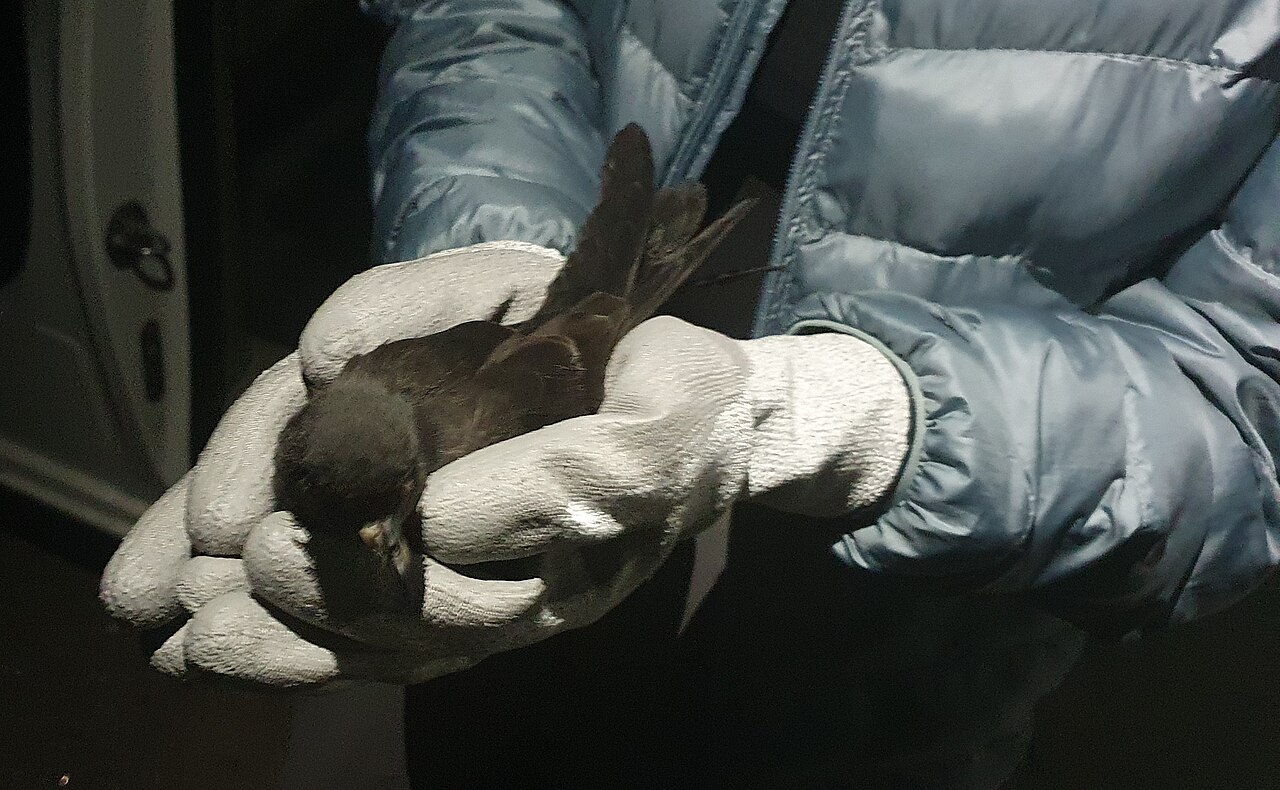
Rescued bird that had been attracted or disoriented by city lights near Iquique, Chile
Temperament
pelagic and elusive
Flight Pattern
low shearing flight with quick, shallow wingbeats interspersed with glides
Social Behavior
A colonial nester, visiting breeding sites at night to reduce predation. Pairs are monogamous within a season and lay a single egg in a crevice or cavity. Adults commute long distances between inland nests and the ocean during the breeding period.
Migratory Pattern
Seasonal migrant
Song Description
Mostly silent at sea; at colonies emits soft chatters and purring trills, often given at night from within nest crevices. Calls are subdued and can be hard to locate in windy desert conditions.
Plumage
Uniform sooty-brown to blackish with a diffuse pale gray diagonal bar across the upperwing; no white rump; long, narrow wings and a shallowly forked tail.
Diet
Takes small fish, squid, and planktonic crustaceans such as copepods and euphausiids. Feeds by surface seizing and pattering, often in areas of strong upwelling. May associate loosely with other seabirds and occasionally follow fishing vessels to scavenge small scraps.
Preferred Environment
Open ocean over cool, productive waters of the Humboldt Current, especially near upwelling fronts and shelf breaks. Typically remains far from shore except when commuting to inland colonies.


