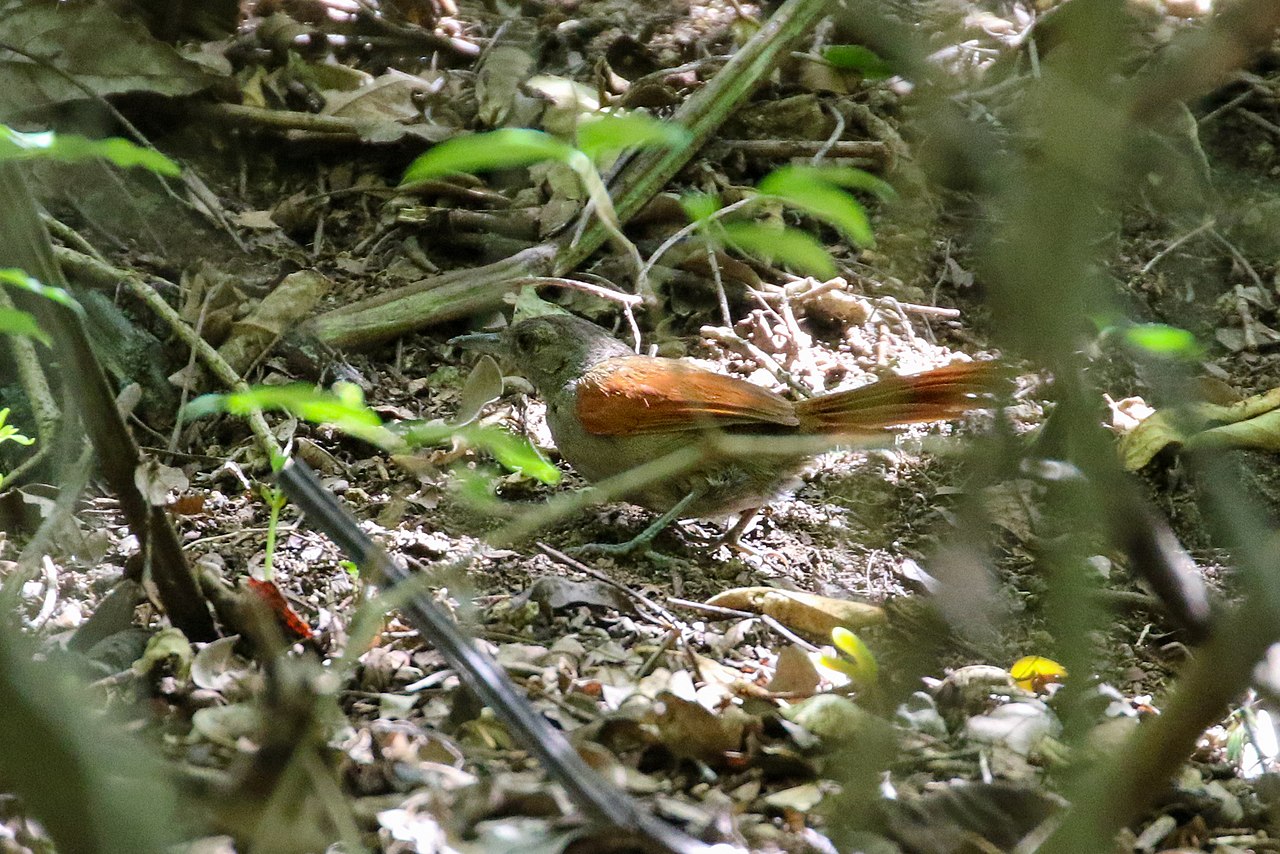
The Marañón sparrow is a passerine of bird in the New World sparrow family Passerellidae that is found in the Marañón River basin of northern Peru. The species was formerly considered to be conspecific with the black-capped sparrow.
Region
Northern Peru, Marañón Valley
Typical Environment
Occurs along the arid inter-Andean Marañón River basin, especially in dry deciduous forest, thorn scrub, and brushy ravines. Prefers dense undergrowth, riparian thickets, and scrubby slopes with scattered trees. Often found near edges and secondary growth where leaf litter and cover are abundant. It is generally local but can be fairly common where suitable habitat persists. Human-altered scrub and hedgerows may also be used.
Altitude Range
400–1800 m
Climate Zone
Arid
Ease of Keeping
Beginner friendly: 1/5
The Marañón sparrow was formerly treated as conspecific with the Black-capped Sparrow but is now recognized as distinct, confined to the arid inter-Andean Marañón River valley of northern Peru. It is a shy ground-forager that favors dense scrub and dry forest edges, where its clear, whistled song often reveals its presence. Its bold black-and-white head pattern contrasts with olive upperparts, aiding field identification.
Temperament
shy and skulking
Flight Pattern
short rapid wingbeats, low darting flights through scrub
Social Behavior
Usually seen singly, in pairs, or small family groups. Territorial during the breeding season, with pairs nesting low in dense shrubs or thickets. Cup nests are constructed with grasses and fibers; both parents likely share incubation and feeding duties.
Migratory Pattern
Resident
Song Description
Song is a series of clear, sweet, whistled phrases delivered from concealed perches within scrub. Calls include thin tseet notes and soft chips used for contact and alarm.
Plumage
A crisp black cap and face pattern offset by a white supercilium, white malar stripe, and white throat; upperparts olive to olive-green with grayish tones; underparts pale gray to whitish with slightly olive flanks.
Diet
Takes small seeds, fallen grain, and a variety of invertebrates such as beetles, ants, and larvae. Will also consume small berries and soft fruits when available. Forages mostly on or near the ground, flicking leaf litter and probing among twigs.
Preferred Environment
Feeds in dense scrub, brushy ecotones, and along forest edges and riparian thickets where cover is close to the ground. Often uses shaded leaf-litter patches and the bases of thorny bushes.