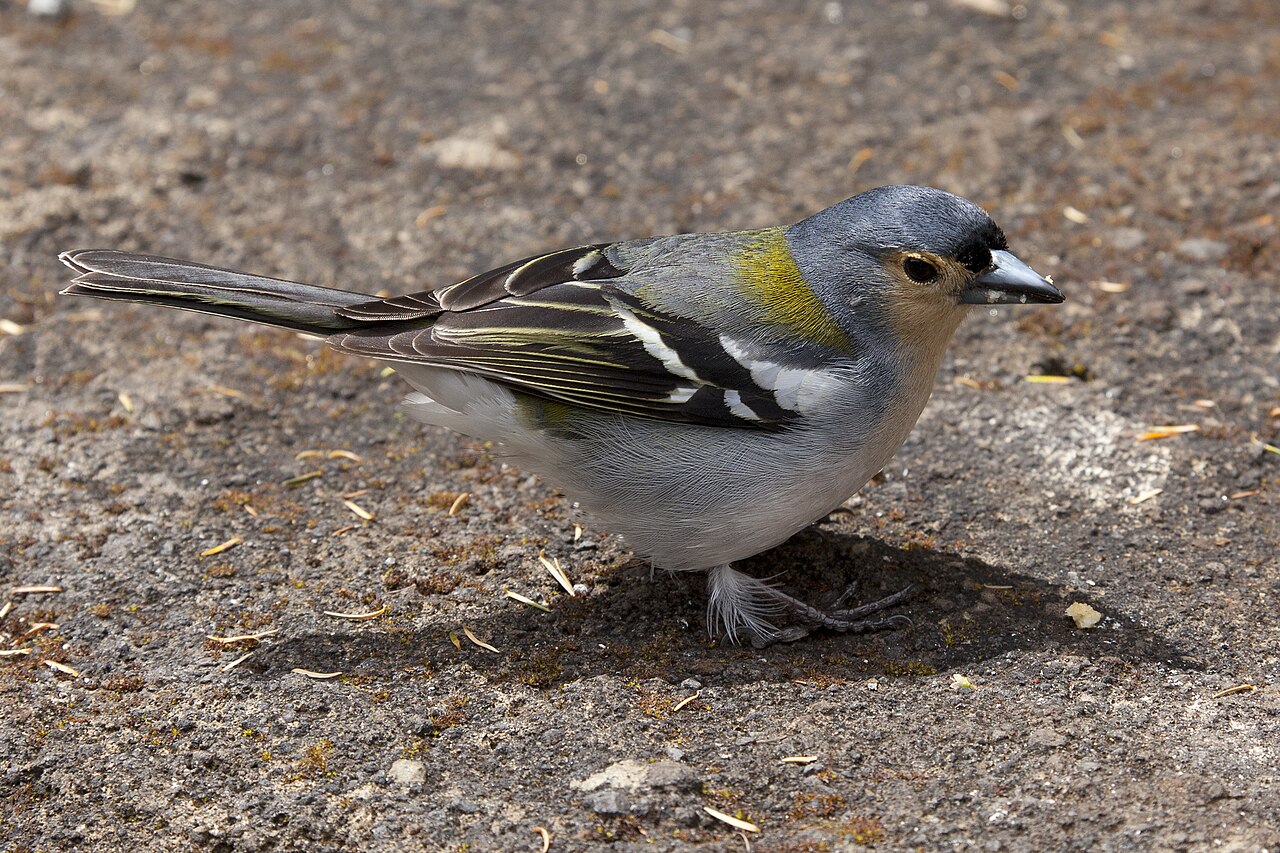
The madanga or rufous-throated white-eye is a species of bird that was formerly included in the family Zosteropidae but is now thought to be an atypical member of the family Motacillidae, consisting of the pipits and wagtails. Its close relatives are tree pipits of the genus Anthus, and is endemic to the moist, mountainous, subtropical and tropical forest of the Indonesian island Buru. The bird was initially described from four specimens collected in April 1922 from one area in the western part of the island, near the settlement Wa Fehat, at elevations between 820 and 1,500 m. These observations were reproduced on two birds in December 1995 at Wakeika, at an elevation of 1,460 m (4,790 ft); changes in the bird's habitat at Wa Fehat were also noted in 1995. The bird was observed only in a few localities and neither its habitat area nor population is reliably known. The population is estimated at more than several hundred individuals, and the habitat at several hundred km2 from the available area above 1,200 m (872 km²) and above 1,500 m (382 km²); the birds are believed to disperse over their habitat rather than form groups. Because the species is restricted to a single island and its habitat is threatened by logging and other human activities, it is listed as endangered by the IUCN since 1996.
Region
Maluku Islands
Typical Environment
Restricted to moist, mossy montane forest on Buru, typically in mature or lightly disturbed primary forest with abundant epiphytes. It frequents mid-elevation ridges and slopes and often forages on moss-covered trunks and larger branches. The species is patchily distributed and occurs at low densities. Habitat loss from logging and associated disturbance remains the principal threat. Records are few and scattered, reflecting both rarity and difficult access to its terrain.
Altitude Range
820–1500 m
Climate Zone
Highland
Ease of Keeping
Beginner friendly: 1/5
Also known as the rufous-throated white-eye, this species was long placed with white-eyes (Zosteropidae) but is now considered an atypical pipit relative within Motacillidae. It is confined to montane forest on the Indonesian island of Buru and is rarely encountered. It forages quietly on mossy trunks and branches, gleaning small invertebrates. Ongoing logging and habitat degradation place it at significant risk.

Temperament
solitary and inconspicuous
Flight Pattern
short rapid wingbeats between perches
Social Behavior
Usually encountered singly or in pairs and does not form flocks. Forages quietly along mossy trunks and larger branches, gleaning prey from bark and epiphytes. Breeding biology remains poorly known due to the species’ rarity and inaccessible habitat.
Migratory Pattern
Resident
Song Description
Vocalizations are poorly documented; reported calls are thin, high-pitched tseep-like notes. Song, if given, is subdued and infrequent, easily overlooked in dense forest.
Plumage
Small, fairly plain forest passerine with olive-brown upperparts and paler underparts, highlighted by a distinct rufous throat patch. Underparts otherwise whitish to buff with subtle shading; plumage appears soft and slightly moss-toned in good light.
Diet
Feeds primarily on small arthropods such as insects, spiders, and larvae. Gleans prey from bark, moss, and epiphyte clusters on trunks and thicker branches. May hover-glean briefly to pick off concealed invertebrates. Ground feeding appears uncommon.
Preferred Environment
Dense, mature montane forest with abundant moss and epiphytes, especially on ridges and steep slopes. Often uses mid-storey to lower canopy microhabitats and areas with large, moss-covered trees.