
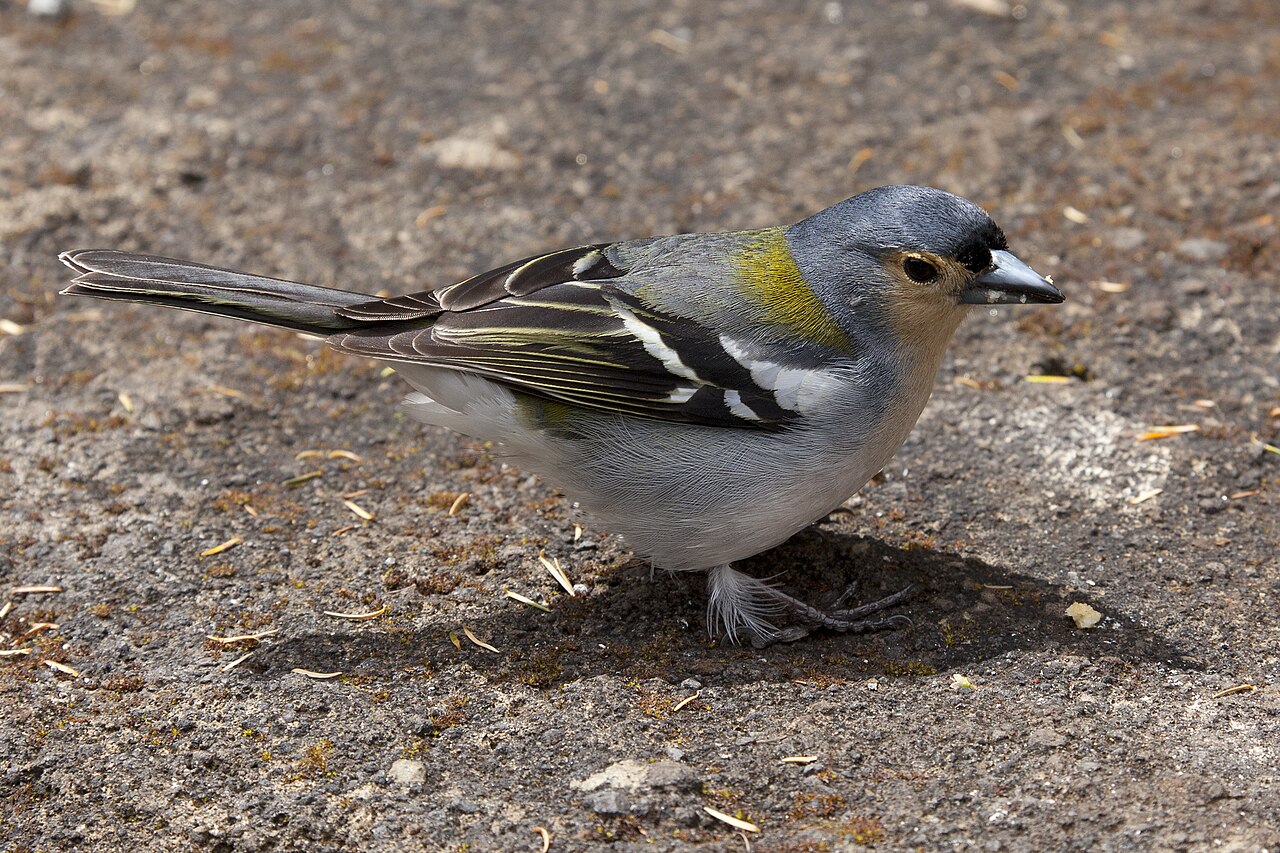
The Madeira chaffinch is a small passerine bird in the finch family Fringillidae. It was formerly treated as a subspecies of the Eurasian chaffinch, but was recently revised to be a species in its own right, following a genetic and morphological analysis of the genus Fringilla in 2021. It is endemic to the Portuguese island of Madeira, part of Macaronesia in the North Atlantic Ocean. It is locally known as the tentilhão.
Region
Macaronesia (Madeira)
Typical Environment
This species is confined to the island of Madeira, where it is common in native laurel forest (Laurisilva), mixed woodland, and mature gardens. It also occurs along forest edges, ravines, and in pine and eucalyptus plantations. Birds often forage along paths and picnic areas where leaf litter accumulates. During the breeding season it favors well-structured forest with dense understory, but in winter it ranges more widely into lower elevations.
Altitude Range
Sea level to 1600 m
Climate Zone
Subtropical
Ease of Keeping
Beginner friendly: 2/5
The Madeira chaffinch is a recently recognized species split from the Eurasian chaffinch following genetic and morphological work in 2021. Locally called the tentilhão, it is one of Madeira’s most familiar forest birds and adapts well to parks and gardens. Males show bold wing bars and a rich, musical song that varies by locality across the island.
Temperament
social and active
Flight Pattern
short rapid wingbeats with undulating flight
Social Behavior
Territorial pairs form in the breeding season and build neat cup nests high in trees, camouflaged with lichens and moss. Clutches typically contain 3–5 eggs; the female incubates while the male guards the territory and both parents feed nestlings. Outside the breeding season they join loose flocks and may associate with other small passerines.
Migratory Pattern
Resident
Song Description
A rich, musical cascade of trills and phrases that accelerates and often ends with a flourish. Calls include a sharp 'pink' contact note and soft, sibilant notes when foraging.
Plumage
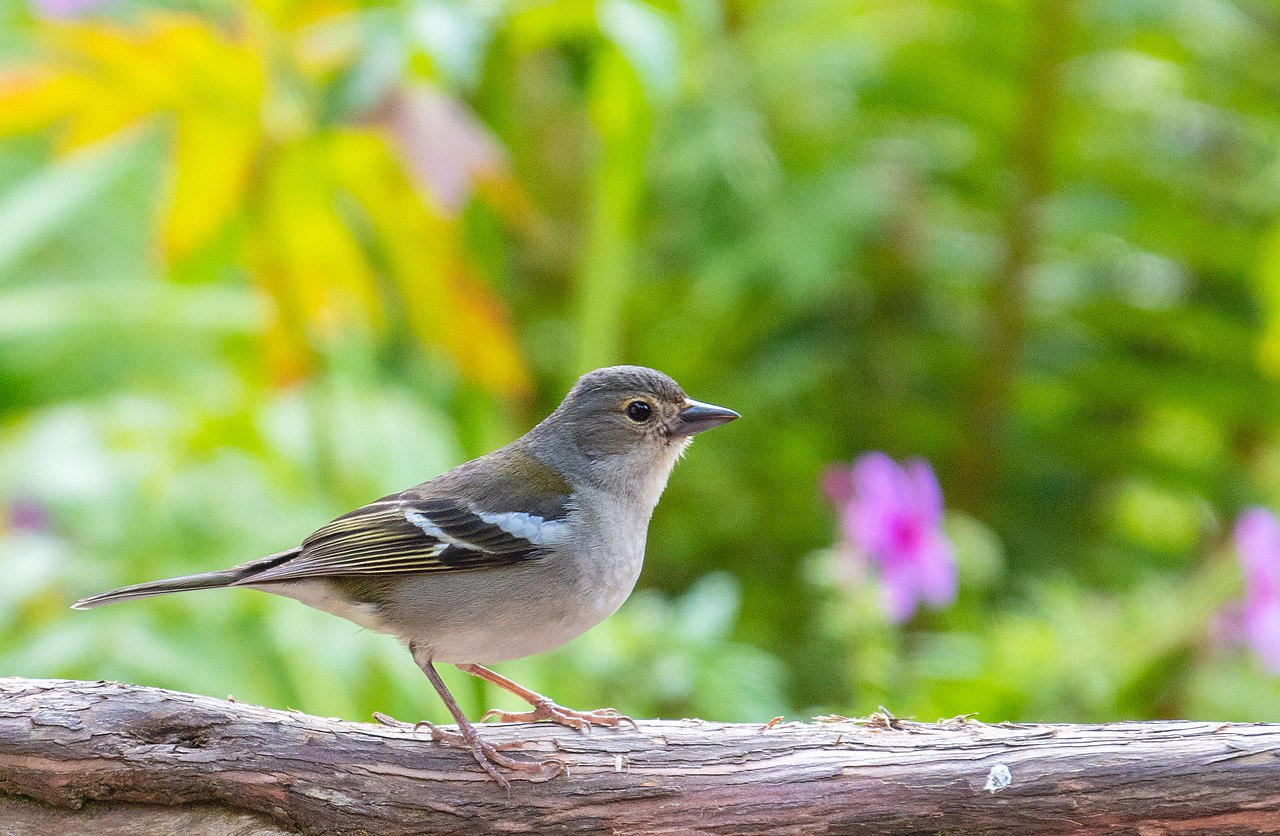
Compact finch with strong white wing bars and white outer tail feathers; males show bluish-grey head and warm pinkish underparts with a green-olive mantle, females are more uniformly brown and subdued.
Diet
Feeds on seeds, buds, and small fruits, switching to more arthropods—especially caterpillars and beetles—during the breeding season. Nestlings are provisioned mainly with soft-bodied insects for protein. It also takes fallen seeds from the ground and gleans in foliage and bark crevices.
Preferred Environment
Forages on forest floors, along edges, and in clearings where seed and leaf litter are abundant. In gardens and picnic areas it often searches paths and lawns, becoming quite tame.


