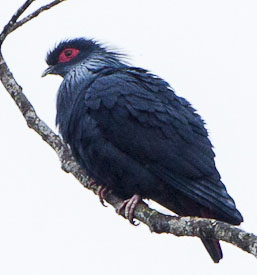
Mackinnon's shrike, also called Mackinnon's fiscal, is a songbird species of the family Laniidae. Its natural habitats are subtropical or tropical moist montane forests and moist savanna. It is not considered a threatened species by the IUCN.The population of this species is increasing, which is thought to be due to the degradation of nearby habitat. Its common name and Latin binomial commemorate Archibald Donald MacKinnon.
Region
Central and East African highlands (Albertine Rift and adjacent ranges)
Typical Environment
Found along forest edges, clearings, and shrubby secondary growth in moist montane zones, as well as in montane farmland with hedgerows and scattered trees. It favors ecotones where open patches meet thickets, using prominent perches to hunt. The species tolerates moderate habitat alteration and often persists near human-modified landscapes. It avoids dense interior forest but thrives in mosaics of bush, pasture, and edge woodlands.
Altitude Range
1000–3000 m
Climate Zone
Highland
Ease of Keeping
Beginner friendly: 1/5
Mackinnon's shrike (also called Mackinnon's fiscal) is a montane edge specialist that often benefits from forest degradation and the creation of secondary growth. Like other shrikes, it may impale prey on thorns or barbed wire to store food. It spends long periods perched conspicuously while scanning for prey and often flashes white wing patches in short flights.

Temperament
solitary and territorial
Flight Pattern
short rapid wingbeats between perches
Social Behavior
Typically seen singly or in pairs, maintaining territories throughout the year. Pairs nest in shrubs or small trees, building neat cup nests concealed in foliage. They use elevated perches to hunt and may create small 'larders' by impaling prey. Courtship involves calling, wing-flicking, and display flights.
Migratory Pattern
Resident
Song Description
A varied series of sharp chatters, metallic clicks, and whistles interspersed with harsh scolds. Calls are often delivered from exposed perches and can include brief mimicry of other species.
Plumage
Compact shrike with clean contrast between dark upperparts and pale underparts; smooth, neat plumage with a distinct mask and bold white wing panel.
Diet
Predominantly feeds on large insects such as beetles, grasshoppers, and caterpillars, but will also take small lizards, rodents, and occasionally small birds. Prey is typically captured by sallying to the ground or snatching from foliage after a watchful perch. Larger items may be impaled on thorns for later consumption.
Preferred Environment
Hunts from fence posts, bush tops, and tree edges along forest margins, clearings, and farmland hedgerows. Frequently forages in mixed mosaics of scrub and open ground where prey is abundant and visible.