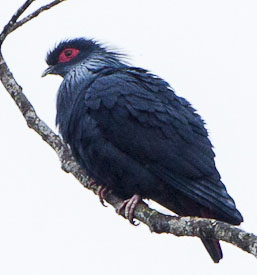
MacGregor's bowerbird is a medium-sized, up to 26 cm long, olive brown bowerbird of New Guinea's mountain forests, roughly the size and shape of an American robin or a Eurasian blackbird. The male is adorned with an erectile orange yellow crest, that is partly hidden until shown in courtship display. The unadorned female is similar to the male, but without the crest. Superb mimics, they are known for imitating other birds, pigs, rushing water, and even human speech.
Region
New Guinea Central Range
Typical Environment
Occurs in montane and subalpine forests of the Central Range of New Guinea, on both the Papua New Guinea and Indonesian sides. Prefers dense mossy cloud forest, forest edges, and shrubby subalpine zones with scattered saplings suitable for bower construction. Bow sites are typically on the forest floor in shaded, sheltered clearings. They use a variety of mid- to upper-story fruiting trees for foraging and descend to the understory for insects.
Altitude Range
1800–3500 m
Climate Zone
Highland
Ease of Keeping
Beginner friendly: 1/5
MacGregor's bowerbird is famed for its elaborate maypole bowers—moss-covered mounds built around a central sapling and decorated with brightly colored objects, fungi, and fruits. Males perform intricate displays at these bowers to attract females, which choose mates based on the structure and performance. They are also remarkable mimics, imitating other birds, pigs, rushing water, and even human speech. The species is named after Sir William MacGregor, a former governor of British New Guinea.

Temperament
solitary and territorial
Flight Pattern
short rapid wingbeats with agile, low forest flights
Social Behavior
Males are polygynous and maintain individual territories centered on elaborate maypole bowers, which they meticulously tend and redecorate. Females visit bowers to assess males, then nest alone in concealed sites in trees or dense vegetation. Pair bonds do not persist beyond mating; males provide no parental care.
Migratory Pattern
Resident
Song Description
A varied repertoire mixing whistles, harsh notes, and striking mimicry of other birds and environmental sounds. During courtship, males deliver extended sequences, interspersed with mechanical-sounding clicks and buzzes, often from near the bower.
Plumage
Olive-brown overall with fine mottling and scalloping, giving a subtly patterned look in good light. Feathers are soft and matte, aiding camouflage in mossy forest.
Diet
Primarily frugivorous, taking a wide range of forest fruits and berries, especially from laurels and figs. Supplements diet with insects, spiders, and other small invertebrates gleaned from foliage and moss. Opportunistically takes nectar and occasionally small snails or other soft-bodied prey.
Preferred Environment
Forages in the mid- to upper canopy for fruit and along trunks and branches for invertebrates. Also searches the understory and forest floor near bowers, especially at edges and light gaps where fruiting shrubs are common.