

The little heron is a small heron, about 44 cm tall. It is mostly sedentary and frequents both fresh and salt water habitats. It is found in the Old World tropics from west Africa to Japan and Australia. The little heron was formerly considered to be conspecific with the striated heron.
Region
Old World tropics and subtropics
Typical Environment
Widely distributed from West Africa across the Indian subcontinent and Southeast Asia to Japan, New Guinea, and northern Australia. It occupies mangroves, estuaries, riverbanks, lakes, rice paddies, and coastal reefs exposed at low tide. Typically keeps to sheltered shorelines and vegetated margins, where overhanging cover offers ambush sites. It is mostly sedentary throughout its range, with local dispersal tied to water conditions.
Altitude Range
Sea level to 1500 m
Climate Zone
Tropical
Ease of Keeping
Beginner friendly: 1/5
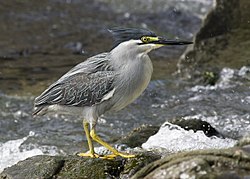
This small heron is often seen alone, stalking quietly along the edges of mangroves, creeks, and tidal flats. It is notable for occasional tool use, such as dropping insects or bread on the water to lure fish within striking range. Its cryptic slate‑grey and greenish tones help it blend into shaded banks and mangrove roots. Generally sedentary, it makes short local movements following water levels and food availability.

Egg, Muséum de Toulouse


Temperament
solitary and territorial
Flight Pattern
short rapid wingbeats, low over water
Social Behavior
Usually solitary outside the breeding season, defending small feeding territories along the water’s edge. Breeds in loose colonies or small groups, often in mangroves or riverside trees, with a platform nest of sticks. Both sexes share incubation and chick-rearing duties.
Migratory Pattern
Resident
Song Description
Generally quiet; emits sharp, harsh 'kek' or 'skewk' calls when alarmed or flushed. During breeding and at roosts, it gives low croaks and clucking notes, especially at dawn and dusk.
Plumage
Compact heron with a dark greenish-black crown and crest, grey‑green back, and slate‑grey wings; the neck and breast are grey with fine whitish streaks and a narrow white throat line. Underparts are dusky with subtle streaking. In breeding, bare parts brighten and the crown plumes are more evident.
Diet
Primarily small fish, but also crustaceans, aquatic insects, frogs, and occasionally small reptiles. Hunts by standing motionless or making short, stealthy stalks before a rapid spear-like strike. Known for opportunistic foraging and occasional bait-fishing, dropping items on the water surface to attract prey. Frequently feeds alone to reduce competition.
Preferred Environment
Shallow edges of mangroves, creeks, ponds, and estuaries with overhanging cover or exposed roots. Also uses rice fields, marshy ditches, and rocky tidal pools at low tide.


