

The little kingfisher is a species of kingfisher in the subfamily Alcedininae.
Region
Australasia
Typical Environment
Found in northern Australia, New Guinea, the Moluccas, and nearby islands. It favors quiet, shaded lowland waterways including rainforest streams, mangroves, paperbark swamps, and slow-flowing creeks. Birds keep close to dense bankside cover and overhanging vegetation. Local movements may follow water levels and seasonal flooding, but populations are generally sedentary.
Altitude Range
0–800 m
Climate Zone
Tropical
Ease of Keeping
Beginner friendly: 1/5
The little kingfisher is one of the smallest kingfishers, often seen as a dark, glossy-blue flash along shaded creeks and mangroves. It sits low over the water on exposed twigs, darting out to snatch prey. Nests are typically burrows excavated into soft stream banks. It is easily overlooked and more often detected by its thin, high-pitched call than by sight.

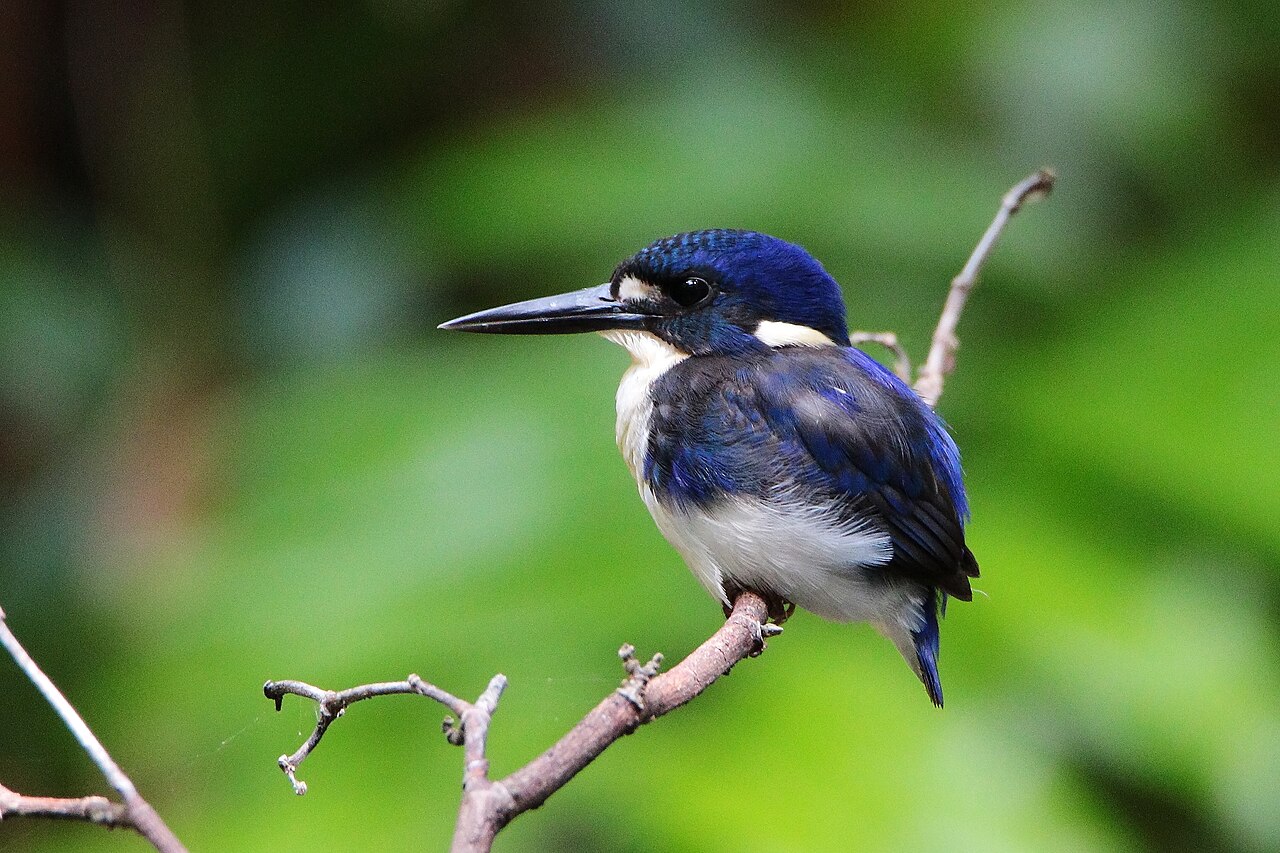
Cairns, Australia
Temperament
solitary and territorial
Flight Pattern
short rapid wingbeats, low over water
Social Behavior
Usually seen singly or in pairs along a short defended stretch of stream. During breeding, pairs excavate a burrow in a soft bank or occasionally in a rotting stump, where both sexes incubate. The male often courts by offering prey items to the female.
Migratory Pattern
Resident
Song Description
A thin, high-pitched seeep or tsip delivered singly or in short series from a shaded perch. Also gives sharp squeaks and ticking notes when alarmed or during territorial interactions.
Plumage
Glossy deep blue upperparts with a short tail, contrasting clean white on the throat and underparts in many subspecies (some show buff tinge). Feathers appear sleek and compact, giving a stubby, rounded look.
Diet
Takes small fish, aquatic insects, crustaceans, and tadpoles. Hunts by watching from a low perch and making short dashes or shallow plunges to seize prey. Prey is typically beaten against the perch before swallowing. Foraging is highly localized to quiet pools and edges with overhangs.
Preferred Environment
Shaded margins of slow streams, backwaters, mangroves, and swampy forest edges. Often selects perches a meter or less above the water, with good overhead cover and clear strike access.


