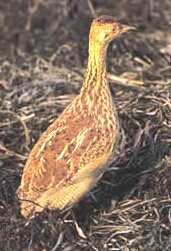
The lesser moorhen is a species of bird in the family Rallidae. It is sometimes placed into the genus Gallinula. It is the only member of the genus Paragallinula.
Region
Sub-Saharan Africa
Typical Environment
Occurs widely across sub-Saharan Africa in still or slow-moving freshwater wetlands. It favors marshes, swamps, lake and reservoir margins, floodplains, and man-made habitats such as rice paddies and farm dams. Dense emergent vegetation like reeds, papyrus, and sedges provides cover and nesting sites. The species is patchy but can be locally common where suitable cover and shallow water are available.
Altitude Range
0–2500 m
Climate Zone
Tropical
Ease of Keeping
Beginner friendly: 1/5
The lesser moorhen is the sole member of the genus Paragallinula, having been split from Gallinula on genetic and morphological grounds. Smaller and slimmer than the Common Moorhen, it is easily overlooked in densely vegetated wetlands. Its angular, red frontal shield and yellow bill are key identification features. It often undertakes local, rain-driven movements to exploit newly flooded habitats.

Temperament
secretive and wary
Flight Pattern
short rapid wingbeats, low and fluttering over water
Social Behavior
Usually seen singly, in pairs, or small family groups, keeping close to dense cover. Builds a platform nest of reeds or other aquatic vegetation, often floating or anchored near the water’s edge. Breeding typically aligns with rainy seasons, and both adults share incubation and chick care.
Migratory Pattern
Partial migrant
Song Description
Vocalizations include sharp clucks, squeaks, and repeated kek notes, often given from cover. Alarm calls are harsher, with quick, chattering bursts. Generally less vocal than the Common Moorhen but can call frequently at dawn and dusk.
Plumage
Sooty-brown to dark brown upperparts with slaty-gray head and underparts; clean white undertail coverts shown when flicking the tail.
Diet
An opportunistic omnivore that picks at seeds, shoots, and soft aquatic plants. It also takes insects, snails, small crustaceans, and other invertebrates gleaned from the water surface and vegetation. Forages by pecking, picking, and occasionally upending in shallow water. Will scavenge small food items at the water’s edge and along floating mats.
Preferred Environment
Feeds along quiet margins of ponds, marshes, and channels where dense emergent vegetation meets shallow open water. Frequently forages on floating vegetation and mud edges. Avoids fast-flowing water and extensive open shorelines without cover.