

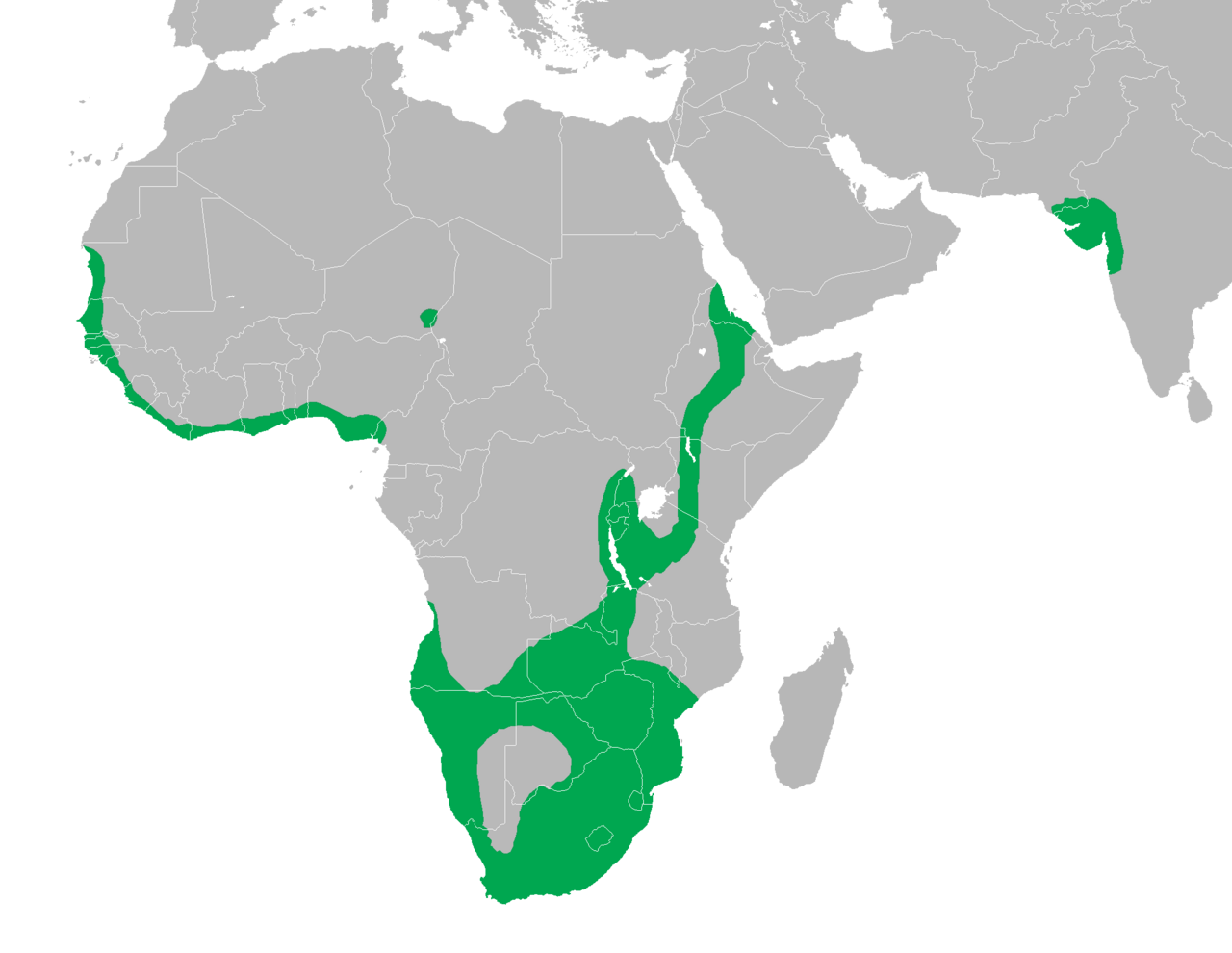
The lesser flamingo is a species of flamingo occurring in sub-Saharan Africa and western India. Birds are occasionally reported from farther north, but these are generally considered vagrants.
Region
Sub-Saharan Africa and western India
Typical Environment
Core populations occur on the saline and alkaline lakes of the East African Rift, with major numbers at lakes Natron, Bogoria, Nakuru, Manyara, and Magadi. They also occupy saline pans and coastal lagoons in southern Africa, including the Makgadikgadi Pans. Outside Africa, important populations occur in western India, especially the Rann of Kutch. Birds wander widely in response to water levels and food availability, sometimes appearing at temporary salt pans and evaporation ponds. They rarely use freshwater bodies except for limited drinking.
Altitude Range
Sea level to 2500 m
Climate Zone
Tropical
Ease of Keeping
Beginner friendly: 1/5
The lesser flamingo is the smallest and most numerous flamingo, famous for vast, pink-hued flocks on East Africa’s soda lakes. Its bill has ultra-fine lamellae adapted to filter microscopic cyanobacteria, which also supply pigments that tint its plumage. It breeds in very few, highly specialized sites—most notably Lake Natron in Tanzania—making it vulnerable to habitat disturbance. Synchronized group displays help pair formation and maintain social cohesion.


A close-up of the head at Marievale, South Africa

Eggs

Adult with begging juvenile, India
Temperament
social and active
Flight Pattern
strong flier
Social Behavior
Extremely gregarious, forming flocks of thousands to over a million individuals. Breeding occurs in dense colonies on isolated mud or salt islands, where pairs build conical nests and lay a single egg. Both parents feed the chick with nutrient-rich crop milk. Outside breeding, they roost and feed in large, coordinated groups.
Migratory Pattern
Partial migrant
Song Description
Vocalizations are nasal, honking calls reminiscent of geese, used constantly within colonies. Contact calls help maintain group cohesion during flight and feeding. Chicks produce high-pitched peeping calls to solicit parental care.
Plumage
Pale pink to deep rose body with richer carmine on wing coverts and contrasting black primary and secondary flight feathers.
Diet
Primarily consumes cyanobacteria (notably Arthrospira/Spirulina) and microalgae, filtered from the water with specialized lamellae. The bill is used upside down while sweeping the head side-to-side, with the tongue pumping water through the filter. It may incidentally take small diatoms and minute invertebrates, but plant-like plankton dominates the diet. Carotenoid pigments from the food source give the plumage its pink coloration.
Preferred Environment
Feeds in shallow, saline or alkaline lakes and salt pans with high densities of microscopic plankton. Typically selects water a few centimeters to tens of centimeters deep, often along wind-concentrated scums or productive shorelines. Will also exploit artificial salterns and evaporation ponds when conditions are suitable.


