

The kererū, also known as kūkupa, New Zealand pigeon or wood pigeon, is a species of pigeon native to New Zealand. Johann Friedrich Gmelin described the bird in 1789 as a large, conspicuous pigeon up to 50 cm (20 in) in length and 550–850 g (19–30 oz) in weight, with a white breast and iridescent green–blue plumage. Two subspecies have been recognised; the second—the Norfolk pigeon of Norfolk Island—became extinct in the early 20th century. Kererū pairs are monogamous, breeding over successive seasons and remaining together when not breeding. They construct nests with twigs in trees, with a single egg clutch.
Region
New Zealand
Typical Environment
Found throughout much of the North, South, and Stewart Islands in native podocarp–broadleaf forests, mixed coastal forest, and regenerating shrublands. They also use plantation forests, rural shelterbelts, and urban parks and gardens where fruiting trees are available. Movements are often nomadic within regions, tracking seasonal fruit and foliage resources. They avoid the most heavily modified open farmland lacking tall trees.
Altitude Range
Sea level to 1200 m
Climate Zone
Temperate
Ease of Keeping
Beginner friendly: 1/5
Kererū are key seed dispersers for many large-fruited native trees, swallowing fruits whole and carrying seeds long distances. Their powerful, whooshing wingbeats are often heard before the bird is seen. The extinct Norfolk Island subspecies is gone, and the Chatham Island form is now treated as a separate species (parea). They are protected in New Zealand and have rebounded locally where predator control is effective.


The extinct Norfolk pigeon (H. n. spadicea), lithograph by John Gerrard Keulemans (1907), based on a preserved specimen in the Natural History Museum at Tring

A kererū chick in the nest
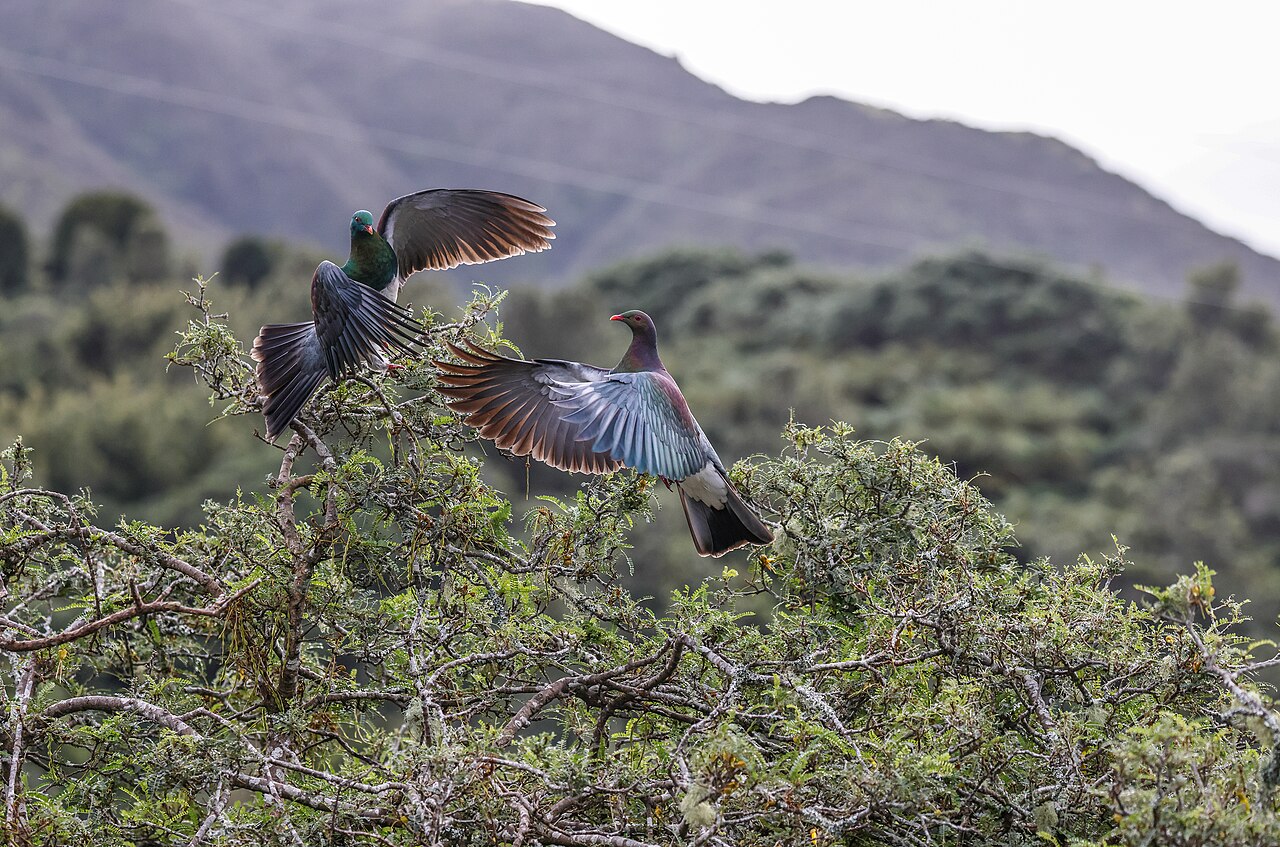
A territorial dispute between kererū

Kererū on nīkau (Rhopalostylis sapida), Waitākere Ranges

Traffic sign in New Zealand cautioning drivers of nearby kererū
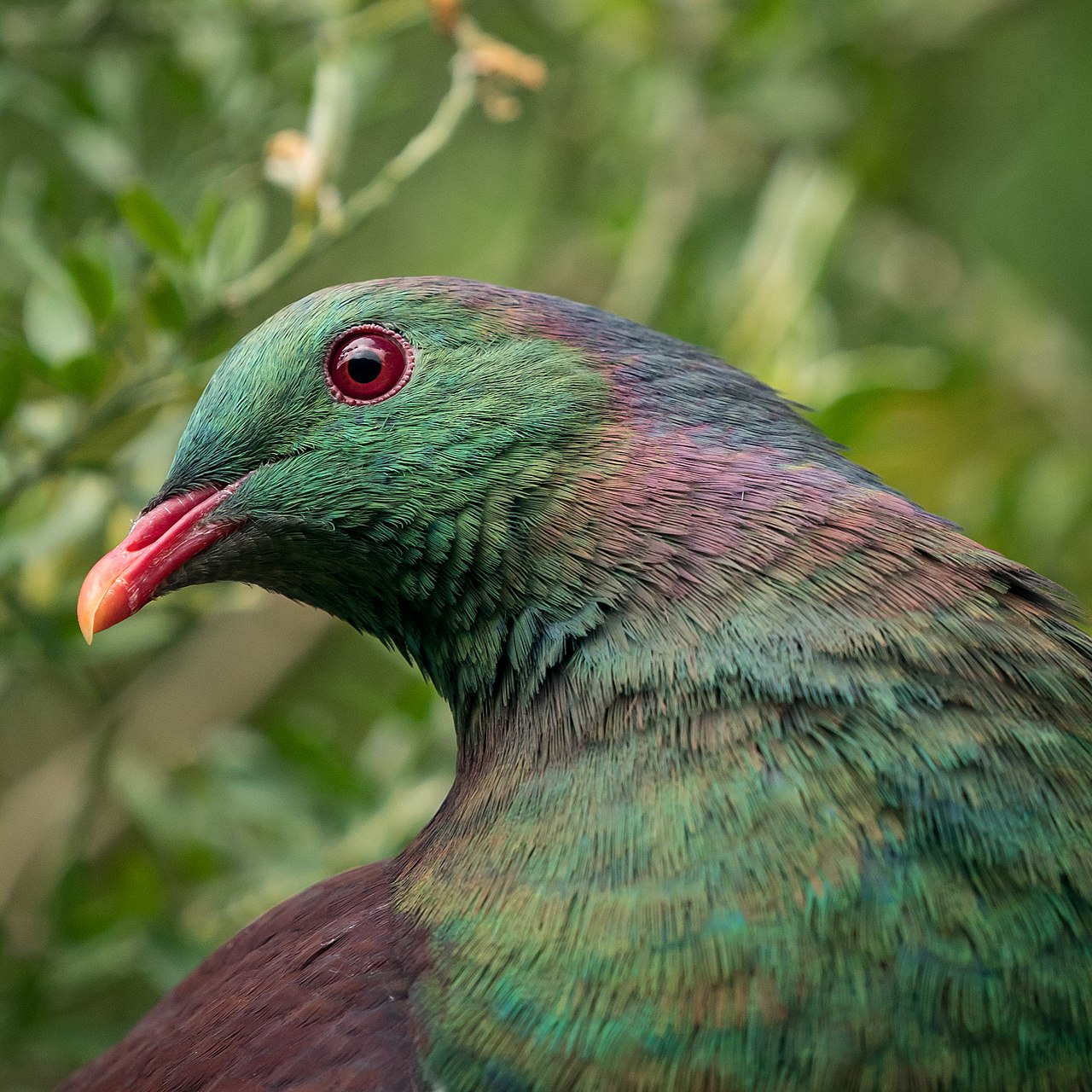
Closeup of head highlighting its iridescent feathers

Egg at museum
Temperament
generally calm but alert; can be confiding where protected
Flight Pattern
strong flier with loud whooshing wingbeats; alternates bursts of flapping with short glides between trees
Social Behavior
Often seen singly or in pairs, but may gather in small groups at heavily fruiting trees. Pairs are monogamous and perform display flights with steep climbs and glides. Nests are flimsy twig platforms placed high in trees, typically with a single egg. Both parents share incubation and chick-rearing duties.
Migratory Pattern
Resident
Song Description
Soft, resonant cooing phrases delivered from perches, often low and repetitive. Display flights may include audible wing claps and pronounced whooshing sounds.
Plumage
Glossy iridescent green-blue head, neck, and upperparts with purplish-bronze sheen, contrasting with a clean white breast and belly.
Diet
Primarily feeds on fruits of native trees such as miro, tawa, karaka, puriri, and nikau, swallowing large drupes whole. When fruit is scarce, it takes leaves, buds, and flowers, particularly from introduced and native trees alike. Its ability to ingest very large fruits makes it critical for dispersing big-seeded forest plants. Occasional ingestion of grit aids digestion.
Preferred Environment
Forages mainly in the mid to upper canopy of mature and regenerating forests. Also exploits fruiting trees in suburban gardens, parks, and farmland shelterbelts. Will travel locally to track seasonal food sources.


