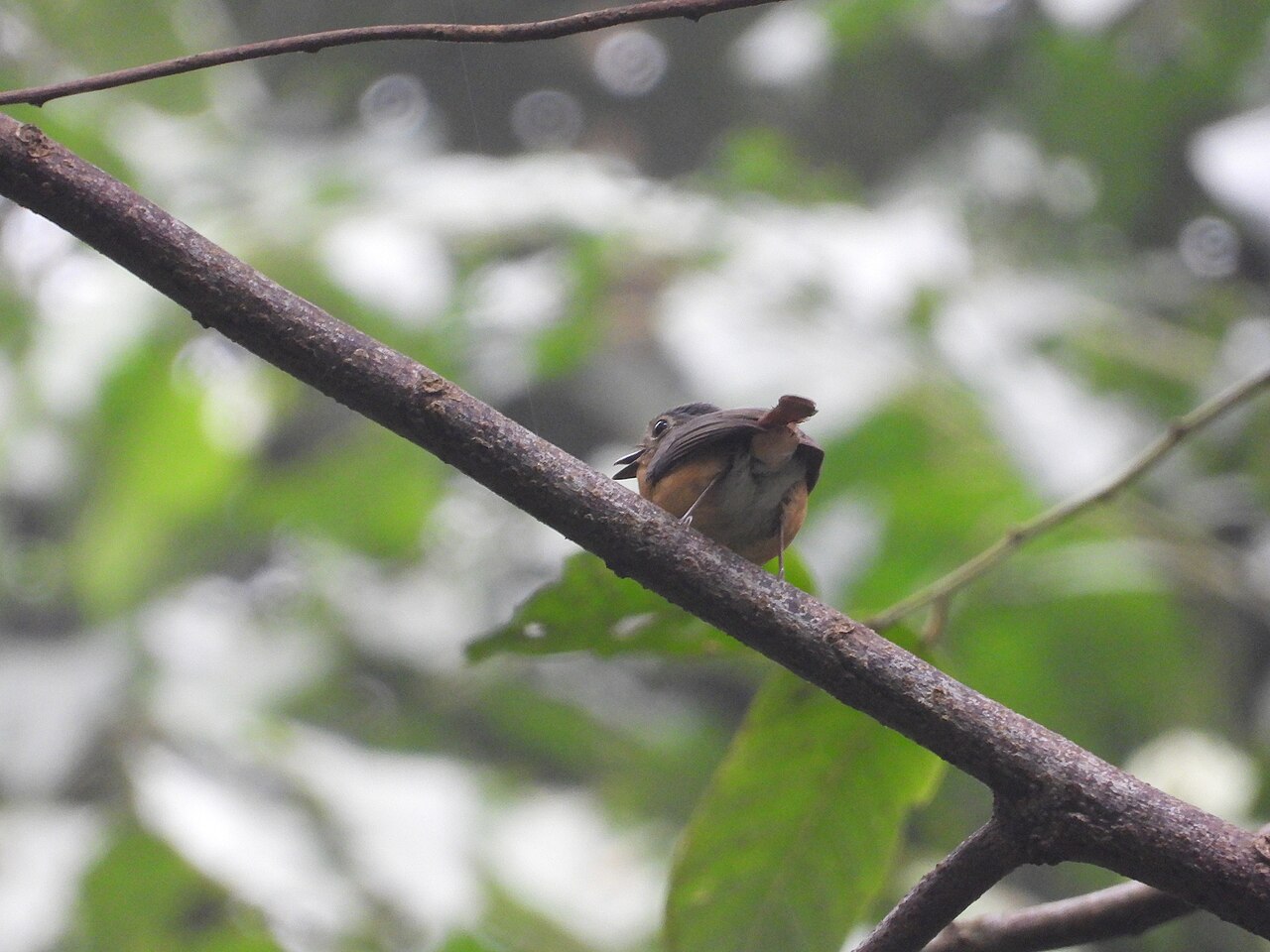
The Javan black-capped babbler is a species of bird in the family Pellorneidae. It is endemic to the island of Java in Indonesia. The Malayan black-capped babbler and the Bornean black-capped babbler were both formerly considered conspecific, but were split from it in 2021. Its natural habitat is subtropical or tropical moist lowland forest.
Region
Sundaic region (Java, Indonesia)
Typical Environment
Occurs across suitable lowland and foothill forests on the island of Java, favoring dense understorey and thickets near streams and ravines. It frequents primary forest as well as well-structured secondary growth, especially where leaf litter and tangled roots provide cover. The species stays close to the ground, moving through vine tangles and bamboo clumps. It is typically absent from open farmland and heavily degraded edges.
Altitude Range
Sea level to 1200 m
Climate Zone
Tropical
Ease of Keeping
Beginner friendly: 1/5
Endemic to Java, this shy understorey babbler was recently split from the Malayan and Bornean black-capped babblers in 2021 based on vocal and genetic differences. It prefers dense, damp lowland forest where it forages mostly on or near the ground. Its presence is often detected by its mellow, whistled song rather than by sight. Habitat degradation on Java may affect local populations, especially outside protected areas.


P. capistratum specimen, Collection Naturalis Biodiversity Center
Temperament
skulking and secretive
Flight Pattern
short rapid wingbeats, usually low through understory
Social Behavior
Usually seen singly or in pairs, often maintaining territories year-round. Pairs may duet, and birds keep in contact with soft calls while foraging close to the ground. Nesting is typically near the forest floor in dense vegetation, roots, or among fallen fronds.
Migratory Pattern
Resident
Song Description
A mellow series of clear, whistled notes delivered at measured pace, often repeated from low perches within dense cover. Calls include soft chips and ticking notes used for contact between mates.
Plumage
A skulking babbler with a distinct black crown contrasting with rich rufous-brown upperparts and warm buff underparts. Face is dusky with a pale throat; the underparts can show subtle grading from buffy chest to paler belly. Feathers appear soft and loose, aiding a sleek, low-profile look in dense cover.
Diet
Primarily feeds on insects and other small invertebrates such as beetles, ants, termites, spiders, and small snails. It gleans from leaf litter, probes rotting wood, and picks prey from low vegetation. Opportunistically takes larvae and occasionally small worms when available.
Preferred Environment
Forages on or near the forest floor in dense understorey, along stream banks, and among root tangles. Prefers shaded, humid microhabitats with deep leaf litter and fallen branches.