
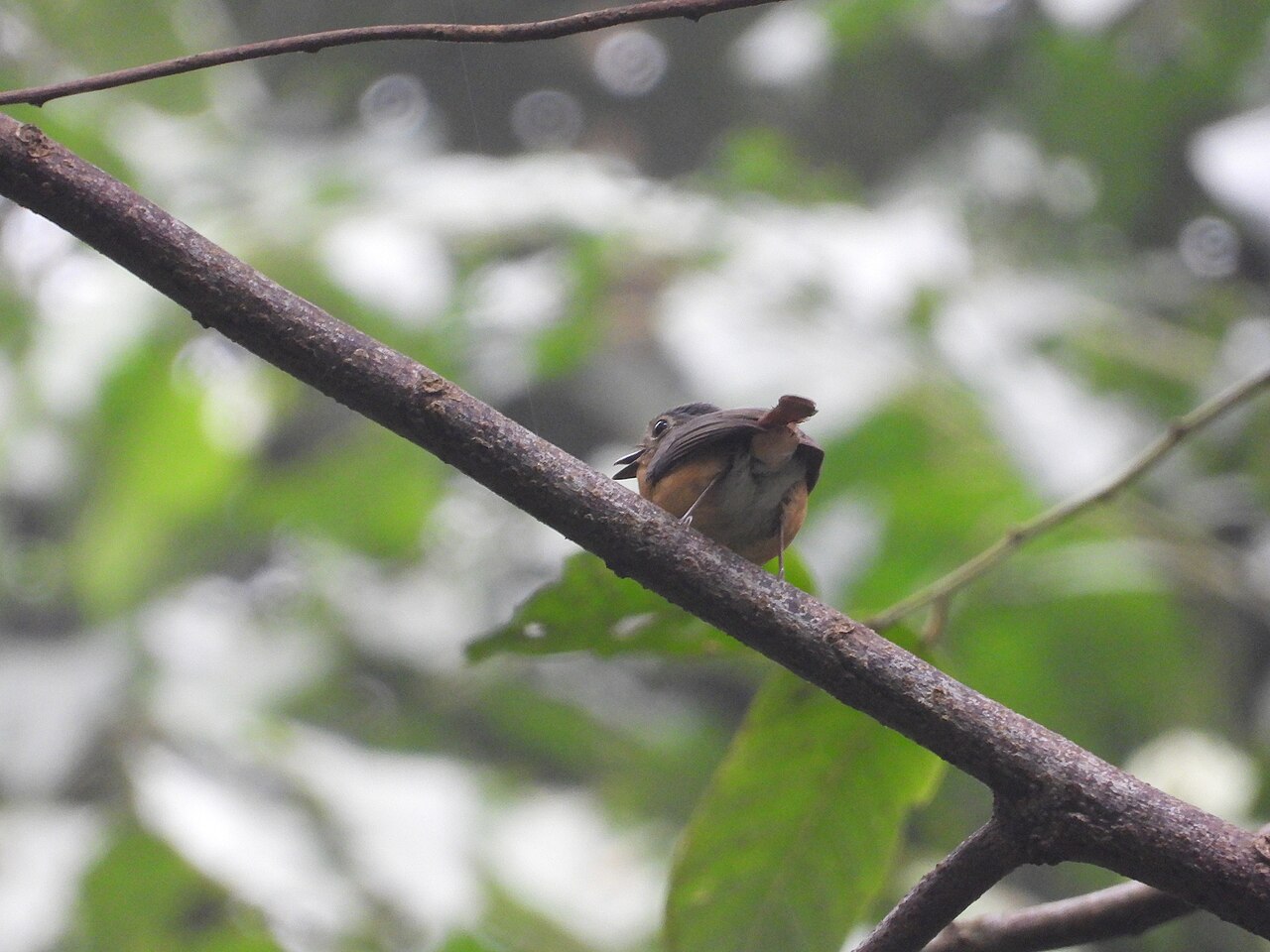
The Javan blue flycatcher is a species of bird in the family Muscicapidae. It is endemic to the Indonesian islands of Java and Panaitan. The Dayak blue flycatcher of Borneo, which was formerly considered conspecific, was split as a distinct species by the IOC in 2021.
Region
Sundaland (Java and adjacent small islands)
Typical Environment
Occurs in lowland to lower montane evergreen and moist secondary forests on Java and Panaitan. Favors shaded interior forest with dense understory, vine tangles, and saplings, often near streams and gullies. Uses forest edges and lightly disturbed habitats but is most regular in mature woodland. Typically forages from the lower to mid-storey, moving between perches in dim, sheltered microhabitats.
Altitude Range
Sea level to 1500 m
Climate Zone
Tropical
Ease of Keeping
Beginner friendly: 1/5
A small forest flycatcher in the family Muscicapidae, the Javan blue flycatcher is restricted to Java and nearby Panaitan Island in Indonesia. In 2021 the IOC split the Dayak blue flycatcher of Borneo as a distinct species, narrowing this species’ range. Males show vivid blue upperparts while females are more subdued brownish with bluish tones. It is a shy, understory sallying insect-hunter and is potentially affected by forest loss and trapping.

Temperament
shy and secretive
Flight Pattern
short rapid wingbeats with quick sallies from a perch
Social Behavior
Usually solitary or in pairs during the breeding season. Holds small territories in suitable forest patches and nests low in vegetation, placing a neat cup in a fork or dense tangle. Outside breeding, may join mixed-species flocks in the mid- and understory.
Migratory Pattern
Resident
Song Description
A soft, melodious series of clear whistles and short phrases delivered from a shaded perch. Calls include thin, high seep notes and sharper ticks when agitated.
Plumage
Male with bright blue upperparts and head, contrasting orange-wash to the breast and clean whitish belly; wings and tail darker blue. Female is brownish-olive above with bluish tail and wings, paler underparts with a warm buff wash on the breast. Both sexes show a neat, sleek feathering typical of Cyornis flycatchers.
Diet
Primarily hunts small flying and ground-dwelling insects such as flies, beetles, moths, and caterpillars; also takes spiders. Captures prey by sallying flights from low perches and by gleaning from leaves and twigs. Foraging is deliberate, with frequent short movements and returns to favored perches.
Preferred Environment
Feeds in shaded understory and along forest streams, edges, and clearings within mature or well-regenerated secondary forest. Often uses vine tangles, saplings, and low branches that provide cover and vantage points.


