

The Himalayan buzzard is a medium to large bird of prey that is sometimes considered a subspecies of the widespread common buzzard. It is native to the Himalayas in Nepal, India and adjacent mountains of southern China.
Region
Himalayas and adjacent mountains of southern China
Typical Environment
Found from northern Pakistan and India through Nepal and Bhutan to the eastern Himalayas, extending into southern Tibet and parts of Sichuan and Yunnan in China. It breeds on forested and scrubby mountain slopes, open mixed woodland, and alpine meadows, often near cliffs or steep valleys. In winter many birds descend to lower elevations, using foothill farmland, river valleys, and terraced hillsides. It tolerates mosaic landscapes with scattered trees, pasture, and rocky outcrops where it can perch and hunt.
Altitude Range
1000–4800 m
Climate Zone
Highland
Ease of Keeping
Beginner friendly: 1/5
The Himalayan buzzard is a medium to large Buteo often treated historically as part of the common or eastern buzzard complex, but now widely recognized as its own species. It favors rugged mountain slopes and valleys where it soars on thermals, scanning for small mammals. Individuals often move downslope in winter, making altitudinal migrations to milder foothills. Its plaintive mewing call is a familiar sound over high Himalayan ridges.


Buteo refectus (Dali Falconer Education and Raptor Conservation Centre)
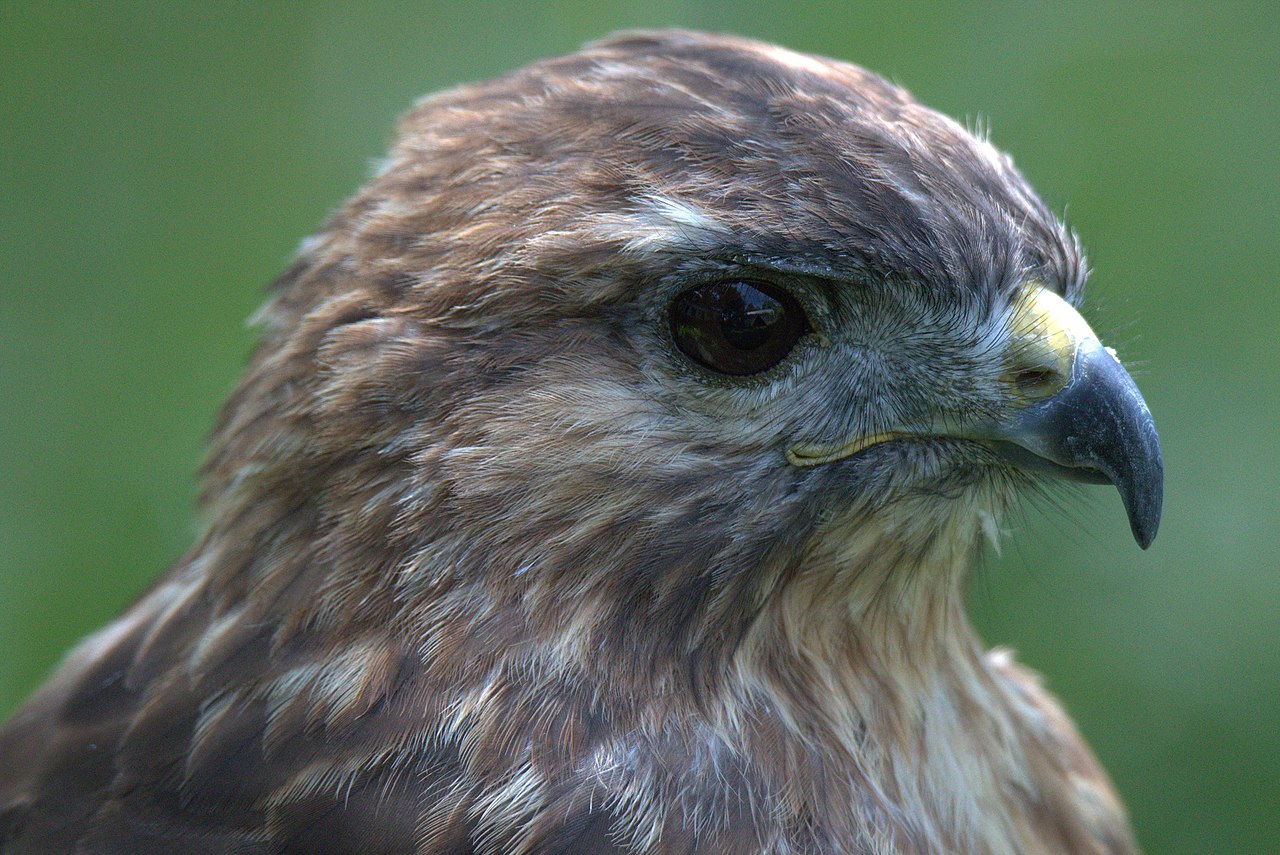
Buteo refectus (Dali Falconer Education and Raptor Conservation Centre)

Buteo refectus (Dali Falconer Education and Raptor Conservation Centre)

Buteo refectus (Dali Falconer Education and Raptor Conservation Centre)

At Pangolakha Wildlife Sanctuary
Temperament
solitary and territorial
Flight Pattern
soaring glider
Social Behavior
Usually seen alone or in pairs, especially during the breeding season when it defends a territory. Nests on trees or cliffs, building a stick platform lined with greenery. Typically lays 1–3 eggs and both adults share incubation and chick rearing. Courtship includes mutual soaring and aerial displays over ridgelines.
Migratory Pattern
Partial migrant
Song Description
Gives a high, plaintive mewing call that carries over valleys, often a descending ‘pii-yah’. Also uses harsher whistles and repeated mews during territorial and courtship flights.
Plumage
Variable, typically dark brown above with paler mottling and a contrasting paler, streaked underside. Many birds show a pale breast band and darker belly, with fine barring on the tail and a bold dark terminal band. In flight, broad wings with slightly upturned tips and pale primary “windows” are evident. Juveniles are generally paler with more diffuse streaking.
Diet
Primarily hunts small mammals such as voles, rats, and pikas. Also takes small birds, reptiles, and large insects, and will occasionally scavenge carrion. It hunts from exposed perches, scanning and then stooping onto prey, or by low quartering flights over open ground. Prey is typically swallowed on the ground or carried to a perch.
Preferred Environment
Favors open slopes, alpine meadows, terraced fields, and forest edges where prey is abundant and perches are available. Frequently uses rocks, pylons, and isolated trees as hunting lookouts. Along foothills it patrols riverbanks and pastureland.


