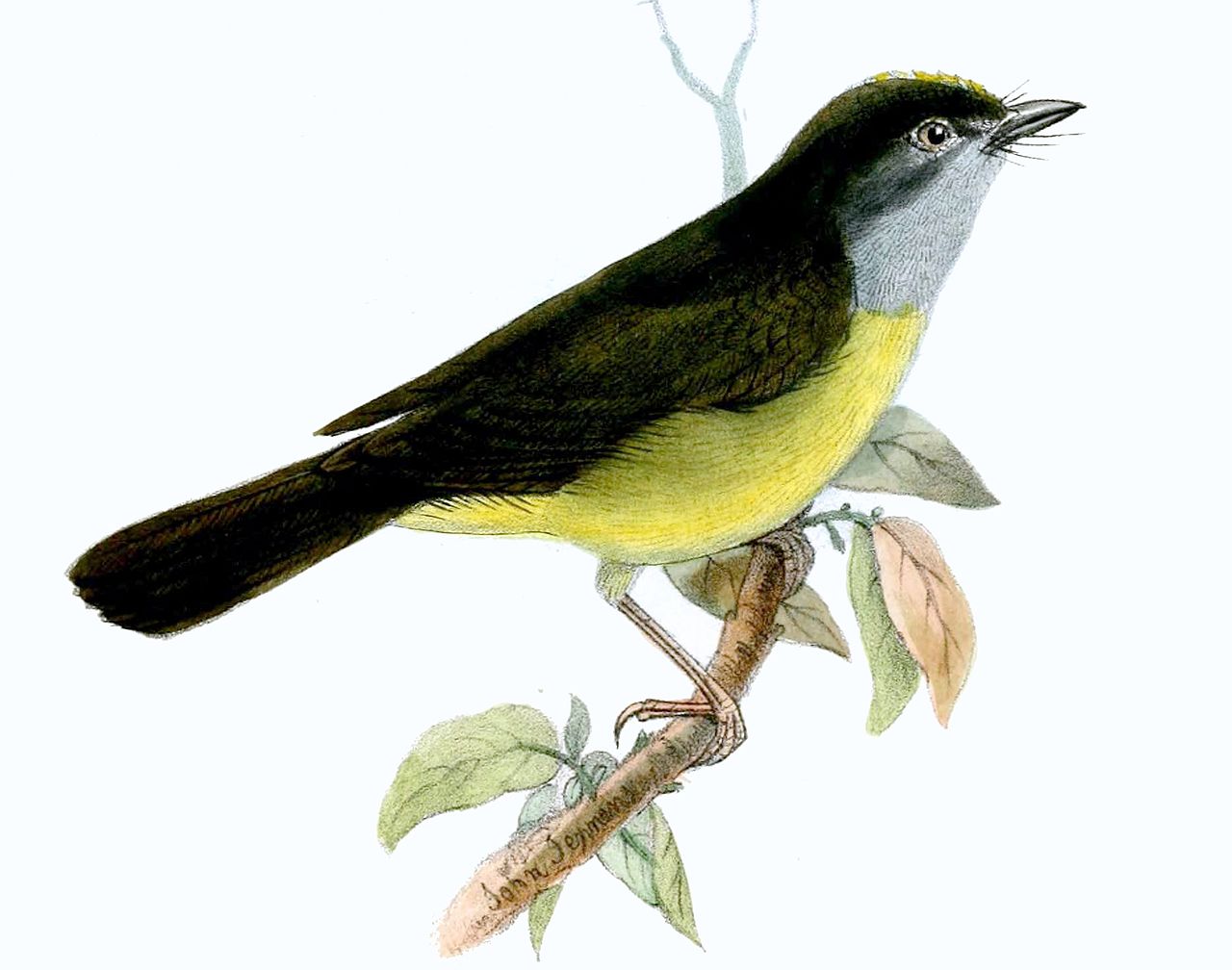
The grey-throated tit-flycatcher is a species of bird in the family Muscicapidae. It is widespread across the African tropical rainforest.
Region
West and Central African Rainforest
Typical Environment
Occurs across humid lowland and foothill evergreen forests, including mature primary forest and well-developed secondary growth. It favors dense, shaded understorey and forest edges, and may be found along streams and in swampy thickets. The species is patchy but widespread wherever continuous rainforest persists. Human-disturbed forests with sufficient understorey cover can also support it.
Altitude Range
Sea level to 1800 m
Climate Zone
Tropical
Ease of Keeping
Beginner friendly: 1/5
A quiet, understorey flycatcher of Africa’s tropical rainforests, it often joins mixed-species flocks, moving methodically through shaded tangles. It frequently sallies from low perches to snatch insects and may flick its tail between forays. Despite being widespread, it can be elusive due to its subdued plumage and soft voice.

Temperament
skulking but active
Flight Pattern
short rapid sallies from low perches
Social Behavior
Often forages singly or in pairs and commonly joins mixed-species flocks moving through the understorey. Breeding pairs defend small territories; both sexes participate in feeding young. Nests are typically cup-shaped and placed low in vegetation.
Migratory Pattern
Resident
Song Description
A soft, thin series of whistles and high, sibilant notes delivered from a concealed perch. Calls include quiet ticks and tseep notes, repeated in short phrases.
Plumage
Subdued, with a grey throat and upper breast contrasting with olive-brown upperparts and paler underparts; fine, neat feathering suited to the understorey. The wings and tail are dusky with slight edging, and the underparts may show a creamy or buff wash.
Diet
Feeds primarily on small flying and gleaned insects such as flies, beetles, and moths, as well as spiders and other arthropods. It launches short sallies to catch prey and also picks insects from foliage and twigs. Occasional consumption of tiny berries may occur but is minor.
Preferred Environment
Forages in shaded understorey, vine tangles, and along forest edges and streams. It favors perches 1–5 meters above ground with ample cover for short aerial sorties.