
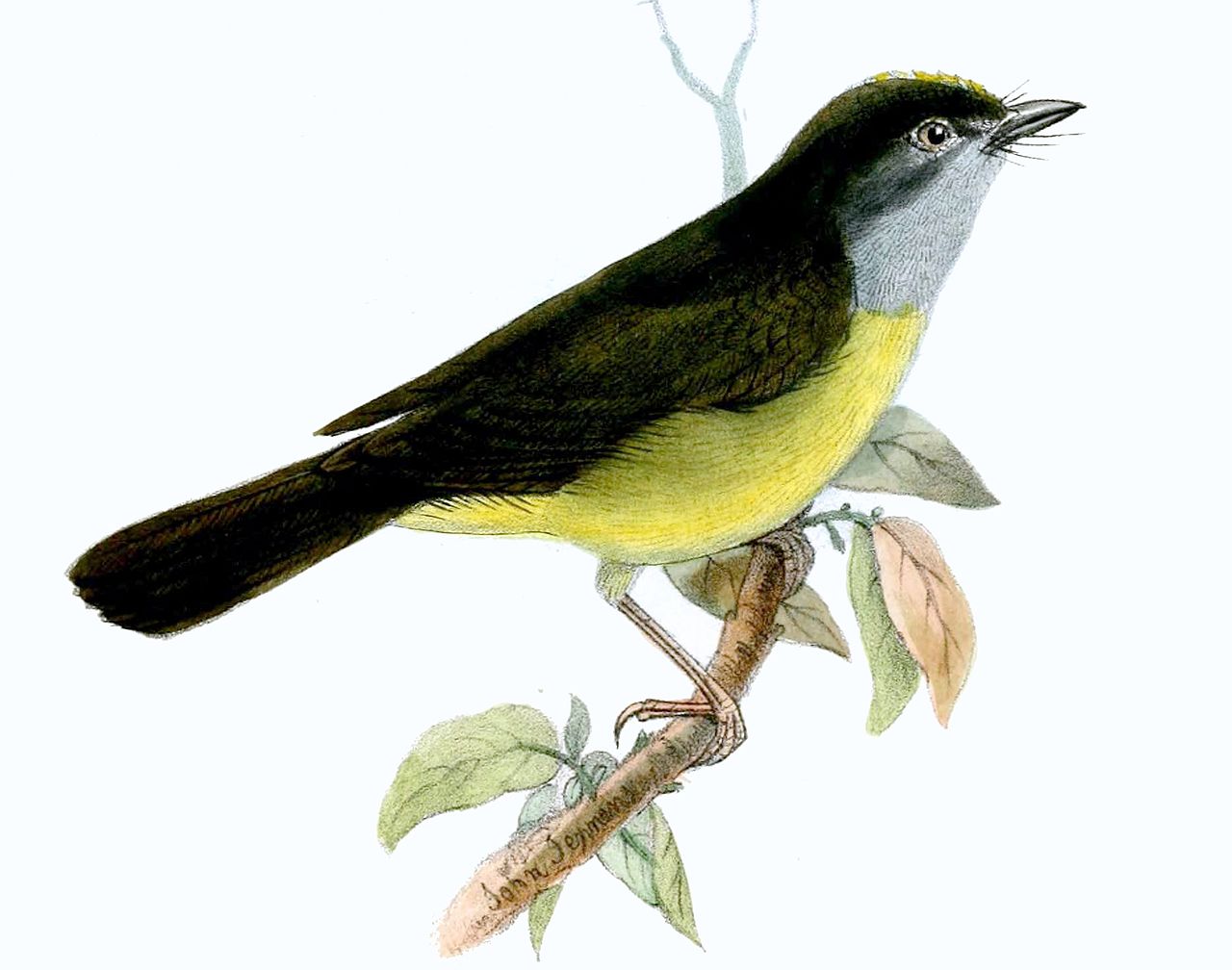
The grey-throated warbler is a species of bird in the family Parulidae.
Region
Northern Andes
Typical Environment
Found in humid montane and foothill forests of the Northern Andes, including Colombia and adjacent Venezuela and Ecuador. It favors dense understory in primary forest, forest edges, and well-regenerated secondary growth, often near ravines and streams. The species keeps to shaded, moist thickets and vine tangles where it can glean arthropods from leaves and stems. It will also utilize forest borders and partially disturbed habitats if sufficient understory cover remains.
Altitude Range
800–2500 m
Climate Zone
Highland
Ease of Keeping
Beginner friendly: 1/5
A small New World warbler of the family Parulidae, the grey-throated warbler is an active understory gleaner that often joins mixed-species flocks in humid montane forests. Its contrasting grey throat and upper breast help distinguish it from similar olive-and-yellow warblers. It typically forages low, flicking its tail and wings as it searches for hidden arthropods. The species is generally inconspicuous but reveals itself with a rapid, high, tinkling song.


Temperament
secretive and active
Flight Pattern
short rapid wingbeats
Social Behavior
Usually found singly or in pairs, frequently associating with mixed-species flocks while foraging. Territorial during the breeding season, with pairs nesting low in dense cover such as banks, fern clumps, or ground vegetation. Both parents typically participate in feeding nestlings.
Migratory Pattern
Resident
Song Description
Song is a fast, high-pitched series of thin tinkling notes delivered in a short burst. Calls include sharp chips and soft tsit notes used to maintain contact in dense cover.
Plumage
Olive-green upperparts with a contrasting grey throat and upper breast blending into yellow underparts; clean, unbarred wings and tail. Subtle facial pattern with a pale yellowish supercilium and darker lores. Underparts otherwise yellow to yellow-olive with slightly paler belly.
Diet
Primarily small arthropods such as insects, spiders, and their larvae. It gleans prey from leaves, twigs, and vine tangles and will probe clusters of dead leaves. Occasionally chases flushed insects with short sallies but mostly forages by careful gleaning at low levels.
Preferred Environment
Feeds in dense understory of humid forest, along shaded trails, and near streams or ravines where moisture supports thick vegetation. Often forages 0.5–3 m above ground in tangles, saplings, and viney thickets.


