

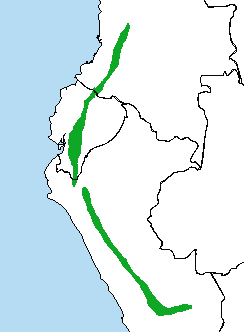
The grey-breasted mountain toucan is a least-concern species of bird in the toucan family, Ramphastidae. It is found in South American countries such as Colombia, Ecuador and Peru.
Region
Northern Andes
Typical Environment
Occupies humid montane cloud forests and elfin forests on the Andean slopes of Colombia, Ecuador, and northern Peru. Prefers mature, moss-laden forests with abundant epiphytes and fruiting trees. Often forages along forest edges, ravines, and in patches of Chusquea bamboo. Uses the canopy and subcanopy but will descend to the midstory where fruit is plentiful.
Altitude Range
1800–3300 m
Climate Zone
Highland
Ease of Keeping
Beginner friendly: 1/5
The grey-breasted mountain toucan is a high-Andean toucan known for dispersing seeds of many cloud-forest trees, helping maintain forest diversity. It travels in pairs or small groups and moves quietly through mossy canopies despite its bright bill. Its far-carrying, barking calls often reveal it before it is seen. Habitat loss is a concern locally, but the species is currently not considered at risk overall.




Temperament
social and active
Flight Pattern
short rapid wingbeats between trees
Social Behavior
Usually found in pairs or small family groups that move methodically through fruiting trees. Nests in natural tree cavities or old woodpecker holes, with both parents participating in incubation and feeding. Territorial displays include duets and bill-pointing.
Migratory Pattern
Resident
Song Description
Vocalizations are loud, far-carrying barks and yelps, often given in series. Also produces frog-like croaks and guttural notes during group contact and duets.
Plumage
Slate-grey breast with bluish underparts, olive-green to greenish upperparts, and darker crown and nape. The vent and undertail coverts show reddish tones, contrasting with the otherwise cool-toned body. Bill is large and laterally compressed with contrasting dark and pale areas.
Diet
Primarily consumes a wide variety of fruits and berries, swallowing them whole and later regurgitating seeds, which aids forest regeneration. Supplements diet with insects, small invertebrates, and occasionally eggs or small vertebrates. Often follows seasonal fruiting patterns and will revisit productive trees repeatedly.
Preferred Environment
Feeds in the canopy and subcanopy of humid montane forest, especially at fruiting trees along edges and gaps. Also visits forested ravines and bamboo thickets where fruit resources are concentrated.


