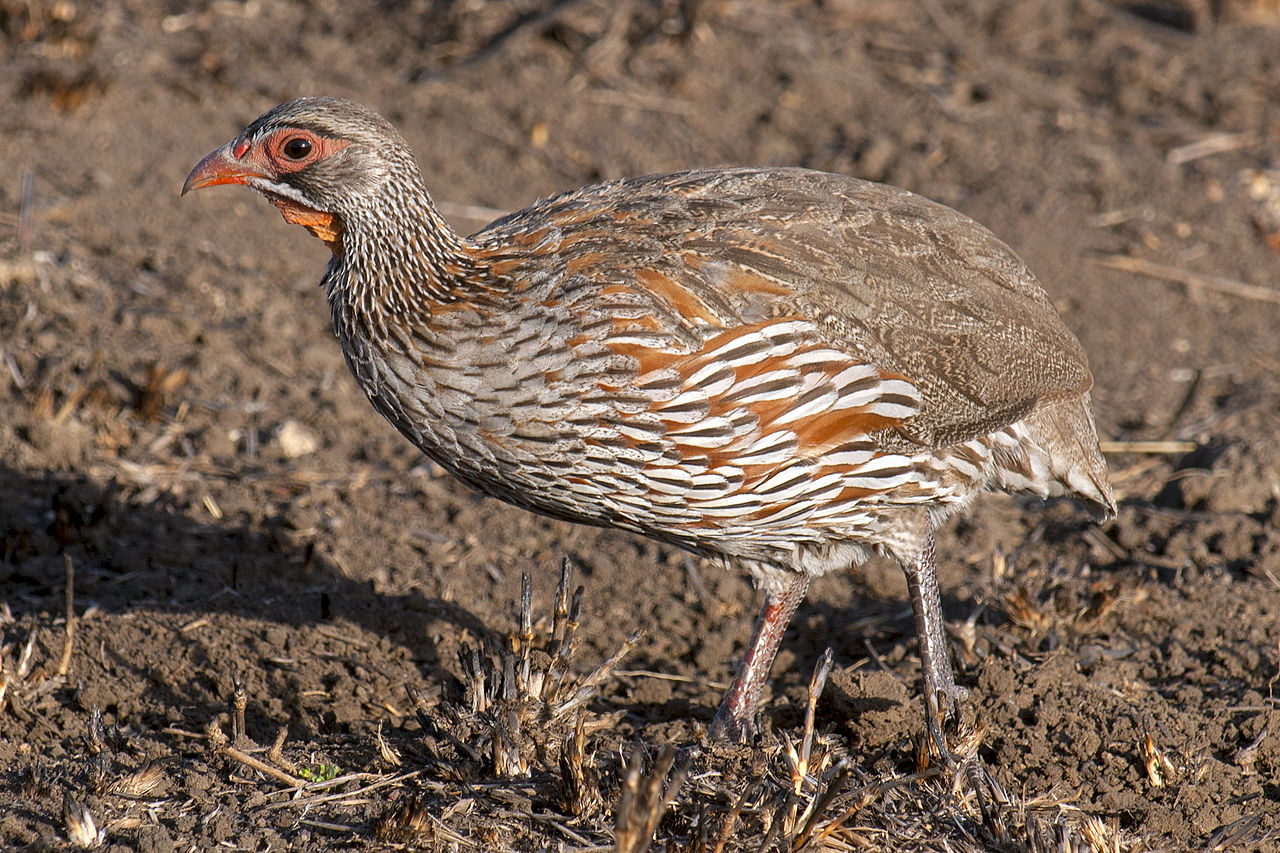
The grey-breasted partridge, also known as the white-faced hill partridge, or Horsfield's hill partridge, is a bird species in the family Phasianidae.
Region
Sunda Islands
Typical Environment
Occurs in montane evergreen and mossy forests with dense understory and bamboo thickets. It favors shaded, humid forest floors with abundant leaf litter for scratching and foraging. Birds keep close to cover and will use forest edges and lightly disturbed secondary forest if understory remains intact. It is rarely found in heavily degraded habitats but may venture into adjacent agroforestry near intact forest.
Altitude Range
800–2400 m
Climate Zone
Highland
Ease of Keeping
Beginner friendly: 2/5
Also called the white-faced hill partridge or Horsfield's hill partridge, it is a shy, ground-dwelling bird of Java’s montane forests. Its clear, whistled duets often reveal its presence long before it is seen. Forest loss and trapping pressure have reduced many local populations, making careful habitat protection crucial.

Temperament
secretive and wary
Flight Pattern
short rapid wingbeats; explosive flush
Social Behavior
Usually found in pairs or small family parties moving quietly along the forest floor. Believed to be largely monogamous, with nests placed on the ground among dense leaf litter or at the base of shrubs. Breeding is thought to coincide with wetter months when food is abundant.
Migratory Pattern
Resident
Song Description
Gives clear, whistled, antiphonal duets; pairs often call responsively from hidden perches on the ground or low logs. Calls carry through the forest and are most frequent at dawn and dusk, aiding detection despite the bird’s secretive habits.
Plumage
Compact, round-bodied partridge with a striking white face bordered by a black facial line, a grey breast, and warm brown upperparts with fine mottling. Flanks often show subtle barring and rufous tones, with a buff to pale belly. The tail is short and often held low.
Diet
Forages by scratching leaf litter for seeds, fallen fruits, tender shoots, and a variety of invertebrates such as beetles, ants, termites, and small snails. Diet composition shifts seasonally with fruiting and insect availability. Grit and small pebbles may be ingested to aid digestion.
Preferred Environment
Feeds on shaded forest floors, along quiet trails, ridge lines, and bamboo tangles where cover is dense. Occasionally uses forest edges and lightly disturbed secondary growth if understory complexity persists.