
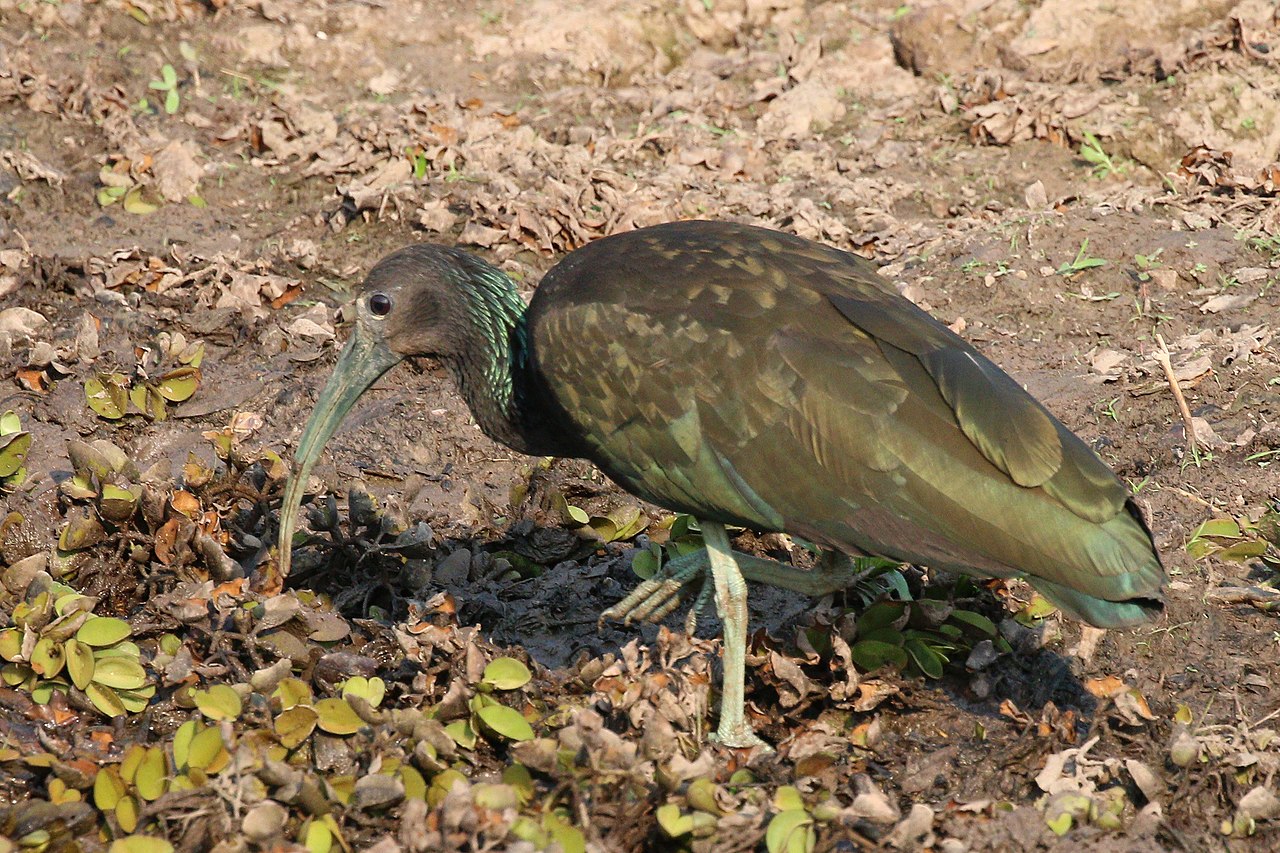
The green ibis, also known as the Cayenne ibis, is a wading bird in the ibis family Threskiornithidae. It is the only member of the genus Mesembrinibis.
Region
Central America and northern South America (Neotropics)
Typical Environment
Occurs from southern Central America through much of northern and central South America, including Honduras, Nicaragua, Costa Rica, Panama, Colombia, Venezuela, the Guianas, Ecuador (east of the Andes), Peru, Bolivia, and much of Brazil. Prefers forested rivers, oxbow lakes, swamps, and seasonally flooded varzea. It often uses shaded banks and backwaters under intact canopy. Local presence depends on availability of quiet, undisturbed wetlands with overhanging trees.
Altitude Range
Sea level to 1000 m
Climate Zone
Tropical
Ease of Keeping
Beginner friendly: 1/5
The green ibis, also called the Cayenne ibis, is the sole member of the genus Mesembrinibis. It favors shaded forested wetlands and is often most active at dawn and dusk, making it easy to overlook despite its size. Its plumage shows a deep green, bronze sheen in good light, helping it blend into riverine forest shadows.


Green ibis perched on log in Tortuguero National Park.
Temperament
shy and crepuscular
Flight Pattern
strong flier with steady wingbeats
Social Behavior
Usually solitary or in pairs while feeding, but may roost communally in trees over water. Nests are placed in trees, often over or near water, with a small stick platform. Clutches typically contain a few eggs, and both parents attend the young.
Migratory Pattern
Resident
Song Description
Vocalizations are harsh croaks and honking calls, often given at dawn and dusk from perches in trees. Flight calls are loud and carrying, but the species is generally quiet while foraging.
Plumage
Uniform dark plumage with a glossy green to bronzy sheen; appears blackish in poor light.
Diet
Feeds on small aquatic and semi-aquatic prey, including insects, crustaceans, mollusks, small fish, tadpoles, and frogs. It probes soft mud and shallow water with its decurved bill and also picks prey from the surface. Foraging is often deliberate and methodical along shaded stream edges.
Preferred Environment
Shaded banks of forest streams, flooded forests, and quiet backwaters with overhanging vegetation. It frequently uses exposed roots, logs, and low branches as vantage points while scanning for prey.


