

The great horned owl, also known as the tiger owl or the hoot owl, is a large owl native to the Americas. It is an extremely adaptable bird with a vast range and is the most widely distributed true owl in the Americas. Its diet consists primarily of rabbits and hares, rats and mice, and voles; it remains one of the few regular predators of skunk. Hunting also includes rodents, larger mid-sized mammals, birds, reptiles, amphibians, and invertebrates.
Region
North, Central, and South America
Typical Environment
Great horned owls range from Alaska and Canada through the United States and Mexico into much of Central and South America. They inhabit woodlands, deserts, grasslands, wetlands, and urban and suburban areas, showing a strong preference for habitat edges and mosaics. They readily use human-altered landscapes, including farms, parks, and city green spaces. Nesting occurs in tree crotches, old raptor or corvid nests, cliff ledges, cacti, and even buildings. Their adaptability allows them to persist in both remote wilderness and densely settled regions.
Altitude Range
0–4000 m
Climate Zone
Other
Ease of Keeping
Beginner friendly: 1/5
The great horned owl is one of the most adaptable raptors in the Americas, occupying habitats from deep forests to cities. Its prominent ear tufts are feathers, not ears, and it has a powerful grip capable of subduing prey larger than itself. It is one of the few regular predators of skunks, likely aided by a weak sense of smell. Exceptional night vision and hearing make it a formidable nocturnal hunter.


Bubo virginianus nacurutu
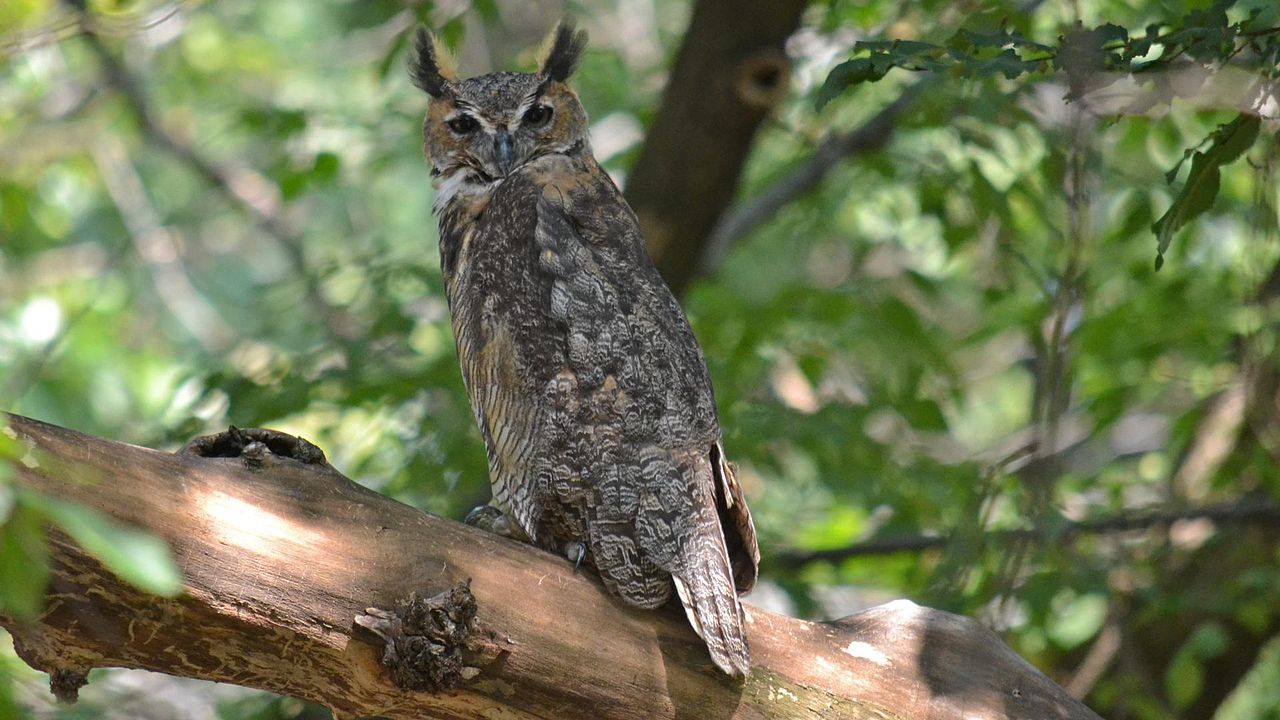
Great horned owl showing much of its camouflage pattern/color

The eyes of great horned owls are among the proportionally largest of terrestrial vertebrates.

Great horned owl wing

Great horned owl (Canada)

South American great horned owl (B. v. nacurutu) with its notably dark eyes

Northern great horned owl (B. v. subarcticus) in Manitoba

California great horned owl (B. v. pacificus) stretching, Bernal Hill Park, San Francisco

Coastal great horned owl (B. v. saturatus) at Grouse Mountain (North Vancouver, British Columbia)

Desert great horned owl (wet feathered) (B. v. pallescens) waiting out a rainstorm in the Mojave Desert

Mojave Desert, desert great horned owl (B. v. pallescens) on top of a Joshua tree in the summer of 2018

Illustrated comparison of a great horned owl, left, to its closest North American relative, the snowy owl

A great horned owl in a barn, Ontario, Canada

The same owl in flight

Desert great horned owl (B. v. pallescens) perched on the top of a Joshua tree in Landers, California

Composite photo of great horned owl flight phases

Great horned owls are typically sluggish and passive but aware during daytime.

His piercing yellow eyes and his ear tufts.

Closeup of great horned owl toes and talons

Painting by Louis Agassiz Fuertes depicting a great horned owl with one of its primary prey species, a snowshoe hare

A large portion of the great horned owl's food consists of small rodents, such as white-footed mice.

Black-tailed jackrabbits are an important food source for western great horned owls.

American coots are often a favored food source for great horned owls living near wetlands.
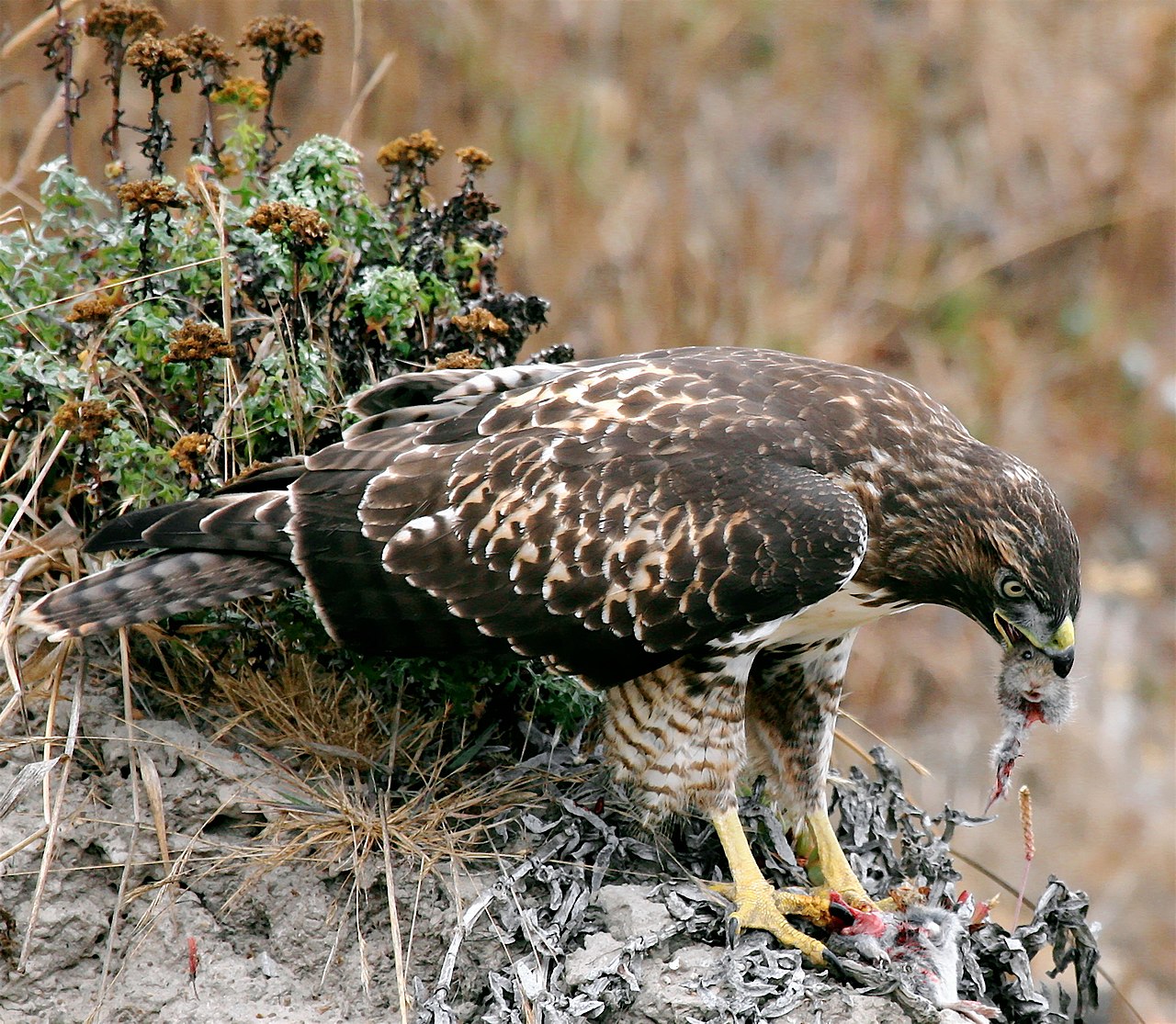
An immature red-tailed hawk eats a vole, one of the many prey items that feed both the competing hawks and great horned owls.

Nestlings of the Rocky Mountains great horned owl (B. v. pinorum) in New Mexico

Juvenile coastal great horned owls (B. v. saturatus) near Tule Lake National Wildlife Refuge, Oregon, United States

A brooding female common great horned owl (B. v. virginianus) on her nest in Louisiana

Adult common great horned owl (B. v. virginianus) with juvenile in nest near Madison, Wisconsin
Temperament
solitary and territorial
Flight Pattern
strong flier with deep, powerful wingbeats and silent glides
Social Behavior
Pairs are typically monogamous and defend territories year-round. They often nest early in the season, using old stick nests of hawks, crows, or herons, or natural sites like cliffs and cavities. Clutches usually contain 1–3 eggs, and the female incubates while the male provisions; young fledge after several weeks and may remain with parents into late summer.
Migratory Pattern
Partial migrant
Song Description
The classic call is a deep, resonant series of hoots, often rendered as hoo-hoo-hoo, hoo, hoo, with a stuttering rhythm. Duets between pairs are common, with females giving higher-pitched hoots. They also hiss, screech, and bill-snap when agitated.
Plumage
Heavily mottled brown and gray with fine barring on the underparts and a contrasting white throat patch. Broad facial disks with a dark border and prominent ear tufts give a 'horned' silhouette. Legs and feet are densely feathered down to the toes.
Diet
A versatile predator, it takes rabbits, hares, rats, mice, voles, and other small to mid-sized mammals. It regularly preys on skunks and will also take birds (including waterfowl and other raptors), reptiles, amphibians, and large insects. Hunting is typically from elevated perches using a sit-and-wait strategy, but it also quarters low over open ground. Prey is swallowed whole when small or torn into pieces with the bill.
Preferred Environment
Often hunts along habitat edges, field margins, riparian corridors, and clearings near woodlands. It readily uses fence posts, utility poles, and building ledges as vantage points in rural and urban settings. In deserts and grasslands, it exploits scattered trees, saguaro cacti, or rock outcrops for perches.


