

The gray-crowned rosy finch or gray-crowned rosy-finch is a species of passerine bird in the family Fringillidae native to Alaska, western Canada, and the north-western United States. Due to its remote and rocky alpine habitat it is rarely seen. There are currently six recognized subspecies. It is one of four species of rosy finches.
Region
Northwestern North America
Typical Environment
Breeds from coastal Alaska and the Aleutian Islands through interior Alaska and western Canada to high mountains of the northwestern United States. Prefers barren alpine habitats such as scree, talus, and rocky ledges near lingering snowfields, but in winter it uses open fields, shorelines, and human settlements. Nests are tucked into rock crevices, cliff holes, or building cavities in remote sites. In harsh weather, flocks may forage along beaches and tide wrack or around structures where wind concentrates seeds.
Altitude Range
Sea level to 4300 m
Climate Zone
Highland
Ease of Keeping
Beginner friendly: 1/5
This hardy finch breeds on windswept cliffs and talus slopes above treeline and often descends to valleys and coastlines in winter. It forms large, tight flocks in cold months and may gather around towns and fishing harbors in the Aleutians. Six subspecies are recognized, differing subtly in crown color and facial pattern. It is one of the few passerines that regularly nests in true alpine conditions in North America.


Female - Sandia Peak - New Mexico
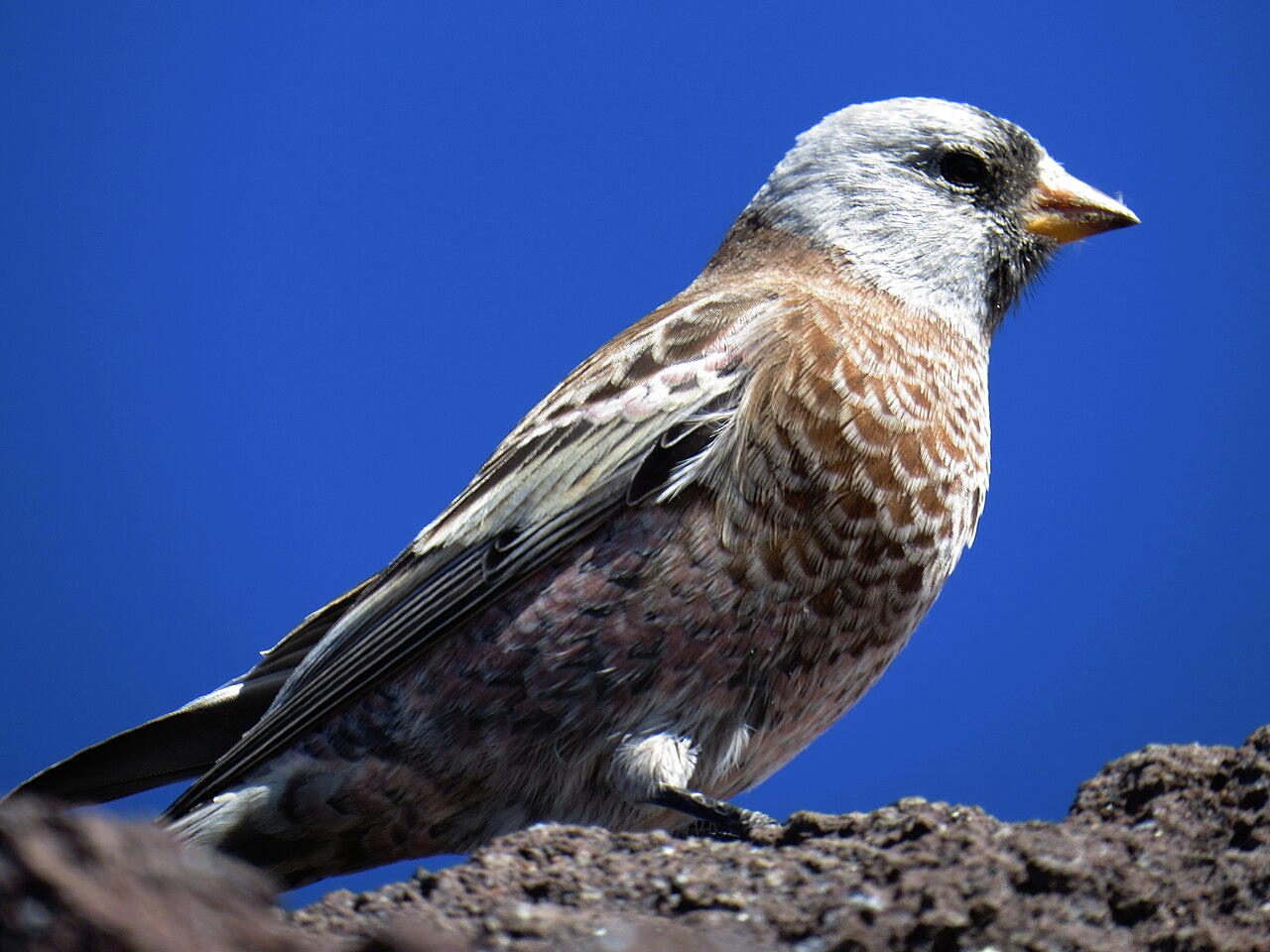
Gray-crowned rosy finch L. t. littoralis - Mount Adams, Washington
Temperament
social and active
Flight Pattern
strong flier with rapid wingbeats; often undulating over open slopes
Social Behavior
Outside the breeding season it forms sizable, cohesive flocks that roam widely in search of food. Pairs are monogamous, nesting in cavities or crevices with well-concealed entrances. Both parents feed the young, and family groups may remain together into early winter.
Migratory Pattern
Partial migrant
Song Description
Song is a simple, scratchy warble interspersed with twitters. Calls include sharp cheep and buzzy tchew notes, often given in flight and within foraging flocks.
Plumage
Brownish body with rosy or pink suffusion on the wings, rump, and lower belly; gray crown and nape with a darker forehead and throat. Feathers are smooth and sleek, appearing slightly frosted in worn plumage.
Diet
Feeds on windblown seeds of grasses, sedges, and alpine forbs, often gleaned from bare ground and the edges of melting snowfields. Insects such as flies, beetles, and caterpillars become important during the breeding season. In winter it also scavenges spilled grain and seeds around human activity and shorelines.
Preferred Environment
Forages on rocky alpine slopes, talus, and snowfield margins in summer. In winter it uses coastal beaches, tide wrack, open fields, and town edges where food concentrates and snow cover is reduced.


