
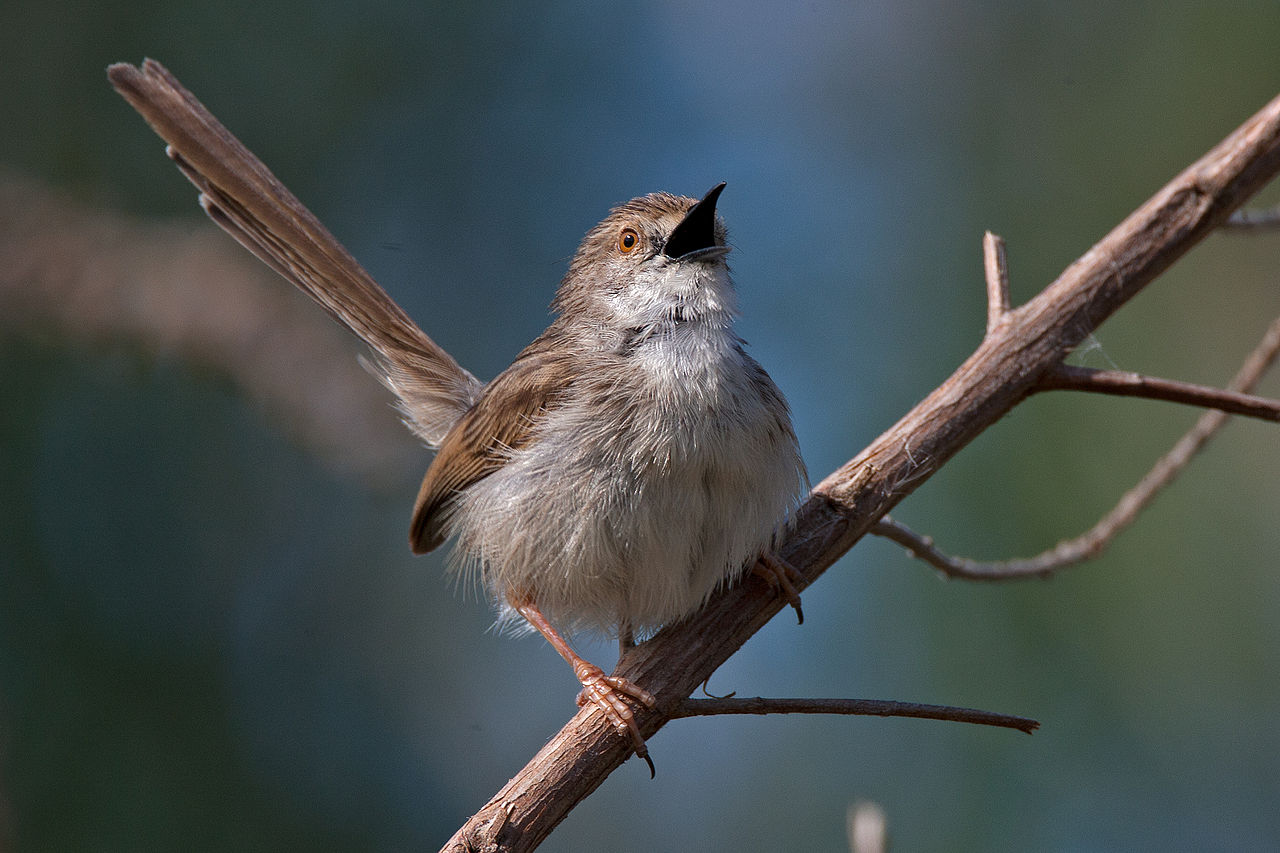
The graceful prinia is a small warbler. This prinia is a resident breeder in northeastern Africa and southern Asia, from Egypt and Somalia east to Saudi Arabia, where it is sometimes called streaked wren-warbler.
Region
Northeast Africa, Levant, and Arabian Peninsula
Typical Environment
Found from the Nile Valley and Horn of Africa through the eastern Mediterranean margins to the Arabian Peninsula. It inhabits dry scrub, tamarisk thickets, reedbeds along wadis and irrigation canals, and edges of cultivated lands. The species tolerates human-modified landscapes where shrubs and grasses remain, including gardens and oasis margins. It avoids dense closed forests and the most barren open deserts, favoring patchy cover near water or cultivation.
Altitude Range
Sea level to 1500 m
Climate Zone
Arid
Ease of Keeping
Beginner friendly: 2/5
Graceful prinias are tiny, active warblers that keep their long tails cocked and often flicked as they move through low scrub. They deliver a loud, repetitive tinkling song from exposed perches like reed tops or thorn bushes. The species favors semi-arid habitats and has several subspecies; parts of its former range have been split by some authorities into the closely related Delicate Prinia.


Eggs of Prinia gracilis palaestinae MHNT
Temperament
active and skulking
Flight Pattern
short rapid wingbeats; low, bouncing flights between shrubs
Social Behavior
Usually seen singly, in pairs, or small family groups. Nests are neat, deep cup structures placed low in dense shrubs or grasses, with clutches typically of 3–5 eggs. Pairs defend small territories during the breeding season but may roam more widely at other times.
Migratory Pattern
Resident
Song Description
Song is a loud, repetitive tinkling or trilling series delivered from exposed perches, often continuing for long bouts. Calls include sharp ticks and thin tsee notes used for contact within pairs.
Plumage
Fine-streaked brown to grey-brown upperparts with a paler, warm buff wash below; breast lightly streaked in many populations. Long, graduated tail often held cocked, with dark barring and pale or white tips. Feathers are soft and fairly loose, giving a slightly fluffy look in wind.
Diet
Primarily consumes small insects and other arthropods such as beetles, caterpillars, aphids, and spiders. It gleans prey from grass stems, seed heads, and thorny shrubs, and will make short sallies to snatch flushed insects. Occasionally takes small seeds, especially outside the breeding season when insect availability is lower.
Preferred Environment
Feeds in dense low vegetation—reeds, tamarisk, acacia scrub, and weedy field margins. Often forages along irrigation ditches, wadis, and hedgerows where cover and insect life are abundant.


