
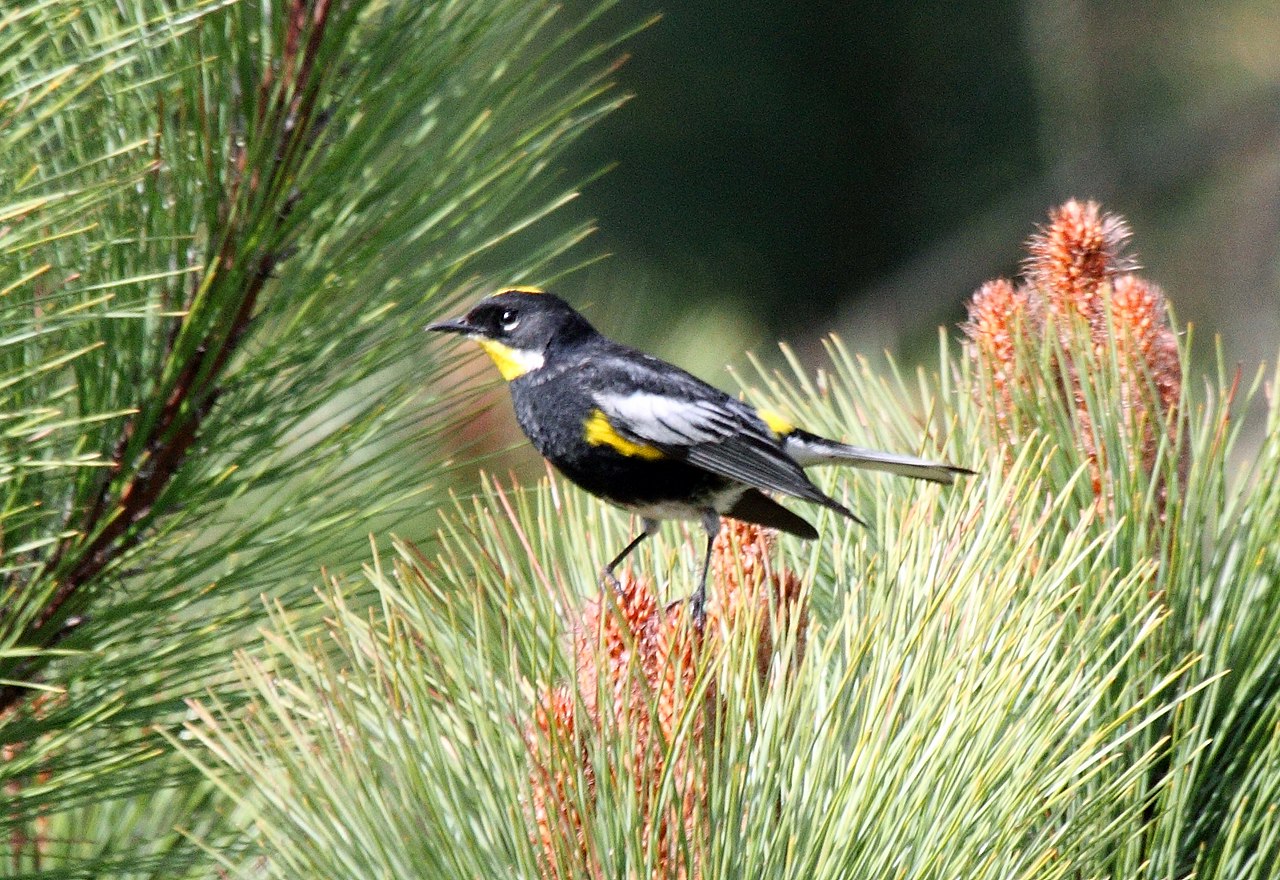
Goldman's warbler is a songbird species in the New World warbler family (Parulidae). It is found in Mexico and Guatemala.
Region
Mesoamerican Highlands (Guatemala and Chiapas, Mexico)
Typical Environment
Occurs mainly in montane pine, pine–oak, and fir forests, as well as forest edges and semi-open highland habitats. It favors mature stands with a mix of conifers and broadleaf trees, but also uses second-growth and clearings with scattered trees. In the nonbreeding season it remains in similar habitats at slightly lower elevations. It typically keeps to mid- to upper-canopy levels while foraging.
Altitude Range
1800–3600 m
Climate Zone
Highland
Ease of Keeping
Beginner friendly: 1/5
Often treated as part of the Yellow-rumped Warbler complex, Goldman's warbler is sometimes recognized as a distinct species restricted to the highlands of southern Mexico and Guatemala. Males show a darker mask and richer coloration than nearby Audubon's warblers, but retain the classic yellow rump. It forages actively in pine–oak canopies and frequently joins mixed-species flocks. Its limited range makes intact montane forest especially important for its persistence.
Temperament
social and active
Flight Pattern
short rapid wingbeats with agile, twisting foraging flights
Social Behavior
Frequently joins mixed-species flocks of highland songbirds while foraging. Pairs form in the breeding season, with cup nests placed in conifers or dense shrubs. Both sexes defend territories near the nest, and adults engage in active insect-gleaning to provision young.
Migratory Pattern
Resident
Song Description
A sweet, buzzy warble of short phrases that rise and fall, reminiscent of Audubon's Yellow-rumped Warbler but slightly thinner and drier in tone. Calls include a high, sharp tsiip used in contact and alarm.
Plumage
Compact warbler with crisp contrasts; males show a dark mask and upperparts with clean wing bars and a bright yellow rump. Underparts are grayish with variable black on the breast and flanks; throat typically yellow. Females and immatures are duller, with softer gray-brown tones and paler yellow highlights.
Diet
Primarily small insects and other arthropods gleaned from needles, leaves, and twigs. It also sallies short distances to snatch flying insects. Seasonally it supplements its diet with small fruits and berries, especially when insect availability is low.
Preferred Environment
Feeds mostly in mid to upper canopy of pine, oak, and fir, often along forest edges and sunlit gaps where prey is more active. Will forage lower in shrubby openings and along trails and clearings.


