

The European shag or common shag is a species of cormorant. It is the only member of the monotypic genus Gulosus. It breeds around the rocky coasts of western and southern Europe, southwest Asia and north Africa, mainly wintering in its breeding range except for the northernmost birds. In Britain this seabird is usually referred to as simply the shag. The scientific genus name derives from the Latin for glutton. The species name aristotelis commemorates the Greek philosopher Aristotle.
Region
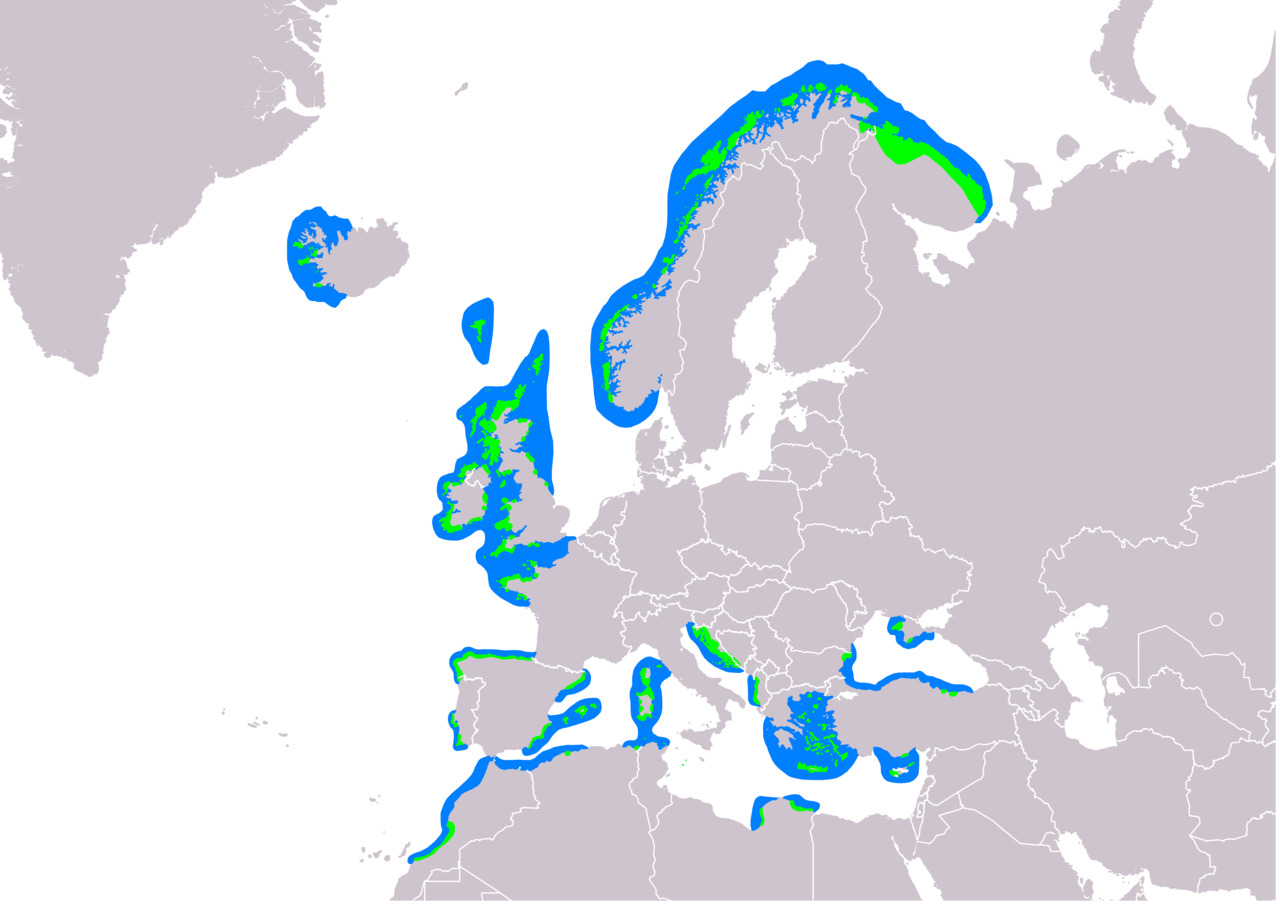
Northeast Atlantic and Mediterranean coasts
Typical Environment
Breeds on rocky islands and sea cliffs from Iceland and Norway south through the British Isles and Atlantic coasts of Western Europe, into the Mediterranean and Black Sea, and along parts of North Africa and southwest Asia. Prefers rugged coastlines with offshore stacks, sea caves, and ledges for nesting. Forages inshore over reefs, kelp forests, and tidal races, rarely venturing far from land. It seldom occurs inland and typically remains in saline waters year-round.
Altitude Range
Sea level to 300 m
Climate Zone
Temperate
Ease of Keeping
Beginner friendly: 1/5
The European shag is a coastal cormorant and the sole member of the genus Gulosus. It is a powerful wing-propelled diver that hunts fish close to rocky shores and kelp beds, often diving to notable depths. In the breeding season adults develop a short crest and a vivid emerald eye, making colonies striking to see. Most populations stay near their breeding cliffs year-round, though northern birds may move south in winter.


Shag in flight


Temperament
social and colonial near breeding sites, wary at close approach
Flight Pattern
low, direct flight with rapid wingbeats close to the water
Social Behavior
Breeds in dense colonies on cliffs and rocky islets, nesting on ledges or in crevices with seaweed and vegetation. Pairs are generally monogamous within a season, with both sexes incubating and feeding young. Outside the breeding season, birds often roost communally on shoreside rocks and stacks.
Migratory Pattern
Partial migrant
Song Description
Usually silent at sea, but at colonies it gives guttural croaks, grunts, and hissing calls during displays and territorial interactions. Vocalizations are harsh and low-pitched, carrying over the noise of surf.
Plumage
Glossy black with an oily green sheen; adults in breeding season show a short forward-curving crest. Juveniles are browner with paler underparts.
Diet
Primarily piscivorous, taking small to medium-sized benthic and demersal fish such as sandeels, gobies, and wrasse. It pursues prey underwater using strong wing strokes and can dive repeatedly to significant depths. Occasional invertebrates like small crustaceans are taken incidentally.
Preferred Environment
Feeds close inshore over rocky reefs, kelp beds, and around headlands with strong tidal flow. Often forages singly or in small groups, staying near colony waters.


