

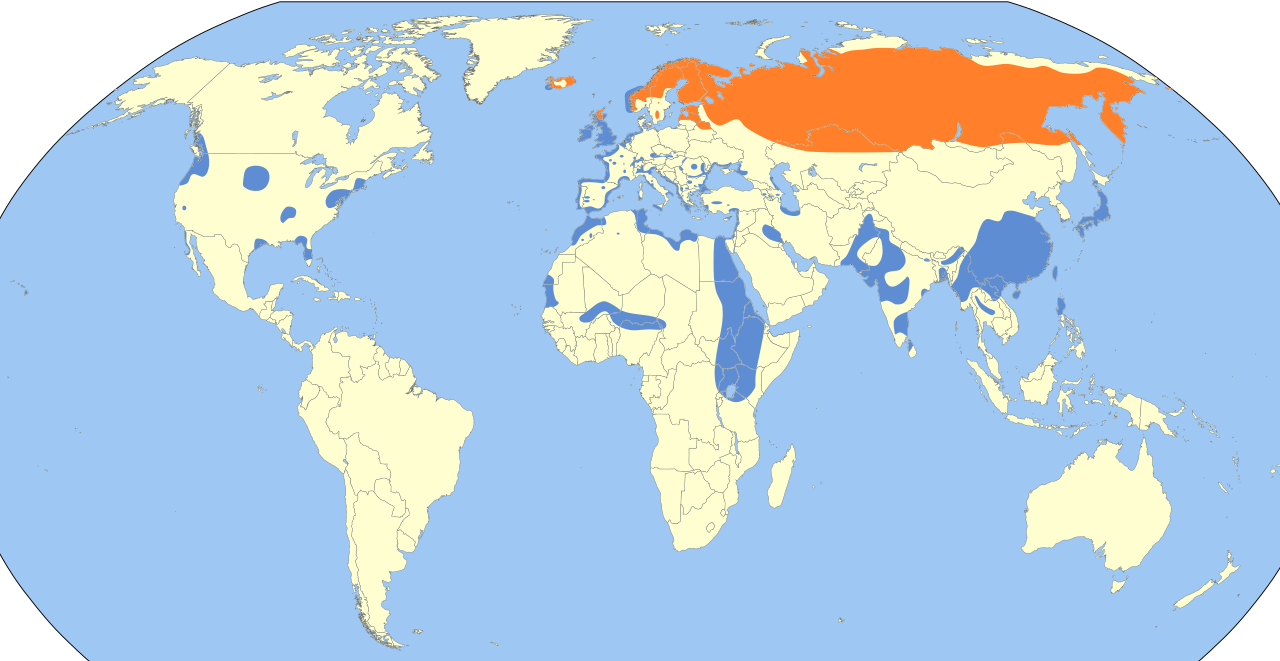
The Eurasian wigeon or European wigeon, also known as the widgeon or the wigeon, is one of three species of wigeon in the dabbling duck genus Mareca. It is common and widespread within its Palearctic range.
Region
Palearctic
Typical Environment
Breeds across northern Europe and Asia on shallow lakes, marshes, and boggy tundra edges with ample emergent vegetation. Outside the breeding season it uses coastal estuaries, brackish lagoons, large lakes, flooded pastures, and urban park waters. Wintering birds often feed on short-cropped grasslands and intertidal flats. Vagrants occur to North America and elsewhere during migration.
Altitude Range
0–2000 m
Climate Zone
Temperate
Ease of Keeping
Beginner friendly: 2/5
The Eurasian wigeon is a common Palearctic dabbling duck, one of three wigeon species. Males give a distinctive clear whistled ‘whee-oo’ that often betrays flocks on open water or grazing fields. In winter they frequently graze short grass like geese, gathering in large mixed flocks with other ducks. Small numbers regularly reach North America as vagrants during migration.




Temperament
social and wary
Flight Pattern
strong flier with rapid wingbeats
Social Behavior
Forms large, cohesive flocks outside the breeding season, often mixing with other dabbling ducks. Pairs typically form on the wintering grounds; nesting occurs on the ground near water, concealed by grasses or low scrub. The female incubates while the male departs early in the breeding season.
Migratory Pattern
Seasonal migrant
Song Description
The male gives a clear, ringing two-note whistle, often rendered as ‘whee-oo’, that carries over long distances. The female utters a lower, gruff quack or growl, especially when disturbed.
Plumage
Male with finely vermiculated grey body, pinkish breast, black rear, and a chestnut head with a creamy-buff forehead; broad white patch in the forewing visible in flight. Female is mottled warm brown with a more subdued pattern and lacks the bold head colors. Both sexes show a dark green speculum edged with white.
Diet
Primarily eats aquatic plants, grasses, and sedges, often grazing on land like geese. Also takes seeds, algae, and invertebrates such as small mollusks and insects, especially in the breeding season. Feeds by dabbling and up-ending rather than diving.
Preferred Environment
Shallow freshwater and brackish wetlands, flooded meadows, and coastal estuaries. Frequently feeds on short turf near water bodies, including agricultural fields and park lawns.


