

The Eurasian woodcock is a medium-small wading bird found in temperate and subarctic Eurasia. It has cryptic camouflage to suit its woodland habitat, with reddish-brown upperparts and buff-coloured underparts. Its eyes are set far back on its head to give it 360-degree vision and it probes in the ground for food with its long, sensitive bill, making it vulnerable to cold weather when the ground remains frozen.
Region
Temperate and subarctic Eurasia
Typical Environment
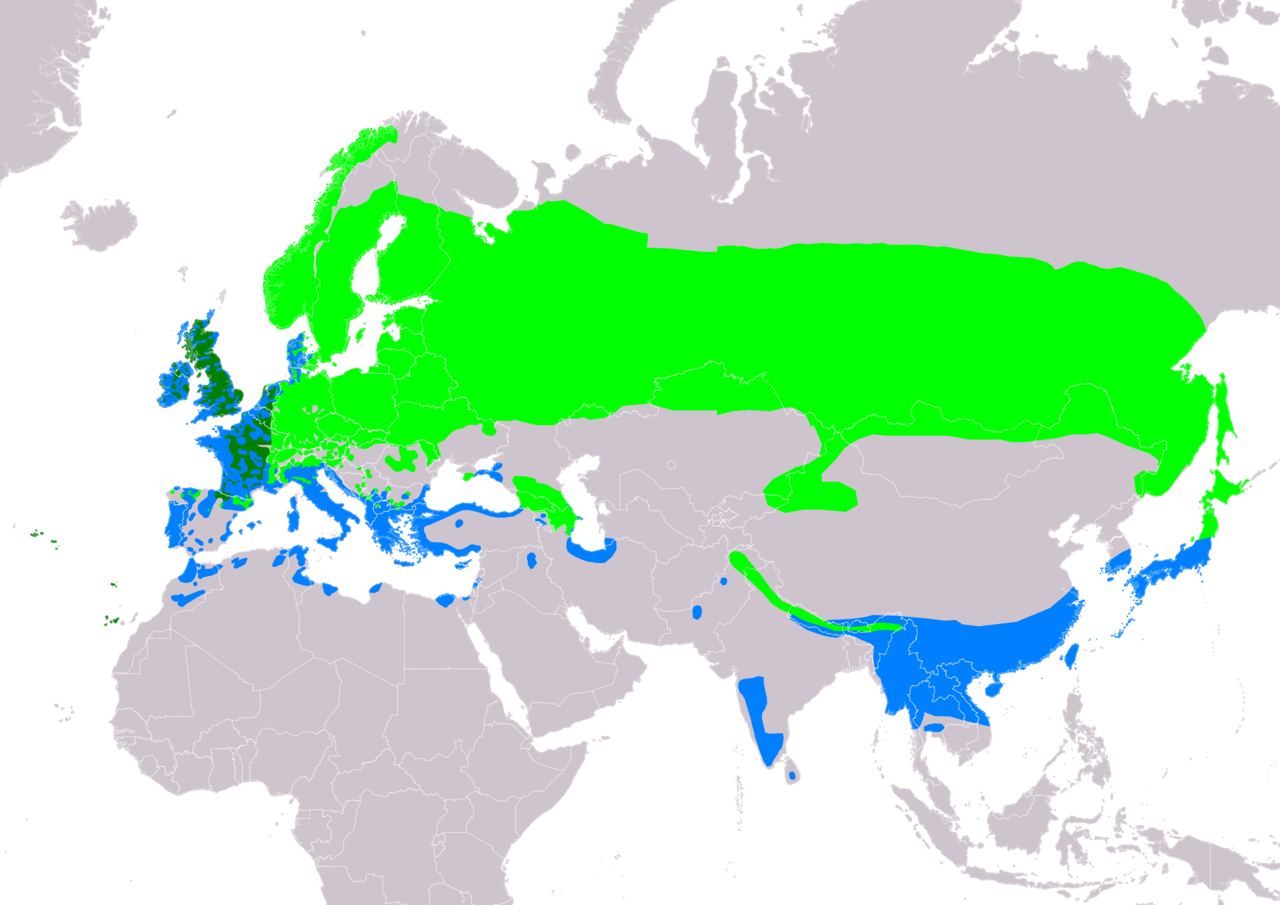
Breeds across boreal and temperate forests from the British Isles and Scandinavia through Russia to northern Asia, wintering farther south into southern Europe, North Africa, the Middle East, and parts of East Asia. Prefers damp deciduous and mixed woodlands with dense understorey and soft leaf-litter for probing. Often uses woodland rides, clearings, and forest edges, and may feed in adjacent pastures or fields at night. During migration it can occur in parks, orchards, hedgerows, and scrubby habitats.
Altitude Range
Sea level to 2000 m
Climate Zone
Temperate
Ease of Keeping
Beginner friendly: 1/5
The Eurasian woodcock is a cryptically camouflaged woodland wader whose eyes sit high and far back on the head, giving nearly 360-degree vision. It performs a distinctive dusk and dawn display flight called ‘roding’, with grunts and wheezy calls over forest edges. Its long, sensitive bill has a flexible tip for probing soil, making it vulnerable during hard frosts when the ground freezes. It is a traditional gamebird in parts of Europe but remains widely distributed.


Eurasian Woodcock, Mangpoo, Darjeeling, West Bengal

Habitat: Białowieża National Park, Poland

Eggs, Collection Museum Wiesbaden, Germany

Eurasian woodcock at Doi Inthanon National Park, Chiang Mai, Thailand
Temperament
secretive and crepuscular
Flight Pattern
short rapid wingbeats with swift zig-zag escape; steady display flights at dusk
Social Behavior
Generally solitary outside the breeding season. Males perform roding display flights along woodland edges to attract females and may mate with multiple females, while females alone incubate and rear the chicks. Nests are shallow scrapes on the forest floor, and chicks are precocial and mobile soon after hatching.
Migratory Pattern
Seasonal migrant
Song Description
During roding, males give a characteristic sequence of hoarse grunts followed by a thin wheeze as they pass overhead. Otherwise largely silent, with soft contact calls and alarm croaks when flushed.
Plumage
Heavily mottled and barred rufous-brown, buff, and black upperparts with finely barred buff underparts; exceptionally cryptic against leaf litter.
Diet
Primarily feeds on earthworms, insect larvae, beetles, and other soil-dwelling invertebrates, supplemented by small mollusks and spiders. Uses its long, sensitive bill to probe soft ground, detecting prey by touch. The bill tip can flex to seize prey beneath the surface. Feeding success declines during prolonged frosts when the soil is frozen.
Preferred Environment
Damp, humus-rich leaf litter in deciduous or mixed woods, especially near rides, edges, and clearings. Often ventures into pastures and fields at night to feed where soil is soft.


