

The orange-headed thrush is a bird in the thrush family.
Region
South and Southeast Asia
Typical Environment
Occurs from the Indian Subcontinent through the Himalayan foothills and south India to Sri Lanka, and eastward through Myanmar, Thailand, Malaysia, and Indonesia. It favors moist evergreen and semi-evergreen forests, bamboo thickets, and shaded plantations, as well as wooded gardens. Typically keeps to dense undergrowth and forest floor, especially near streams and in ravines. Some populations are resident while others move seasonally to lower elevations or more southern latitudes.
Altitude Range
Sea level to 2200 m
Climate Zone
Tropical
Ease of Keeping
Beginner friendly: 2/5
The orange-headed thrush is a striking member of the thrush family known for its rich, fluty song and shy, ground-foraging habits. It often remains hidden in dense understory, flicking leaves to uncover prey. Several subspecies vary in the tone of the upperparts and the prominence of wingbars. It adapts well to well-wooded gardens and parks where suitable cover and leaf litter are available.


Orange-headed thrush from Bangladesh

Orange-headed thrush ssp. cyanotus in Sanjay Gandhi National Park, India
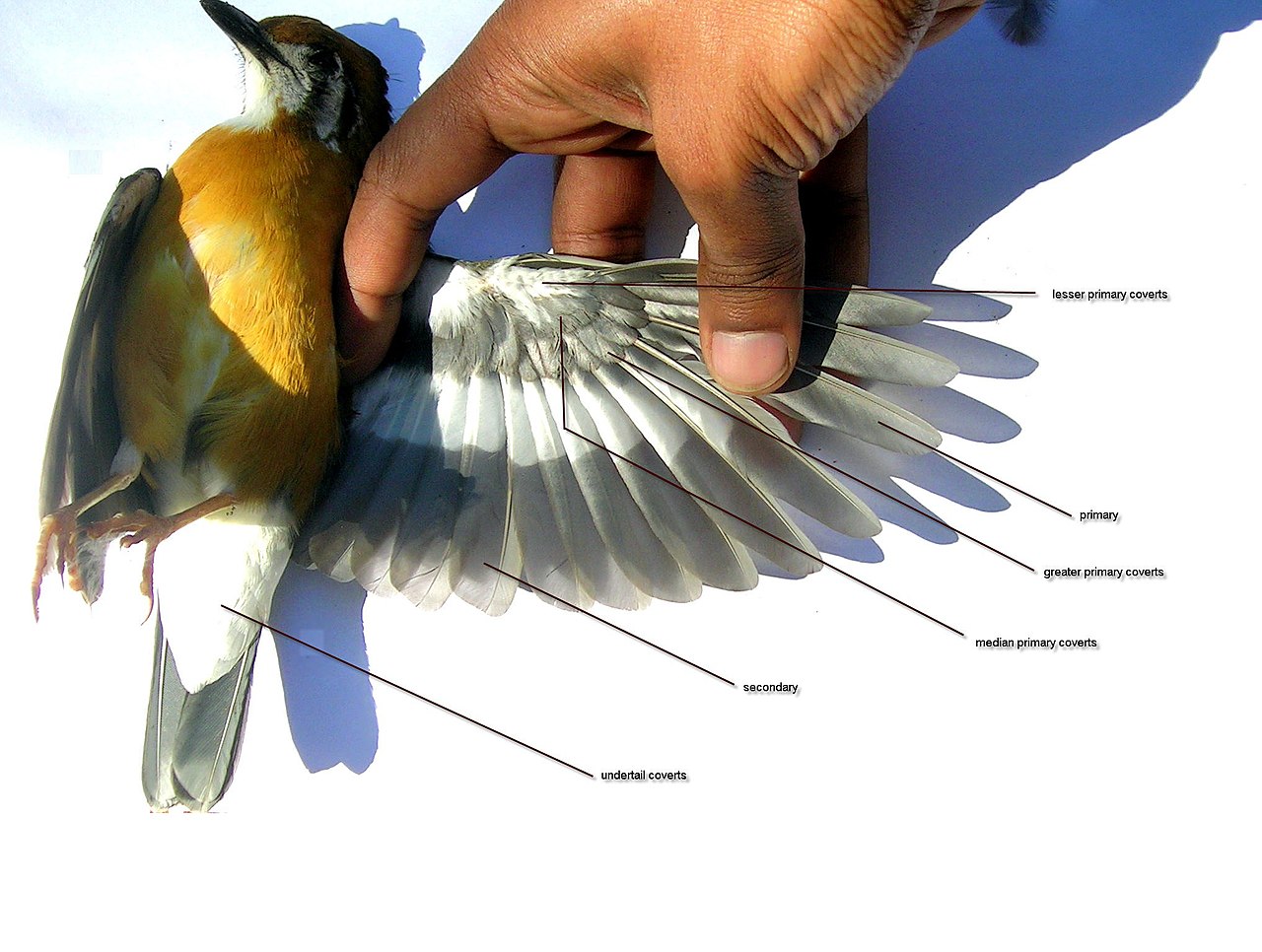
Underwing of G. c. cyanota


Temperament
shy and skulking
Flight Pattern
short rapid wingbeats, low and direct through understory
Social Behavior
Generally solitary or in pairs, defending small territories during the breeding season. Builds a neat cup nest of twigs, roots, and moss placed low in a tree or shrub. Clutch is typically 2–4 eggs, and both parents feed the young. Outside breeding, may join loose mixed feeding flocks in suitable habitat.
Migratory Pattern
Partial migrant
Song Description
Song is rich, fluty, and melodious, delivered from a concealed perch, with clear whistles and variable phrases. Calls include sharp, thin seep notes and soft contact chips, and the species may mimic fragments of other birds’ songs.
Plumage
Bright orange head, face, throat, and underparts with contrasting bluish-grey to olive-brown upperparts depending on subspecies and sex; wings often show distinct white wingbars. Females and immatures are duller and browner above with a slightly less vivid orange below. Plumage is smooth and neat, with a clean, unmarked orange face.
Diet
Feeds on insects, earthworms, snails, and other invertebrates gleaned from leaf litter. Also takes berries and soft fruits, especially when invertebrates are scarce. Forages by hopping and flicking leaves to expose hidden prey, picking items with quick jabs. Will visit fruiting shrubs and sometimes take fallen fruit.
Preferred Environment
Most often on shaded forest floors, along stream edges, and in dense understory with abundant leaf litter. In human-modified landscapes, uses well-vegetated parks and gardens with cover and damp soil.


