
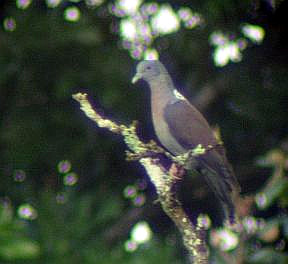
The eastern bronze-naped pigeon, also known as Delegorgue's pigeon, is a species of bird in the family Columbidae. It is found in Angola, Kenya, Malawi, Mozambique, South Africa, South Sudan, Tanzania, Uganda, Zambia, and Zimbabwe. It is part of the Turturoena subgenus. The species is named after the collector, Adulphe Delegorgue.
Region
East and Southern Africa
Typical Environment
Occurs from South Sudan and Uganda south through Kenya and Tanzania into Malawi, Mozambique, Zambia, Zimbabwe, and northeastern South Africa, with populations also in Angola. Favors moist evergreen and semi-evergreen forests, forest edges, riverine woodland, and well-wooded miombo. Often uses secondary growth and forest clearings with fruiting trees. Typically shy and keeps to dense canopy or midstory but will descend to the ground to drink or feed at fallen fruit.
Altitude Range
0–2500 m
Climate Zone
Tropical
Ease of Keeping
Beginner friendly: 2/5
Also called Delegorgue's pigeon, it is a shy forest pigeon recognized by the metallic bronze-green sheen on the back of its neck. It is part of the Turturoena subgenus and can be confused with the western bronze-naped pigeon, but differs in range and subtle plumage tones. Its low, booming coos often reveal its presence long before it is seen. The species honors the collector Adulphe Delegorgue.


C. d. delegorguei, male in front, female in the middle, and C. d. sharpei (behind)
Temperament
solitary and wary
Flight Pattern
fast, direct flight with strong whirring wingbeats
Social Behavior
Usually seen singly or in pairs; small loose groups may gather at fruiting trees. Builds a simple twig platform nest in dense foliage, typically a few meters above ground. Courtship involves bowing displays and soft cooing from a perch.
Migratory Pattern
Resident
Song Description
A series of deep, resonant hoots delivered at measured intervals, often described as mournful and owl-like. Calls carry far through forest, especially at dawn and dusk.
Plumage
Smooth, mostly slate-grey plumage with a vinous to purplish wash on the breast and a striking iridescent bronze-green patch on the nape. Wings and tail are dark grey with a subtle green gloss and a narrow darker subterminal tail band. Underparts darken toward the belly; the face is slightly paler grey.
Diet
Primarily consumes small fruits and berries, especially figs and other canopy fruits. Also takes seeds and drupes, and occasionally pecks at fallen fruit on the forest floor. Foraging is mostly in the canopy but it will visit lower strata when trees are fruiting.
Preferred Environment
Frequents fruiting trees along forest edges, clearings, and riparian corridors. Will feed quietly within dense foliage, moving between favored trees along habitual routes.


