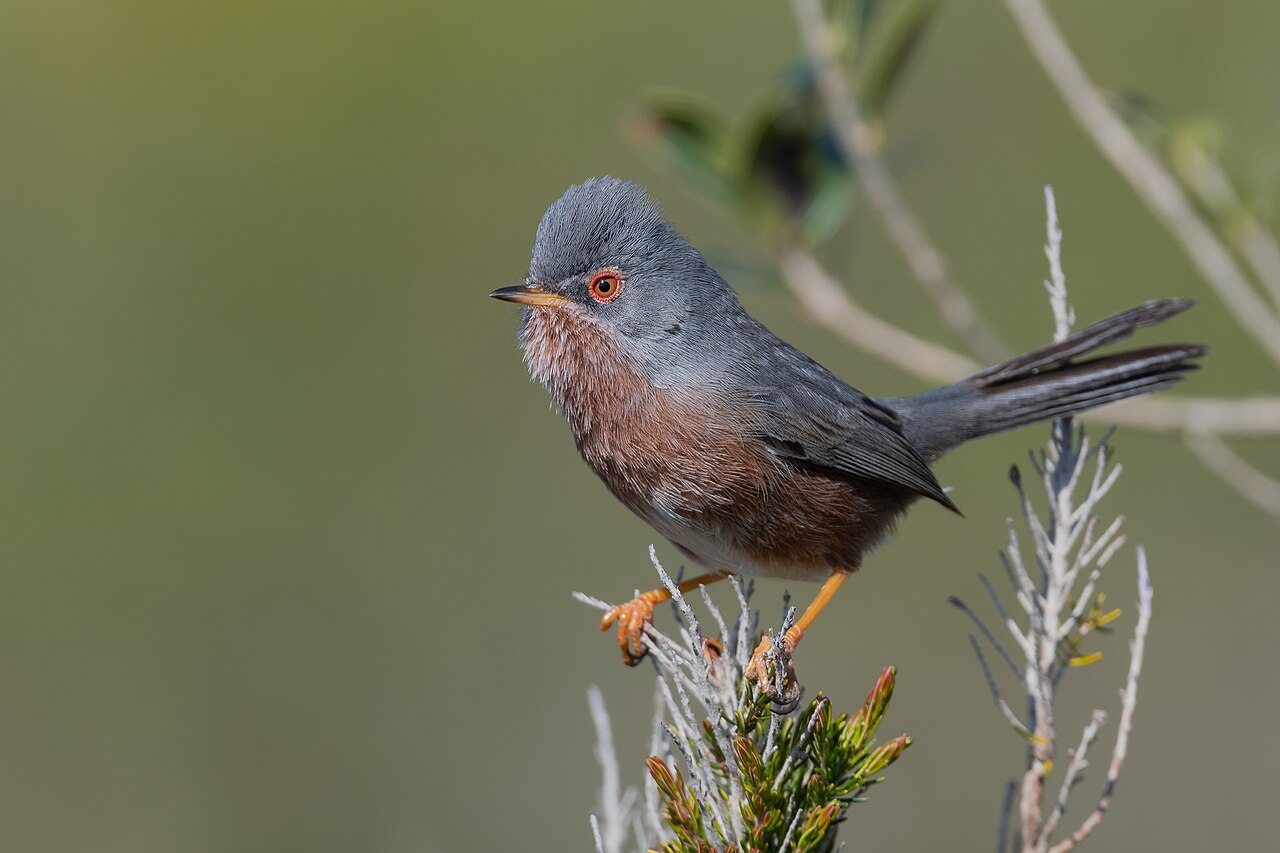
The dark-winged canastero, or Arequipa canastero, is a species of bird in the Furnariinae subfamily of the ovenbird family Furnariidae. It is found in Bolivia, Chile, and Peru.
Region
Andes Mountains
Typical Environment
Occurs from southern Peru (notably Arequipa and adjacent departments) south into western Bolivia and northern Chile. It inhabits arid to semi-arid montane scrub, rocky quebradas, and shrub-dotted slopes, often with cacti and scattered bushes. The species frequents ecotones along field margins and village outskirts where native scrub persists. It also uses the edges of high Andean shrublands and open Polylepis patches. Foraging typically occurs from ground level up through low to mid-level shrubs.
Altitude Range
1500–4200 m
Climate Zone
Highland
Ease of Keeping
Beginner friendly: 1/5
Also called the Arequipa canastero, this furnariid is adapted to arid Andean scrub and rocky slopes. It often carries its long, graduated tail cocked, flashing rufous tones as it moves through shrubs. Like many canasteros, it builds a bulky stick nest with a side entrance in dense bushes or cacti. Its dry trills and rattles carry surprisingly far in open terrain.


Temperament
shy and skulking
Flight Pattern
short rapid wingbeats, low and direct between shrubs
Social Behavior
Usually solitary or in pairs, maintaining territories in dense scrub. Nests are bulky twig structures placed within thorny bushes or cacti, with a side entrance. Breeding occurs in the austral spring–summer, and pairs communicate with trills and rattles while foraging.
Migratory Pattern
Resident
Song Description
Song is a fast, dry series of trills and rattling phrases that accelerate slightly. Calls include sharp chips and a harsh churr given when alarmed or in territorial encounters.
Plumage
Warm brown upperparts with faint streaking, contrasting darker wings with rufous edging, and a long, graduated tail showing rufous tones. Underparts are buffy to grayish with subtle shading. A pale supercilium and slightly decurved bill give a distinctive canastero profile.
Diet
Primarily feeds on arthropods such as beetles, caterpillars, ants, and spiders gleaned from foliage and ground litter. It picks prey from twig tips, probes into leaf clusters, and occasionally hawks short distances after flying insects. Plant material is taken rarely and opportunistically.
Preferred Environment
Forages within dense shrubs, cacti, and low brush on rocky slopes and ravines. It also uses roadside scrub and hedgerows near fields where cover is intact.