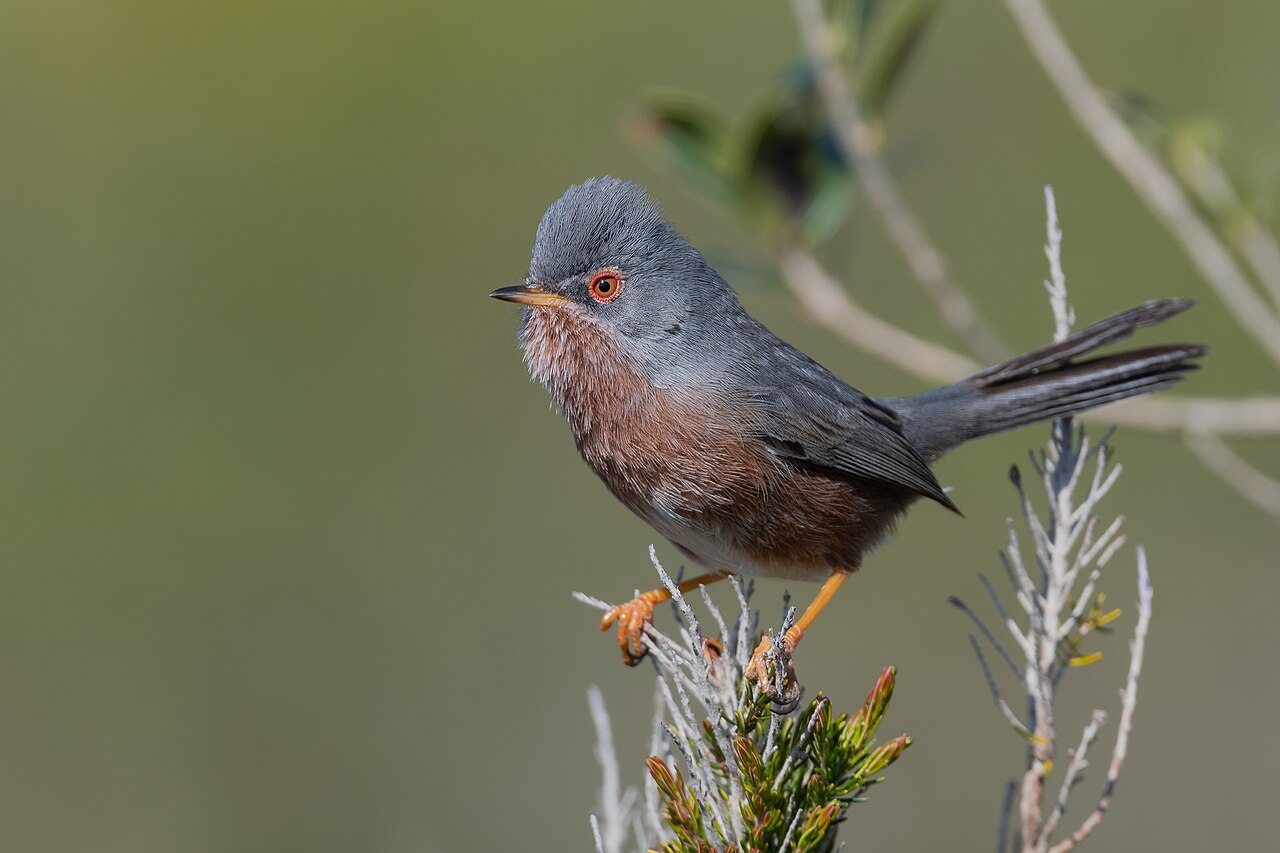
The dark-winged miner is a species of bird in the subfamily Sclerurinae, the leaftossers and miners, of the ovenbird family Furnariidae. It is endemic to Peru.
Region
Peruvian Andes
Typical Environment
Found on the western and central slopes of the Andes in Peru, primarily in open puna grasslands, stony flats, and sparsely vegetated montane scrub. It favors areas with extensive bare soil, rocky outcrops, and eroded banks suitable for burrow nesting. Overgrazed pastures and short turf are commonly used for foraging. It is typically encountered singly or in pairs, moving quickly over the ground.
Altitude Range
3000–4600 m
Climate Zone
Highland
Ease of Keeping
Beginner friendly: 1/5
The dark-winged miner is a small ground-dwelling ovenbird of high Andean open country, named for its habit of excavating nesting burrows in earthen banks. It runs quickly across rocky slopes and bare ground, flushing only for short, low flights that reveal distinctly darker wings. Pairs maintain territories year-round and often forage together. Its restricted range is entirely within Peru.


Temperament
solitary and territorial
Flight Pattern
short rapid wingbeats with low, undulating hops between perches or ground patches
Social Behavior
Usually seen alone or in pairs, maintaining territories throughout the year. Nests are excavated burrows in earthen banks or friable slopes, where the pair raises a small clutch. Courtship includes ground chases and display flights with soft calls.
Migratory Pattern
Resident
Song Description
Vocalizations include thin, high trills and brief series of clear whistles delivered from the ground or a low rock. Calls are sharp tik or tsip notes used during contact and alarm. The song is modest in volume and often given at dawn.
Plumage
Sandy-brown upperparts with pale whitish underparts and faint breast streaking; wings appear noticeably darker, especially in flight. Tail often rufous with a darker subterminal band; feathering is smooth and close. A pale supercilium contrasts with a duskier ear patch.
Diet
Primarily consumes ground-dwelling arthropods such as beetles, ants, termites, and spiders. It forages by running, pausing, and picking prey from the surface or probing soft soil and turf. Occasional small seeds or plant fragments may be taken incidentally.
Preferred Environment
Feeds in open, sparsely vegetated areas with abundant bare ground, rocky scree, and short grass. Often uses eroded banks, paths, and grazed puna flats where prey is exposed.