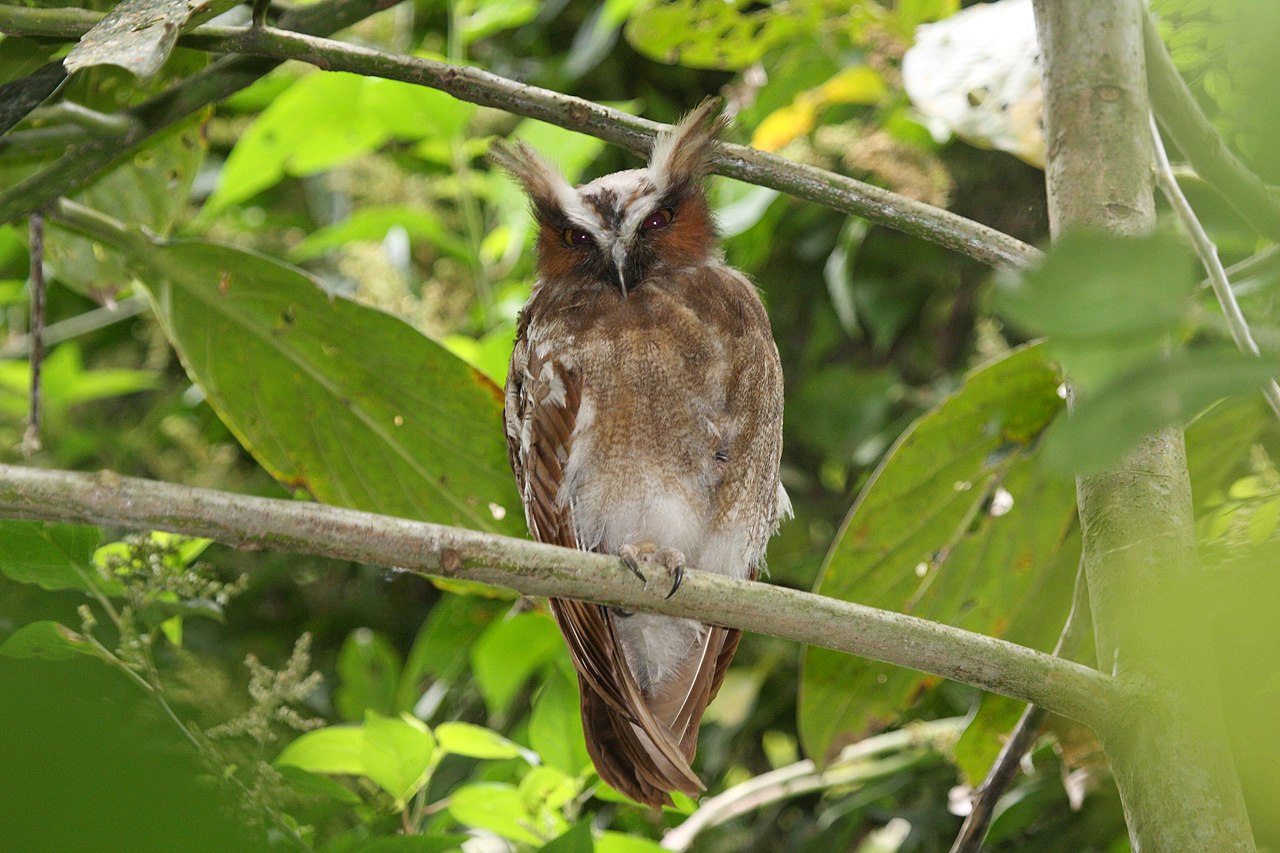
The crested jayshrike or crested shrikejay, formerly known as the crested jay, is a species of bird found in Brunei, Indonesia, Malaysia, Myanmar, and Thailand. It is the only member of the genus Platylophus and the family Platylophidae.
Region
Southeast Asia
Typical Environment
Occurs from southern Myanmar and western/southern Thailand through the Malay Peninsula and into Borneo, Sumatra, and nearby islands, including Brunei, Malaysia, and Indonesia. Favors primary and well‑structured secondary evergreen forests, often near streams and in tall, closed-canopy lowlands. It keeps to the mid‑story and subcanopy and avoids open habitats. Locally found in selectively logged forest if sufficient structure remains.
Altitude Range
Sea level to 1300 m
Climate Zone
Tropical
Ease of Keeping
Beginner friendly: 1/5
Also called the crested shrikejay, it is the sole living member of both its genus (Platylophus) and family (Platylophidae). It inhabits dense lowland forests where it can be secretive, but its loud, nasal calls often betray its presence. Its hefty, slightly hooked bill and bold crest give it a distinctive shrike‑like, jay‑like appearance.


At Jurong BirdPark, Singapore
Temperament
shy and skulking
Flight Pattern
short rapid wingbeats between trees
Social Behavior
Most often seen singly or in pairs, sometimes joining mixed-species flocks moving through the mid‑story. Likely monogamous; pairs maintain territories year-round in suitable forest. Nests are placed well above ground in dense foliage; both sexes participate in care, though details are poorly documented.
Migratory Pattern
Resident
Song Description
Vocalizations are loud, nasal yaps and scolding, jay-like calls that carry through the forest. It also gives harsher rattles and squeals, especially at dawn and when alarmed.
Plumage
Dark brown to chestnut-brown body with a darker, almost blackish head and a long, shaggy erectile crest; underparts are paler brown with slightly warmer tones.
Diet
Takes large insects such as beetles, orthopterans, cicadas, and caterpillars, along with spiders and other invertebrates. Will also consume small vertebrates on occasion and supplements its diet with fruits and berries. Forages methodically among leaves and twigs, sometimes sallying for disturbed prey.
Preferred Environment
Feeds in the subcanopy and mid‑story of primary and mature secondary evergreen forest, along forest edges with tall trees, and near streams. Avoids open ground and rarely descends to the forest floor.