

The cliff swallow or American cliff swallow is a member of the passerine bird family Hirundinidae, the swallows and martins. The generic name Petrochelidon is derived from the Ancient Greek petros meaning "stone" and khelidon (χελιδών) "swallow", and the specific name pyrrhonota comes from purrhos meaning "flame-coloured" and -notos "-backed".
Region
North America (breeding) and southern South America (wintering)
Typical Environment
Breeds widely across much of North America, from Alaska and Canada through most of the United States and into northern Mexico, wherever suitable vertical substrates and overhangs exist. Originally tied to natural cliffs, it now commonly uses bridges, culverts, buildings, and dams. During migration it occurs over open country, river corridors, and lakes, often in large flocks. In the nonbreeding season it winters in southern South America, frequenting open lowlands near water and agricultural areas.
Altitude Range
Sea level to 3500 m
Climate Zone
Temperate
Ease of Keeping
Beginner friendly: 1/5
Cliff swallows nest in dense colonies that can number into the thousands, building gourd-shaped mud nests under cliffs, bridges, and culverts. Their range expanded dramatically with the spread of human-made structures across North America. They often engage in cooperative behaviors at colonies and are known for occasional conspecific brood parasitism (laying eggs in neighbors’ nests). They are agile aerial insectivores that feed high over open areas and water.


Juvenile cliff swallow
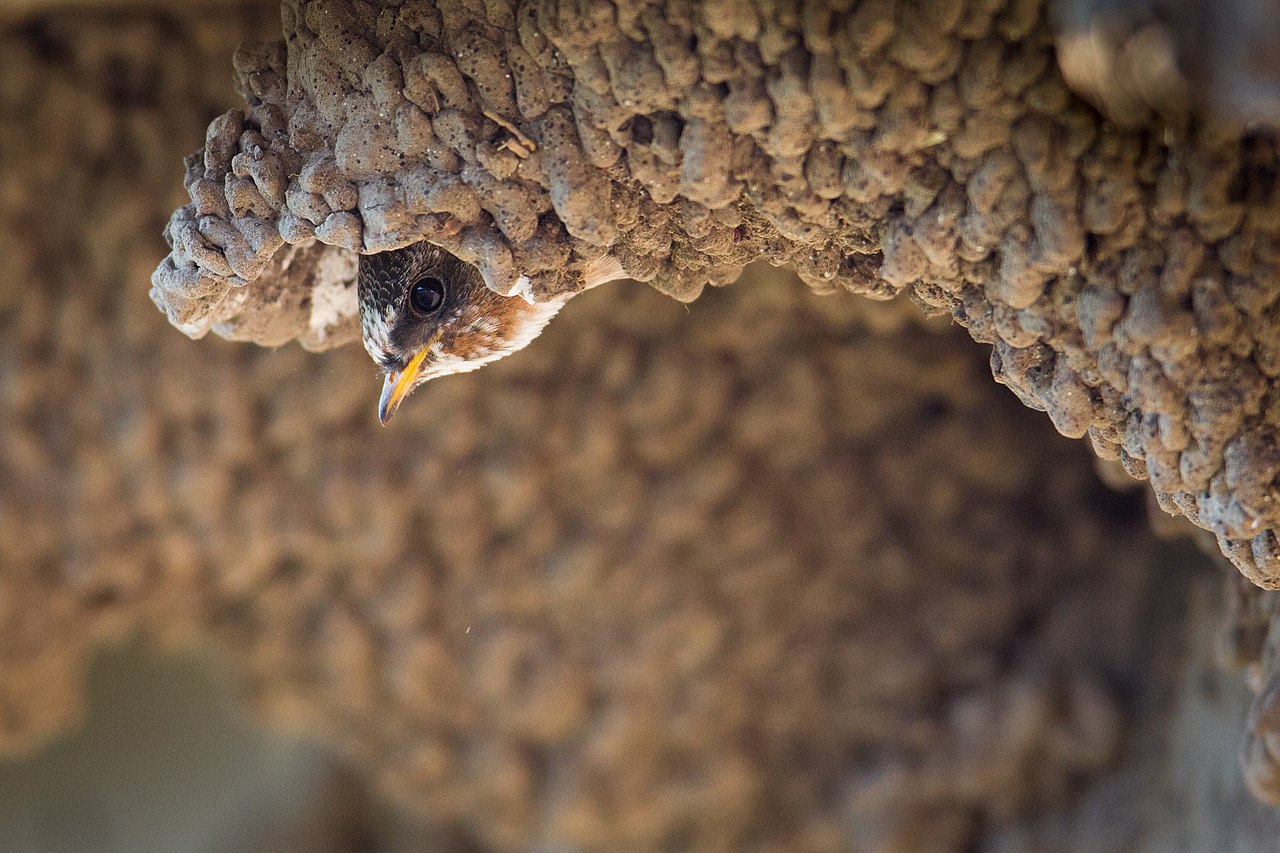
Juvenile cliff swallow in a gourd-shaped mud nest

Petrochelidon pyrrhonota 1894

Petrochelidon pyrrhonota – California, US

In-flight and mid-air feeding of juvenile cliff swallow by an adult


Collecting mud at a puddle, Prince Edward Point, Ontario

Mate delivering food to cliff swallow nest

A cliff swallow nest occupied by a house sparrow
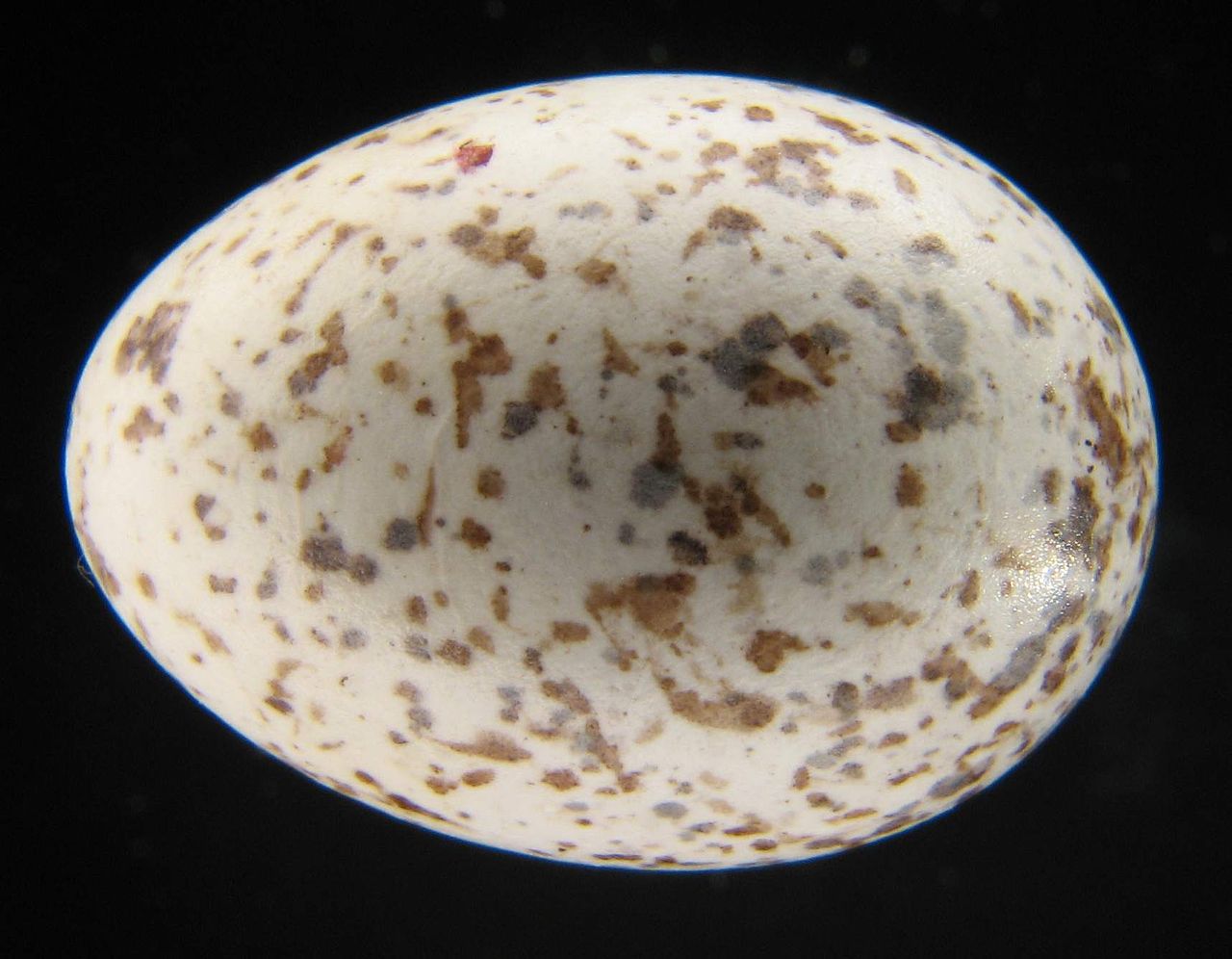
Cliff swallow egg
Temperament
social and active
Flight Pattern
strong flier with rapid, agile wingbeats and swift glides
Social Behavior
Highly colonial, with close-spaced mud nests attached to vertical surfaces; both sexes gather pellets of mud to build and repair nests. Pairs are monogamous within a season and show some site fidelity to colonies. Intra-colony interactions include cooperative information sharing about food and occasional egg-dumping into neighbors’ nests.
Migratory Pattern
Seasonal migrant
Song Description
A mix of squeaky, chattering notes and buzzy rattles, often given in a constant chorus at colonies. Contact calls include sharp chips and soft, rolling trills used to keep flock cohesion in flight.
Plumage
Compact swallow with a squared tail, iridescent dark blue back, pale or buffy rump, pale underparts, and a chestnut throat. The forehead is typically pale to whitish, contrasting with a darker crown and mask. Wings are long and pointed; overall appearance is blockier than similar swallows.
Diet
Feeds almost entirely on flying insects such as flies, beetles, true bugs, wasps, and winged ants. Captures prey on the wing, often at considerable heights when conditions allow. Will concentrate over water, fields, and roads during insect hatches or after weather fronts concentrate insects.
Preferred Environment
Open airspace over rivers, lakes, wetlands, grasslands, and agricultural fields, as well as around bridges and culverts. Often forages in mixed-species flocks with other swallows.


