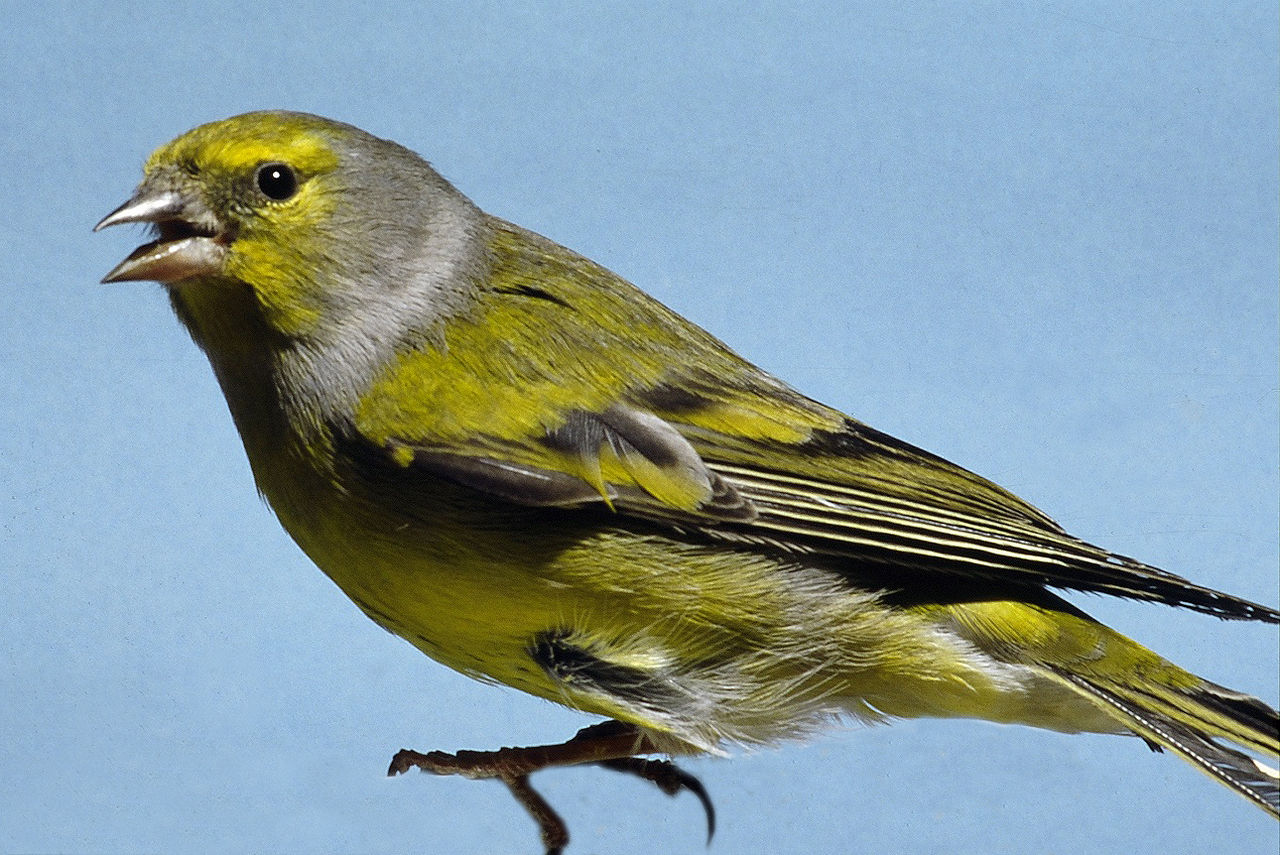
The cirl bunting, , is a passerine bird in the bunting family Emberizidae, a group now separated by most modern authors from the finches, Fringillidae.
Region
Southern and Western Europe (Western Palearctic)
Typical Environment
Found from the Iberian Peninsula and France through Italy and the Balkans, locally reaching southern England and coastal zones around the Mediterranean. Prefers mixed low-intensity farmland with hedgerows, scrubby field margins, and scattered trees. Frequently uses vineyards, orchards, and gorse or broom scrub, avoiding dense forests and very open treeless plains. In Britain it is most associated with coastal farmland and sheltered south-facing slopes.
Altitude Range
Sea level to 1500 m
Climate Zone
Temperate
Ease of Keeping
Beginner friendly: 1/5
The cirl bunting is a small passerine of open farmland and hedgerows across southern Europe, with a stronghold in Mediterranean landscapes. Males are striking, with a yellow supercilium and black mask and throat, while females are more streaked and subdued. In the UK it declined sharply due to agricultural intensification but has rebounded locally thanks to targeted conservation and habitat management. It often forages on weedy stubbles in winter and switches to insects for chick-rearing in summer.


Emberiza cirlus - MHNT

Cuculus canorus canorus in a spawn of Emberiza cirlus - MHNT

Frontispiece of the Ornithological Dictionary, 1802, showing a male cirl bunting. George Montagu discovered the species near his home in Kingsbridge, Devon, still its British stronghold.
Temperament
wary and territorial
Flight Pattern
short rapid wingbeats with an undulating glide
Social Behavior
Breeds in scattered pairs holding small territories centered on dense hedges or scrub. The cup nest is placed low in shrubs or thick hedgerows; clutches typically contain 3–4 eggs and pairs may raise multiple broods. Outside the breeding season it may form small loose flocks, often joining other buntings at favored feeding sites.
Migratory Pattern
Resident
Song Description
The male delivers a short, rattling series of metallic notes from a prominent perch such as a hedge top or small tree. The song is brisk and clipped, less drawn-out than that of the yellowhammer, and repeated at intervals during the breeding season.
Plumage
Males show a boldly patterned head with a black mask and throat, yellow supercilium and chin, olive-brown upperparts, and streaked flanks; the rump often has a warm chestnut tone. Females are more uniformly streaked brown with a pale, less contrasting head pattern. Both sexes have fine streaking on the breast and flanks with greener-olive hues on the underparts.
Diet
Seeds of grasses and cereals make up much of the diet outside the breeding season, taken from the ground and low vegetation. During spring and summer it switches to insects and other invertebrates, which are crucial for feeding chicks. It also takes small buds and occasionally berries when available, using its stout bill to husk seeds efficiently.
Preferred Environment
Forages along field margins, weedy stubbles, and track edges, often near dense hedgerows or scrub that provide cover. Vineyards, orchards, and mixed farmland mosaics with rough ground and fallow patches are frequently used.