
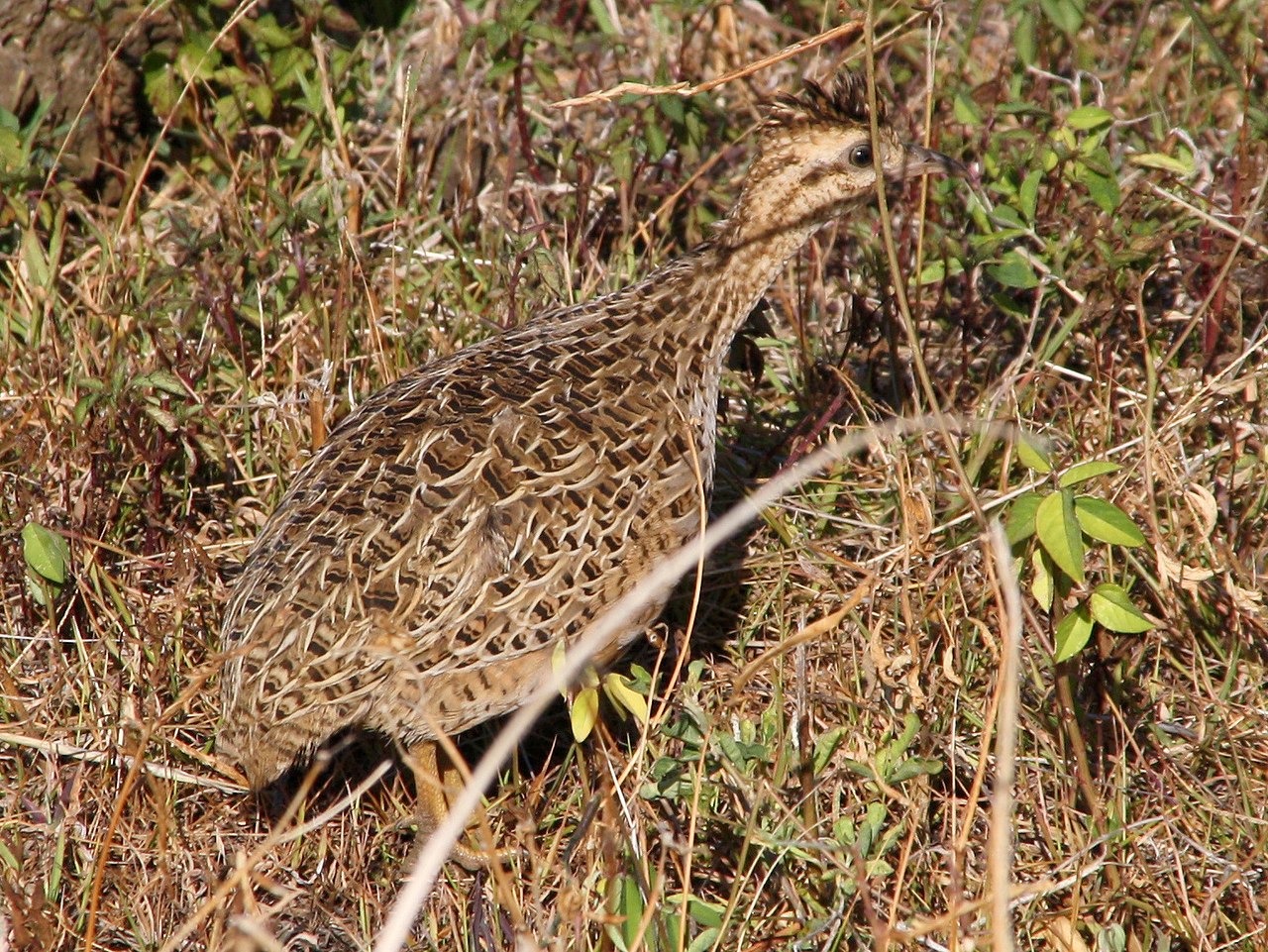
The Chilean tinamou is a type of tinamou commonly found in high elevation shrubland in subtropical regions of central Chile.
Region
Central Chile
Typical Environment
Occurs in Mediterranean-type shrubland (matorral), open scrub, grassy hillsides, and edges of agricultural fields. It favors dry, brushy slopes with scattered shrubs and patches of grass for cover. In cultivated landscapes it uses fallow fields, vineyard margins, and hedgerows. Though often associated with foothills and higher terraces, it may also be found in lower valleys where cover persists.
Altitude Range
Sea level to 2000 m
Climate Zone
Subtropical
Ease of Keeping
Beginner friendly: 2/5
This ground-dwelling tinamou is endemic to central Chile’s matorral and farmlands and typically bursts into a short, explosive flight only when flushed. Males incubate and raise the brood, often from a clutch laid by multiple females. Its cryptic, vermiculated plumage makes it difficult to spot among dry shrubs and grasses.


Temperament
shy and cryptic
Flight Pattern
short rapid wingbeats with explosive flush; prefers to run
Social Behavior
Often seen singly, in pairs, or small coveys outside the breeding season. Nests on the ground in concealed scrapes. Males incubate and rear chicks, commonly caring for mixed clutches from several females.
Migratory Pattern
Resident
Song Description
Gives mellow, whistled, flute-like notes, often carrying over distance in early morning and late afternoon. Calls are simple, repeated phrases used for contact and territorial advertisement.
Plumage
Densely vermiculated and mottled brown to gray-brown with fine barring; underparts paler with subtle barring on the flanks.
Diet
An opportunistic omnivore feeding on seeds, green shoots, bulbs, and fallen fruits. It also takes insects and other small invertebrates such as beetles and ants, especially in the breeding season. Foraging is mostly by walking and gleaning from the ground and low vegetation.
Preferred Environment
Feeds along shrub edges, grassy openings, and field margins where cover is close by. In agricultural areas it uses stubble, orchards, and vineyard borders, retreating to dense shrubs when disturbed.


