

The chestnut-crowned babbler is a medium-sized bird that is endemic to arid and semi-arid areas of south-eastern Australia. It is a member of the family Pomatostomidae, which comprises five species of Australo-Papuan babblers. All are boisterous and highly social, living in groups of up to 23 individuals that forage and breed communally. Other names include red-capped babbler, rufous-crowned babbler and chatterer.
Region
Southeastern Australia
Typical Environment
Occurs in arid and semi-arid interiors of southeastern Australia, especially in mallee eucalypt, acacia (mulga), and chenopod (saltbush/bluebush) shrublands. Prefers mosaics of dense shrubs interspersed with open ground, fallen timber, and leaf litter for foraging. It uses creeklines and drainage lines where shrubs are denser, and will persist in fragmented habitat patches if suitable cover remains. Avoids tall, closed forests and extensive treeless deserts.
Altitude Range
Sea level to 800 m
Climate Zone
Arid
Ease of Keeping
Beginner friendly: 1/5
This cooperative breeder lives in noisy, tight-knit groups that forage and raise young together, with non-breeding helpers assisting at the nest. It constructs bulky, domed stick nests in shrubs or low trees and uses sentinel behavior to watch for predators. The species is adapted to arid and semi-arid shrublands and is highly terrestrial, spending much time hopping and probing on the ground.


Distribution of the chestnut-crowned babbler (BirdLife Australia Atlas Project)
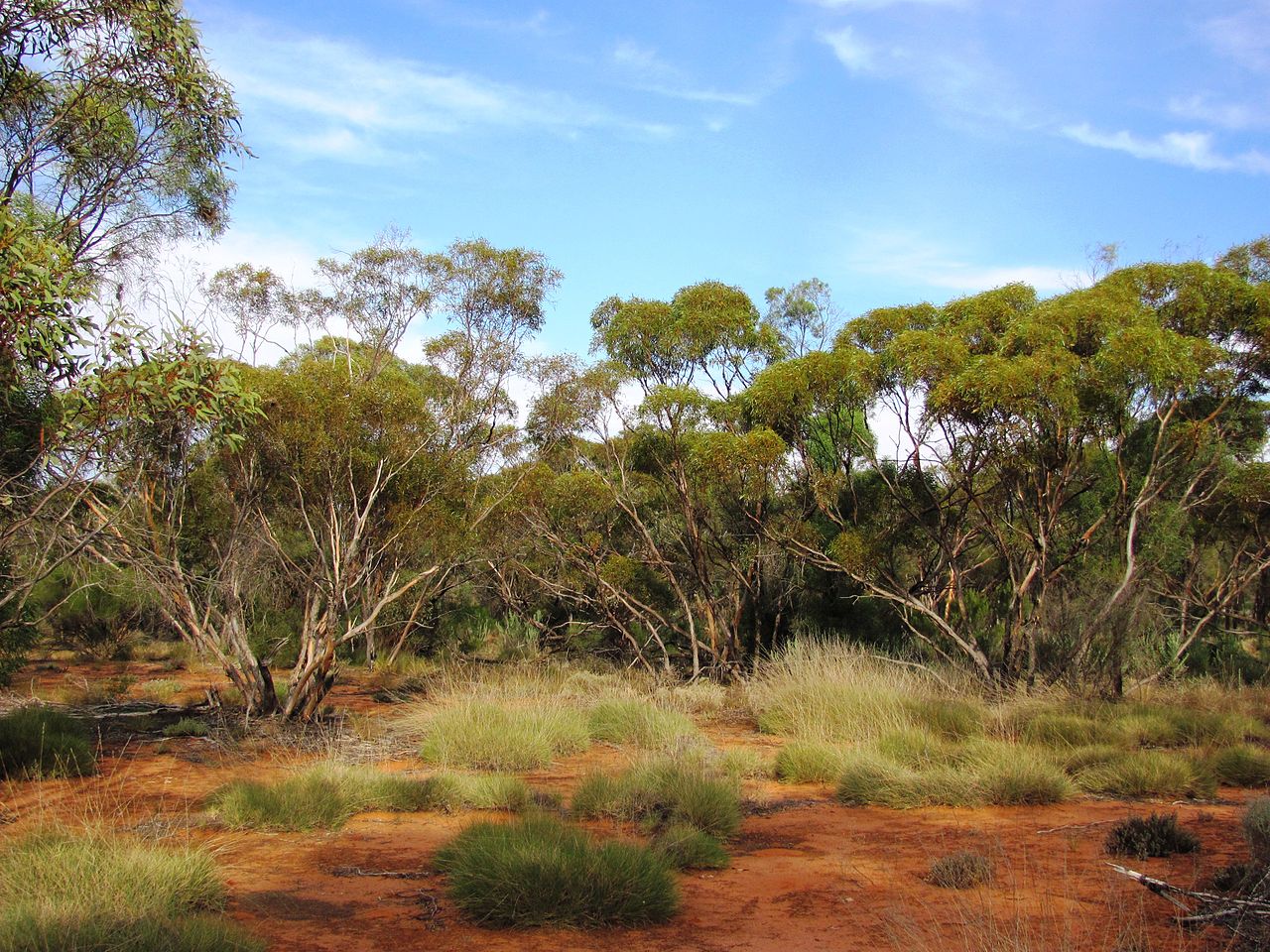
Typical chestnut-crowned babbler habitat, Gluepot Reserve, South Australia

Adult chestnut-crowned babblers

Chestnut-crowned babbler nest, Sturt National Park, NSW
Temperament
social and active
Flight Pattern
short rapid wingbeats, low bounding flights between shrubs
Social Behavior
Lives in cohesive groups that forage together on or near the ground. Breeding is cooperative, with helpers feeding incubating females and nestlings and defending the territory. Nests are bulky domed structures of sticks placed in shrubs or small trees, used for both breeding and communal roosting.
Migratory Pattern
Resident
Song Description
Vocal and chatty, with a chorus of rapid chattering, scolding notes, and babbling calls exchanged within the group. Pairs and group members engage in antiphonal calling that sounds like a lively duet.
Plumage
Warm chestnut crown and nape with dark brown upperparts and a contrasting whitish throat and upper breast. Underparts are pale grey-brown with darker flanks; long, graduated tail often shows pale tips. The face has a darker mask-like area and the bill is long and slightly decurved.
Diet
Primarily takes insects and other invertebrates such as beetles, ants, spiders, and larvae gleaned from leaf litter, bark, and shrubs. Also consumes seeds, berries, and occasionally small vertebrates or eggs when available. Foraging is often cooperative, with group members spreading out while a sentinel watches for danger.
Preferred Environment
Feeds mostly on the ground and in low shrubs within mallee, mulga, and chenopod shrublands. Frequently works around fallen branches, spinifex clumps, and dense shrub bases where prey is concentrated.


