

The Chatham Islands rail, also known as the Chatham rail, is an extinct flightless species of bird in the family Rallidae. It was endemic to Chatham, Mangere and Pitt Islands, in the Chatham archipelago of New Zealand. The Chatham Islands rail was first discovered on Mangere in 1871, and 26 specimens collected there are known from museum collections. Its Māori name was "mātirakahu".
Region
South Pacific (Chatham Islands)
Typical Environment
Historically restricted to Mangere, Pitt, and Chatham Islands, where it occupied dense tussock grasslands, fernlands, and coastal shrub. It favored thick ground cover and damp margins where leaf litter and low vegetation provided protection. The rail was largely terrestrial, moving through runways under dense cover. Following human settlement, burning and introduced predators fragmented and eliminated much of its habitat.
Altitude Range
Sea level to 300 m
Climate Zone
Temperate
Ease of Keeping
Beginner friendly: 1/5
Also called the Chatham rail, it was a small, flightless member of the rail family Rallidae, known in Māori as mātirakahu. It lived in dense tussock and coastal scrub on the Chatham archipelago and was last collected in the late 19th century. The species likely disappeared rapidly after the introduction of cats, rats, habitat burning, and grazing that degraded its cover.


Cabalus modestus mount from the collection of Auckland Museum

Illustration from 1907
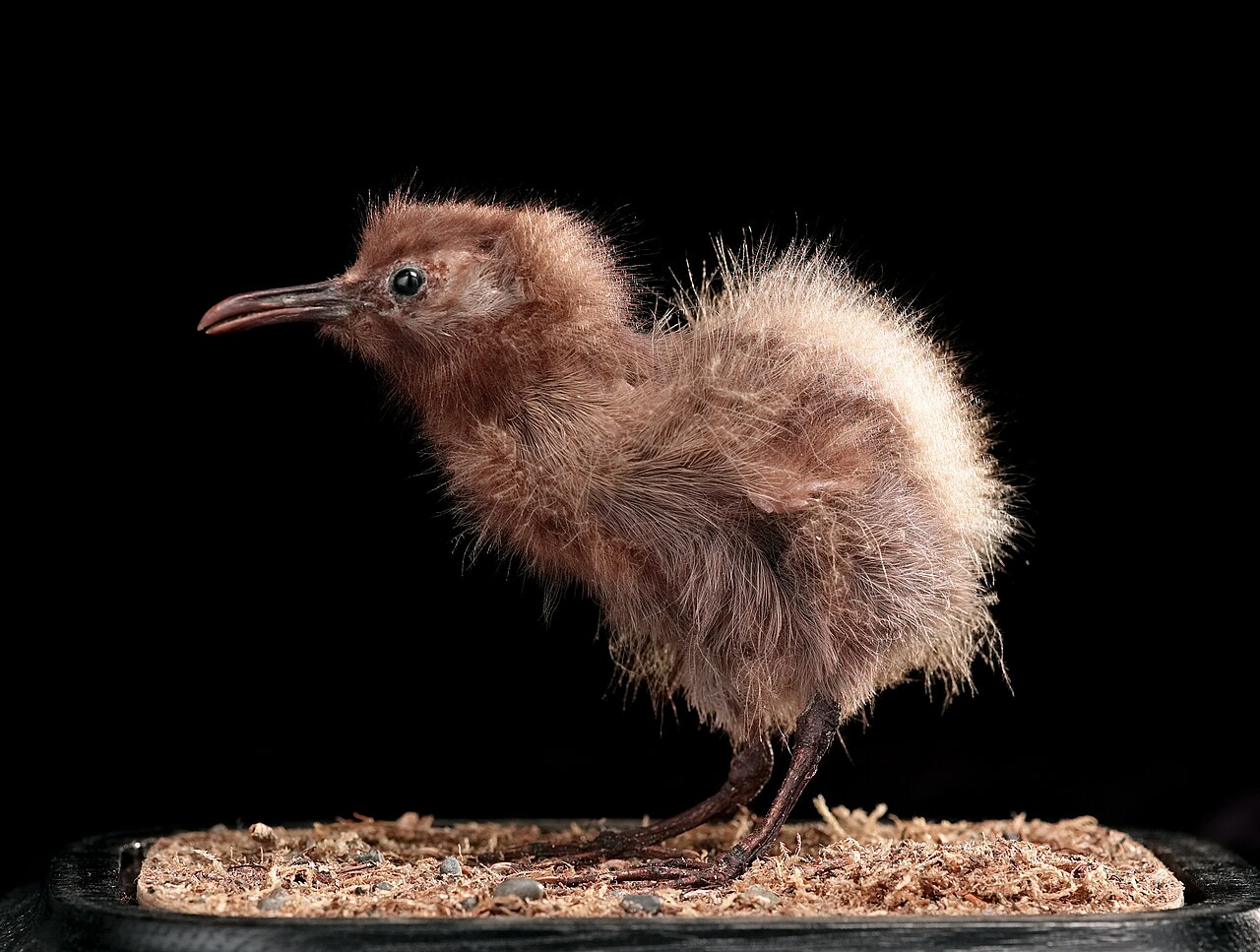
Taxidermied chick collected in 1872


Temperament
secretive and skulking
Flight Pattern
flightless; prefers running through dense cover
Social Behavior
Likely formed monogamous pairs defending small territories within dense vegetation. Nests were probably shallow cups hidden under tussocks or shrubs. Chicks were likely precocial and followed adults through cover soon after hatching.
Migratory Pattern
Resident
Song Description
Reported vocalizations were soft, squeaky clucks and clicks typical of small rails, often given from cover. Calls likely served contact and alarm functions, carrying only short distances in dense vegetation.
Plumage
Cryptic, finely mottled and barred plumage suited to dense vegetation; upperparts dark brown with lighter streaking, flanks barred, and underparts dull brownish-grey.
Diet
Foraged for small invertebrates such as insects, worms, and amphipods among leaf litter. It likely supplemented this with seeds and fallen berries when available. Opportunistic scavenging of small coastal invertebrates may have occurred along damp margins.
Preferred Environment
Feeds on the ground within dense tussock, ferns, and coastal scrub, probing leaf litter and soil. Often stays close to damp edges where invertebrate prey is abundant while remaining under cover.


