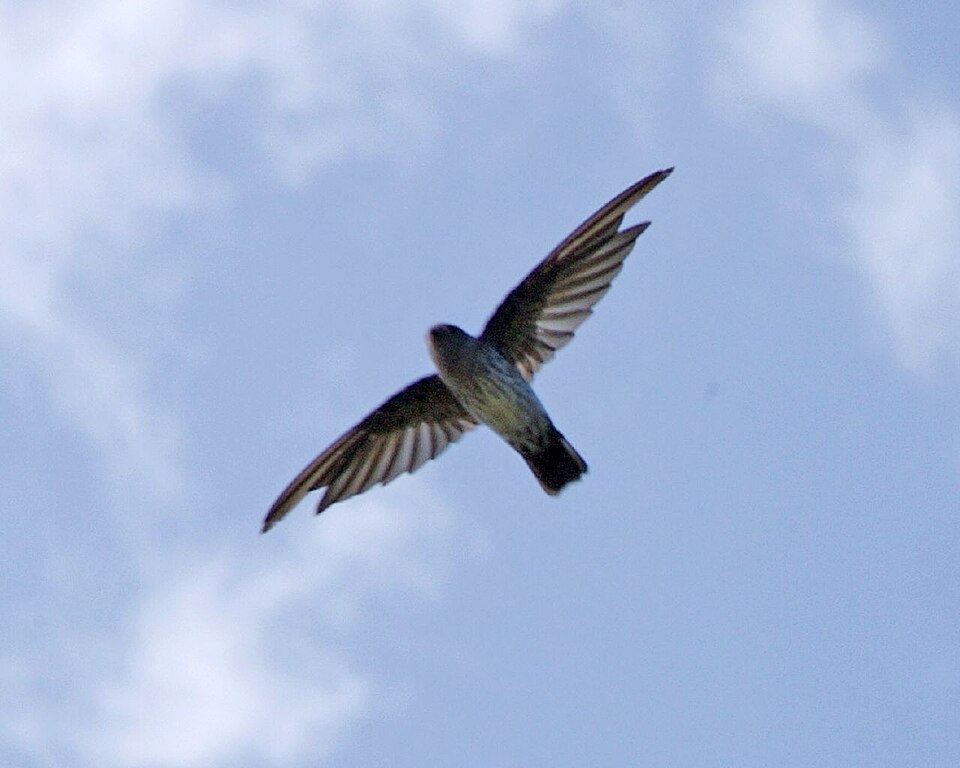
The cave swallow is a medium-sized, squarish-tailed swallow belonging to the same genus as the more familiar and widespread cliff swallow of North America. The cave swallow, also native to the Americas, nests and roosts primarily in caves and sinkholes.
Region
North America and the Caribbean
Typical Environment
Occurs from the Caribbean islands and the Yucatán Peninsula north into northeastern Mexico and the southern United States, with local dispersal and seasonal movements. Natural colonies are concentrated in karst regions with caves, sinkholes, and coastal cliffs. The species readily uses artificial structures such as bridges, culverts, and buildings that mimic cave ceilings. It forages over open country, along coastlines, above wetlands, and around agricultural fields.
Altitude Range
Sea level to 2000 m
Climate Zone
Subtropical
Ease of Keeping
Beginner friendly: 1/5
Cave swallows nest and roost primarily in caves and sinkholes, but they have expanded markedly by adopting bridges and highway culverts. They build gourd- or retort-shaped mud nests in dense colonies on sheltered ceilings and ledges. In North America, they are closely related to cliff swallows and can form mixed colonies. Their use of artificial structures has helped some populations increase and spread northward.


Temperament
social and active
Flight Pattern
agile flier with rapid, shallow wingbeats and swift glides
Social Behavior
Strongly colonial nester, often forming large, dense clusters of mud nests on cave or culvert ceilings. Pairs are seasonally monogamous and defend a small area immediately around the nest. They roost communally, especially outside the breeding season, often deep within caves or on sheltered man-made structures.
Migratory Pattern
Partial migrant
Song Description
Soft chattering and twittering notes given in rapid sequences, especially around colonies. Calls include dry chips and buzzes used for contact and alarm. The chorus at a colony can be a continuous, high-pitched chatter.
Plumage
Glossy blue-black upperparts with a warm cinnamon to buff rump and nape, and pale buff underparts. Throat and forehead are rufous to cinnamon, contrasting with a darker crown and mask. Tail is squarish and relatively short; wings are long and pointed.
Diet
Feeds almost entirely on aerial insects, including flies, beetles, wasps, winged ants, and termites. It hawks insects on the wing, shifting altitude and speed to track swarms. During hatches or swarms, it may concentrate in mixed flocks with other swallows and swifts.
Preferred Environment
Usually feeds in open airspace over fields, pastures, roads, and water bodies where insect densities are high. Often forages near cliff faces, cave mouths, and around bridges and culverts where updrafts concentrate insects.