

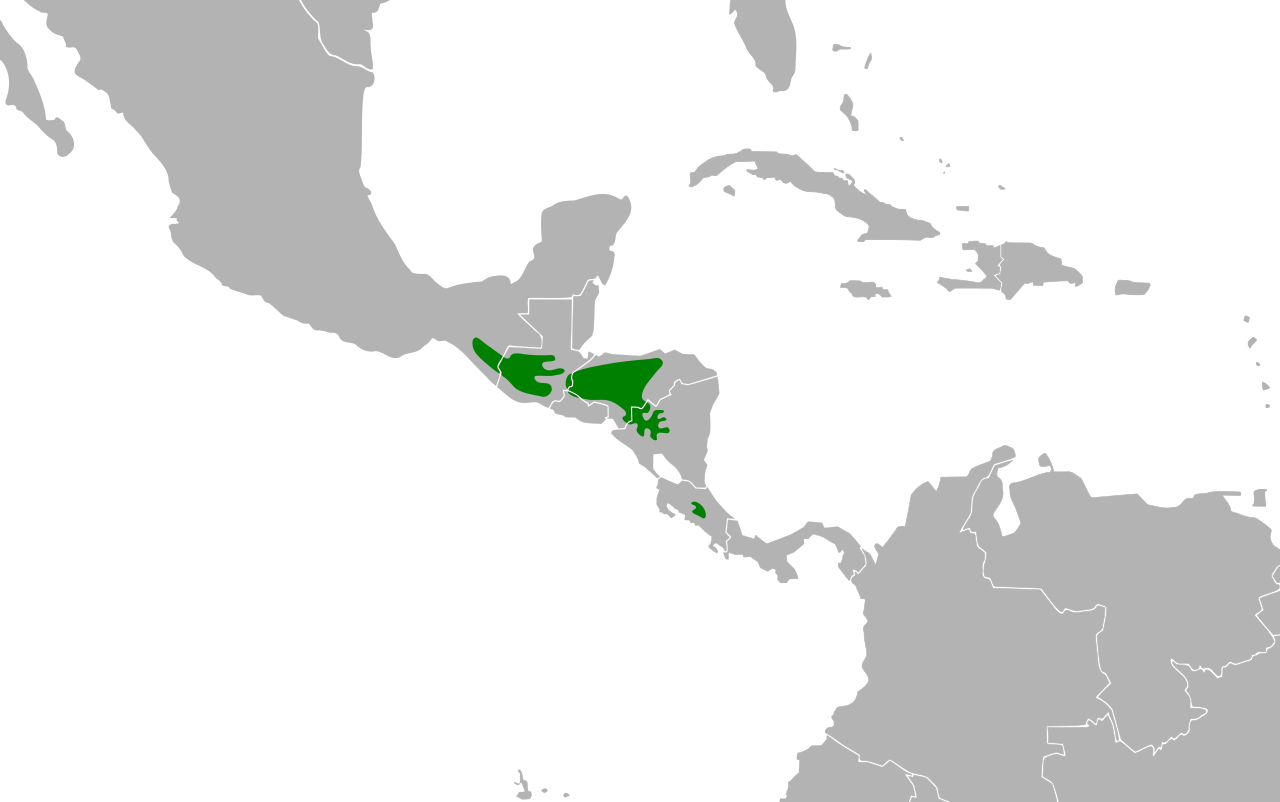
The buffy-crowned wood partridge is a bird species in the family Odontophoridae, the New World quail. It is found in Mexico, Guatemala, Honduras, El Salvador, Costa Rica and Nicaragua.
Region
Mesoamerican Highlands
Typical Environment
Occurs from southern Mexico (Chiapas) through Guatemala, Honduras, El Salvador, Nicaragua, and Costa Rica in humid montane forests. Favors cloud forests and oak-pine woodlands with dense understory, often near forest edges and along trails. It tolerates secondary growth and can use shaded plantations adjacent to intact forest when cover is sufficient. Typically remains on or near the forest floor, retreating quickly into thick cover when disturbed.
Altitude Range
900–3000 m
Climate Zone
Highland
Ease of Keeping
Beginner friendly: 1/5
The buffy-crowned wood partridge is a shy, ground-dwelling New World quail of humid highland forests. It is most often detected by its far-carrying, whistled duets at dawn and dusk rather than by sight. Family groups, or coveys, move quietly through dense understory, scratching in leaf litter for food. Habitat loss and local hunting pressure affect some populations, but the species remains relatively widespread.


Temperament
shy and secretive
Flight Pattern
short rapid wingbeats with explosive flush, usually runs to cover
Social Behavior
Usually found in pairs or small family coveys that keep in contact with soft calls. Nests are placed on the ground, well concealed in dense vegetation. Likely monogamous, with both members of a pair maintaining strong territory calls. Coveys forage together, moving in a tight line through understory.
Migratory Pattern
Resident
Song Description
Delivers clear, far-carrying whistled phrases, often as antiphonal duets between mates. Most vocal at dawn and dusk, with repeated, ringing notes that carry across valleys. Contact calls are softer and used to keep coveys together in dense cover.
Plumage
Overall dark brown to chestnut-brown upperparts with fine mottling and scalloping, grayish breast, and warmer rufous-brown belly and flanks with subtle barring. The crown and supercilium are buffy, contrasting with a darker face and nape. Feathers appear dense and smooth, aiding camouflage on the forest floor.
Diet
Feeds on a mix of seeds, fallen fruits and berries, tender shoots, and bulbs. Also consumes invertebrates such as beetles, ants, and other arthropods, especially during the wet season. Forages by scratching through leaf litter and probing soft soil. Diet composition varies with local fruiting and seeding cycles.
Preferred Environment
Forages on the forest floor in dense understory of cloud forest and oak-pine woodland. Frequently uses edges, trails, and small clearings where seeds and fruits accumulate, but remains close to cover. Will enter adjacent shaded agroforestry systems when continuous cover is available.


