

The bull-headed shrike is a passerine bird of eastern Asia belonging to the shrike family Laniidae.
Region
East Asia
Typical Environment
Occurs from the Russian Far East and northeastern China through the Korean Peninsula and widely across Japan, with winter movements into southern China and nearby regions. It favors open and semi-open habitats such as farmland mosaics, orchards, forest edges, riverbanks, and coastal scrub. Suburban parks and hedgerows with scattered perches are commonly used. Outside the breeding season it may range more broadly into lowland thickets and secondary growth.
Altitude Range
Sea level to 1500 m
Climate Zone
Temperate
Ease of Keeping
Beginner friendly: 1/5
Like other shrikes, the bull-headed shrike often impales prey on thorns or barbed wire to store food and tear it apart more easily. Its name refers to its relatively large head and stout, hooked bill. It perches conspicuously on wires and posts in open countryside across East Asia and is well known in Japan, where it frequents farmlands and suburban edges.

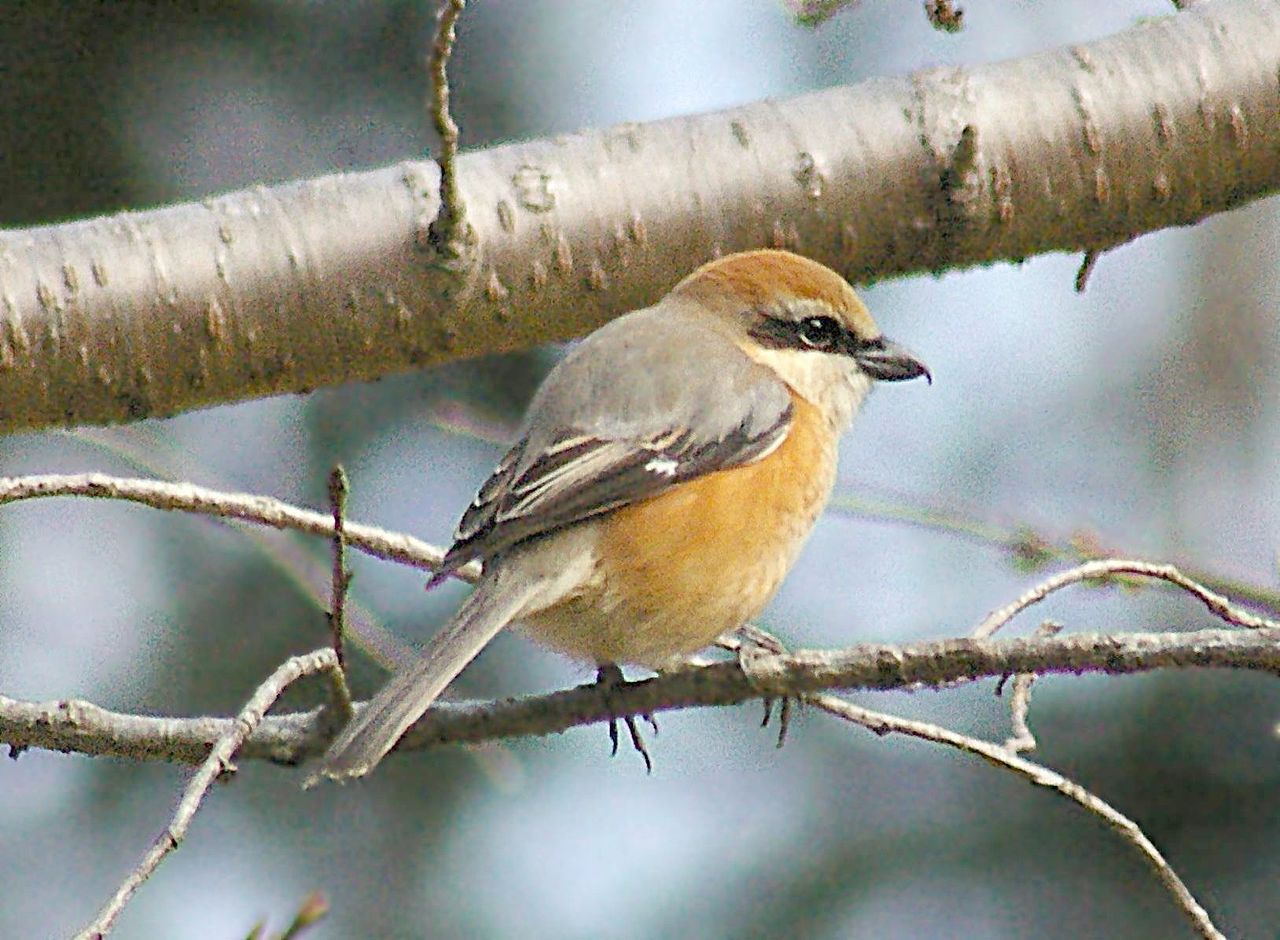
Japan, winter
Temperament
solitary and territorial
Flight Pattern
short rapid wingbeats with direct, purposeful flight
Social Behavior
Typically seen alone or in pairs, perched conspicuously while scanning for prey. During breeding, pairs defend territories vigorously; the nest is a cup placed in shrubs or low trees. Clutches are moderate-sized, and both adults provision the young, with the female doing most of the incubation. Outside breeding, individuals may use traditional larders where prey is stored.
Migratory Pattern
Partial migrant
Song Description
Male song is a varied series of whistles, trills, and chatters, often incorporating mimicry of other species. Calls include harsh scolding notes and sharp 'chak' alarms. Singing males often perform from exposed perches.
Plumage
Compact shrike with a robust head; males show warm rufous-brown upperparts with a grayish crown and clean rufous underparts, females and immatures more buff with fine scalloping on the breast and flanks. Both sexes have a stout, hooked bill and a small white wing patch visible in flight. The tail is relatively long and dark with pale edges.
Diet
Primarily hunts large insects such as beetles, grasshoppers, and wasps, but also takes spiders, small lizards, rodents, and occasionally small birds. Uses a perch-and-pounce strategy, dropping to the ground or making short sallies to seize prey. Frequently impales prey on thorns, twigs, or barbed wire to cache or tear apart food.
Preferred Environment
Feeds along hedgerows, field margins, orchards, and forest edges where exposed perches overlook open ground. Also uses reedbeds and scrubby riverbanks and will hunt in suburban green spaces with scattered shrubs.


