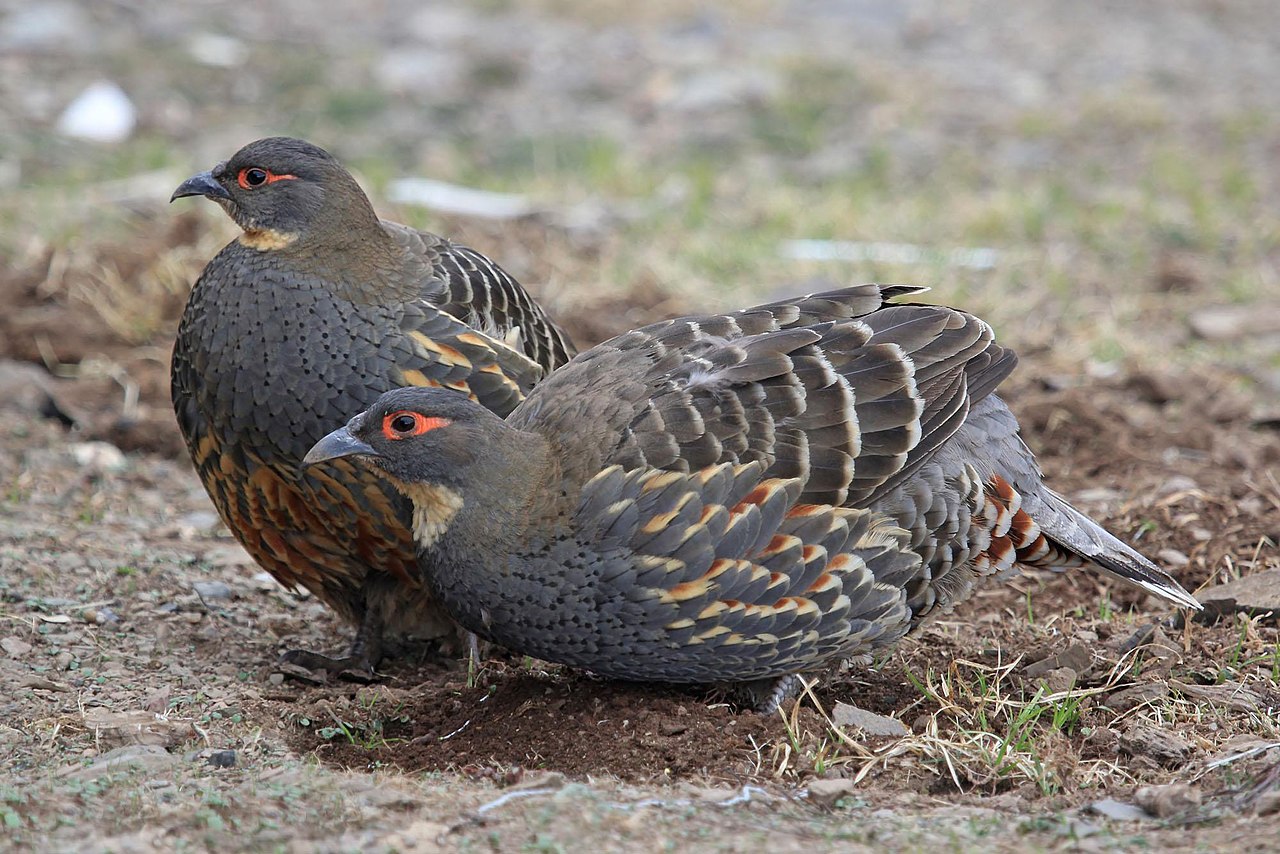
The buff-spotted woodpecker is a species of bird in the family Picidae. It is native to large parts of tropical central Africa. It has an extremely wide range and is an uncommon species, and the International Union for Conservation of Nature has rated its conservation status as being of "least concern".
Region
Central Africa
Typical Environment
Occurs widely in lowland and foothill evergreen forests across the Congo Basin and adjacent regions. It favors primary rainforest but also uses secondary growth, forest edges, and gallery forests. The species often frequents vine tangles, dead snags, and partially open areas within forest. It can persist in selectively logged forest and sometimes visits shaded plantations near intact woodland.
Altitude Range
Sea level to 1800 m
Climate Zone
Tropical
Ease of Keeping
Beginner friendly: 1/5
This small African woodpecker is a quiet forest specialist that forages methodically on trunks, limbs, and lianas. Males have a red crown while females show more speckling, making the pair sexually dimorphic. It uses a long, barbed tongue to extract ants and other insects from crevices. Drumming is soft and brief compared with larger woodpeckers, helping it stay inconspicuous in dense rainforest.
Temperament
quiet and unobtrusive
Flight Pattern
short, undulating flights between trees
Social Behavior
Usually seen singly or in pairs, occasionally joining mixed-species flocks in the midstory. Pairs excavate nest cavities in soft or decaying wood and share incubation and chick-rearing. Clutches are small, and nesting occurs within forested habitats where suitable snags are available.
Migratory Pattern
Resident
Song Description
Vocalizations are soft, high-pitched notes delivered in short series, often a thin ‘tsip-tsip-tsip’. Drumming is a brief, low-amplitude rattle used for communication and territory.
Plumage
Olive-green upperparts densely marked with buff spots, giving a dappled look. Underparts are buff to creamy with dark streaking and light barring on the flanks. Tail is barred, and the face shows pale buff with fine dark spotting.
Diet
Feeds mainly on ants, termites, beetle larvae, and other wood-boring insects. Probes bark, crevices, and dead wood, and gleans from vines and epiphyte-laden branches. Uses its long, sticky, barbed tongue to extract prey and occasionally hammers lightly to expose insects.
Preferred Environment
Forages on trunks, larger branches, dead snags, and in tangles of lianas within rainforest. Also works along forest edges and semi-open patches where insect activity is high.