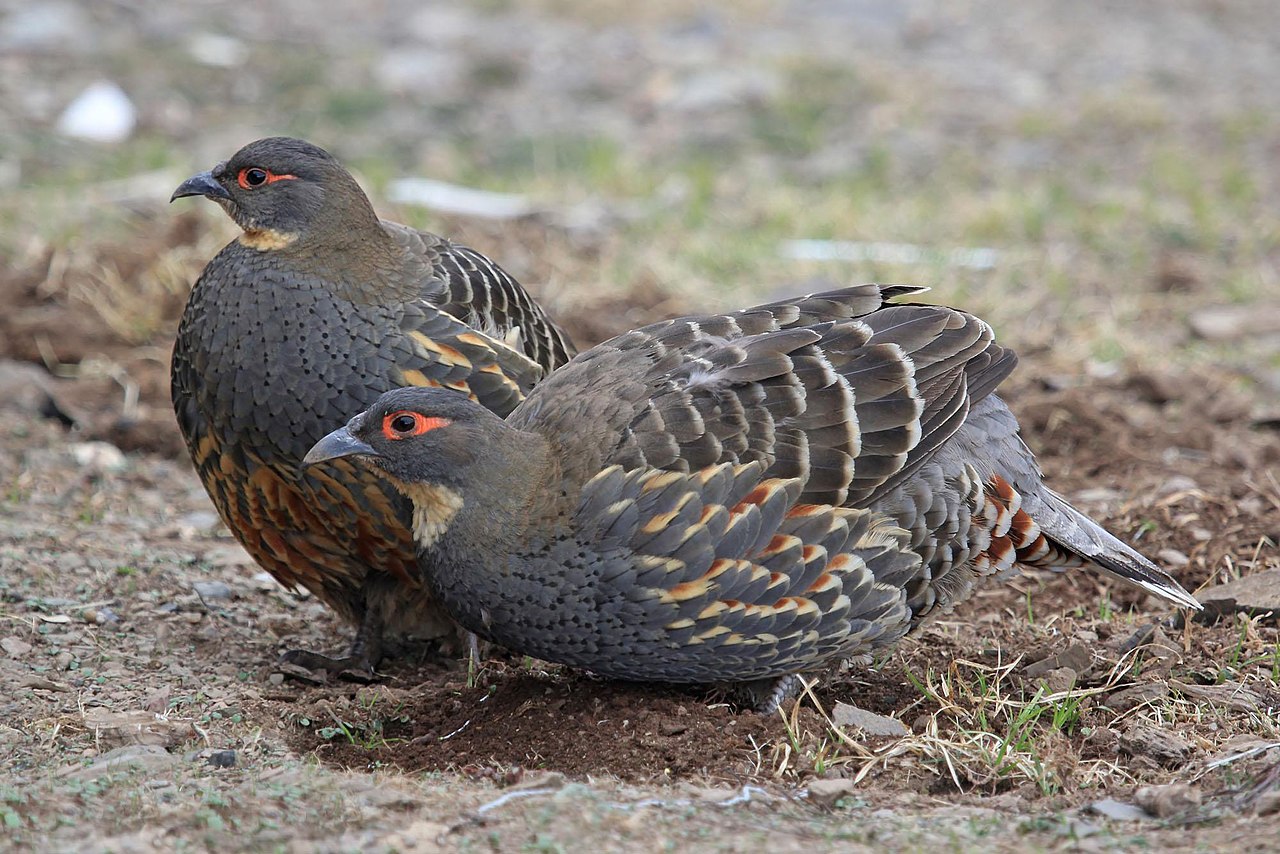
The buff-spotted flufftail is a species of bird in the family Sarothruridae. It is found in forested areas of Angola, Botswana, Burundi, Cameroon, Republic of the Congo, Democratic Republic of the Congo, Ivory Coast, Equatorial Guinea, Eswatini, Ethiopia, Gabon, Guinea, Kenya, Liberia, Malawi, Mozambique, Nigeria, Rwanda, Sierra Leone, Somalia, South Africa, South Sudan, Tanzania, Uganda, Zambia, and Zimbabwe.
Region
Sub-Saharan Africa
Typical Environment
Occupies forested and densely vegetated habitats from West and Central Africa through the east and southeast of the continent. Favors the shaded understory of moist evergreen and gallery forests, riparian thickets, and secondary growth. Often found along forest edges, overgrown clearings, and in plantations or wooded gardens with dense ground cover. Requires leaf-litter and tangled vegetation for foraging and concealment. Avoids open habitats and frequently uses damp, shaded microhabitats near streams or seeps.
Altitude Range
Sea level to 2600 m
Climate Zone
Tropical
Ease of Keeping
Beginner friendly: 1/5
This elusive rail-like bird is most often detected by its deep, rhythmic hooting call rather than by sight. It keeps to dense forest floor cover and will flush only reluctantly, flying low for a short distance before dropping back into cover. Playback or whistled imitations often elicit vocal replies from territorial males. Despite its broad range, it remains poorly seen due to its extremely secretive habits.


Specimen at Nairobi National Museum
Temperament
secretive and skulking
Flight Pattern
short rapid wingbeats, low flushing flight
Social Behavior
Usually solitary or in pairs within dense ground cover. Territorial during the breeding season with males calling from concealed perches near the ground. Nests are well-hidden, often domed or partially covered structures of grasses and leaves placed in thick vegetation on or near the ground.
Migratory Pattern
Resident
Song Description
A series of deep, resonant hoots given at measured intervals, often at dawn, dusk, and during overcast or rainy periods. Calls may alternate in duets, with nearby birds responding antiphonally from different patches of cover.
Plumage
Compact, round-bodied flufftail with short tail and dense, soft plumage marked by buff spots on darker upperparts. Male shows rich rufous-chestnut on the head and upper breast with darker, spotted mantle and barred flanks; female is browner with heavier buff spotting and barring. Underparts are darker with fine barring and spotting, blending well with leaf litter.
Diet
Primarily takes invertebrates such as ants, termites, beetles, caterpillars, spiders, and small snails and worms. Will also consume other small arthropods uncovered by probing and flicking leaf litter. Occasionally supplements diet with seeds or small fruits when available.
Preferred Environment
Forages on the forest floor within dense understory, along damp edges of streams, and in tangles of vines and saplings. Uses cover to move quietly, gleaning and probing among leaf litter and decaying wood.