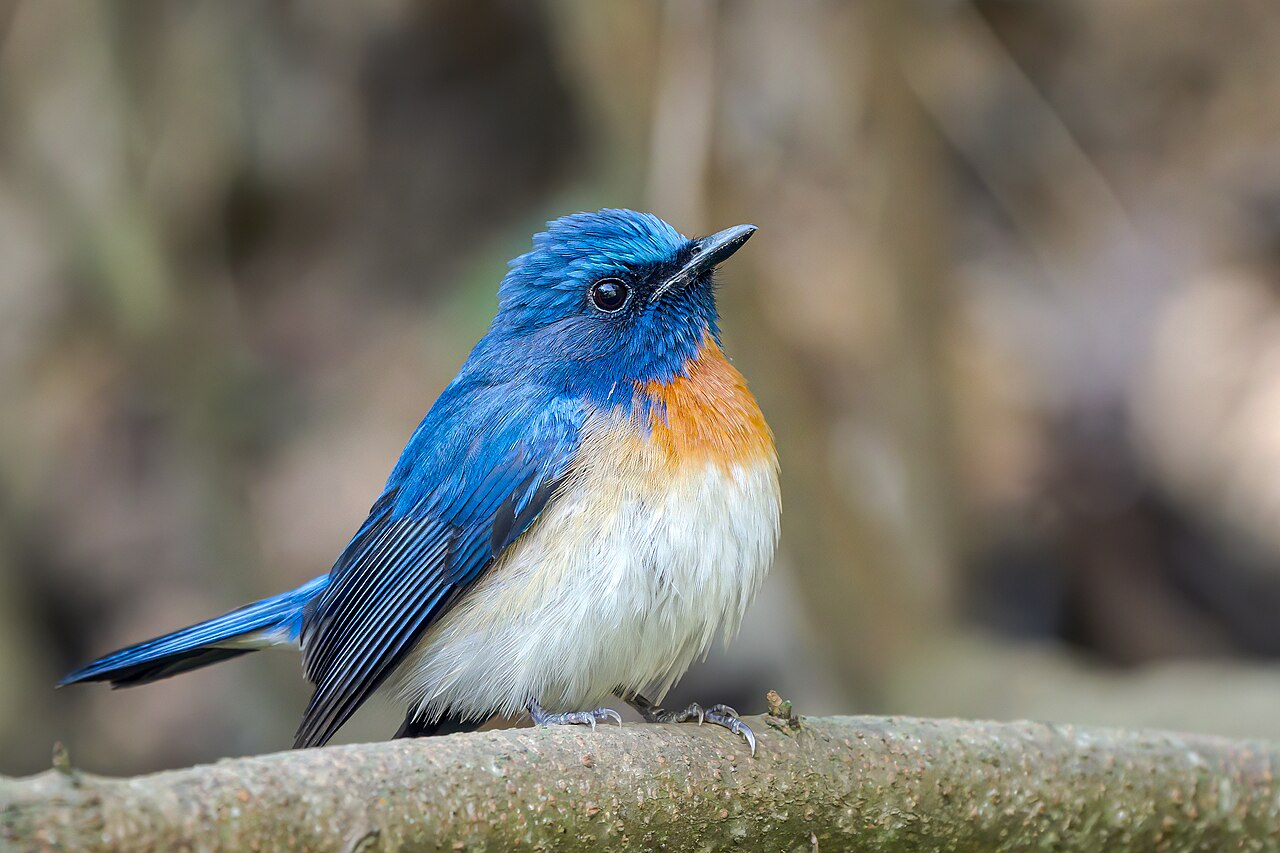
The blue-tailed hummingbird is a species of hummingbird in the "emeralds", tribe Trochilini of subfamily Trochilinae. It is found in Costa Rica, El Salvador, Guatemala, Honduras, Mexico, and Nicaragua.
Region
Central America
Typical Environment
Occurs from southern Mexico (Chiapas) through Guatemala, El Salvador, Honduras, and Nicaragua, with records into northern Costa Rica. It favors semi-open habitats including forest edges, second-growth, dry to semi-humid woodlands, coffee plantations, and gardens. Often found along ravines and near streams where flowering shrubs and trees are abundant. Regularly uses perches in the lower to mid-canopy and forages from the understory to mid-level blossoms.
Altitude Range
Sea level to 2000 m
Climate Zone
Tropical
Ease of Keeping
Beginner friendly: 1/5
This small hummingbird is named for its vividly blue tail, which contrasts with its glittering green body. It aggressively defends rich nectar sources and readily visits flowering shrubs in gardens and coffee plantations. Subtle differences in tail color and range help separate it from similar emerald hummingbirds.


Temperament
territorial and energetic
Flight Pattern
short rapid wingbeats with frequent hovering
Social Behavior
Usually solitary when feeding but may gather loosely where flowers are dense. Males defend nectar resources and display from exposed perches. The species builds a tiny cup nest of plant down and spider silk on low to mid-level branches; typical clutches are two eggs.
Migratory Pattern
Resident
Song Description
Calls are high, thin chips and buzzy notes delivered in quick sequences. Males also give rapid, squeaky trills during disputes or display. Vocalizations are sharp and carry well in open woodland edges.
Plumage
Shimmering emerald-green upperparts and breast with a distinctly cobalt to violet-blue tail; wings show a rufous-brown panel. Underparts can appear slightly paler or grayish on the belly. The bill is mostly straight with a reddish base and dark tip.
Diet
Primarily feeds on nectar from a variety of flowering shrubs and trees, including Inga, Erythrina, and ornamental garden plants. Supplements nectar with small insects and spiders for protein, captured by hawking or gleaning from foliage. Will revisit rich nectar sources repeatedly and defend them from other hummingbirds.
Preferred Environment
Forages along forest edges, secondary growth, hedgerows, and cultivated landscapes such as coffee farms and gardens. Often feeds at mid-level blossoms but will work lower shrubs and occasionally canopy flowers when available.