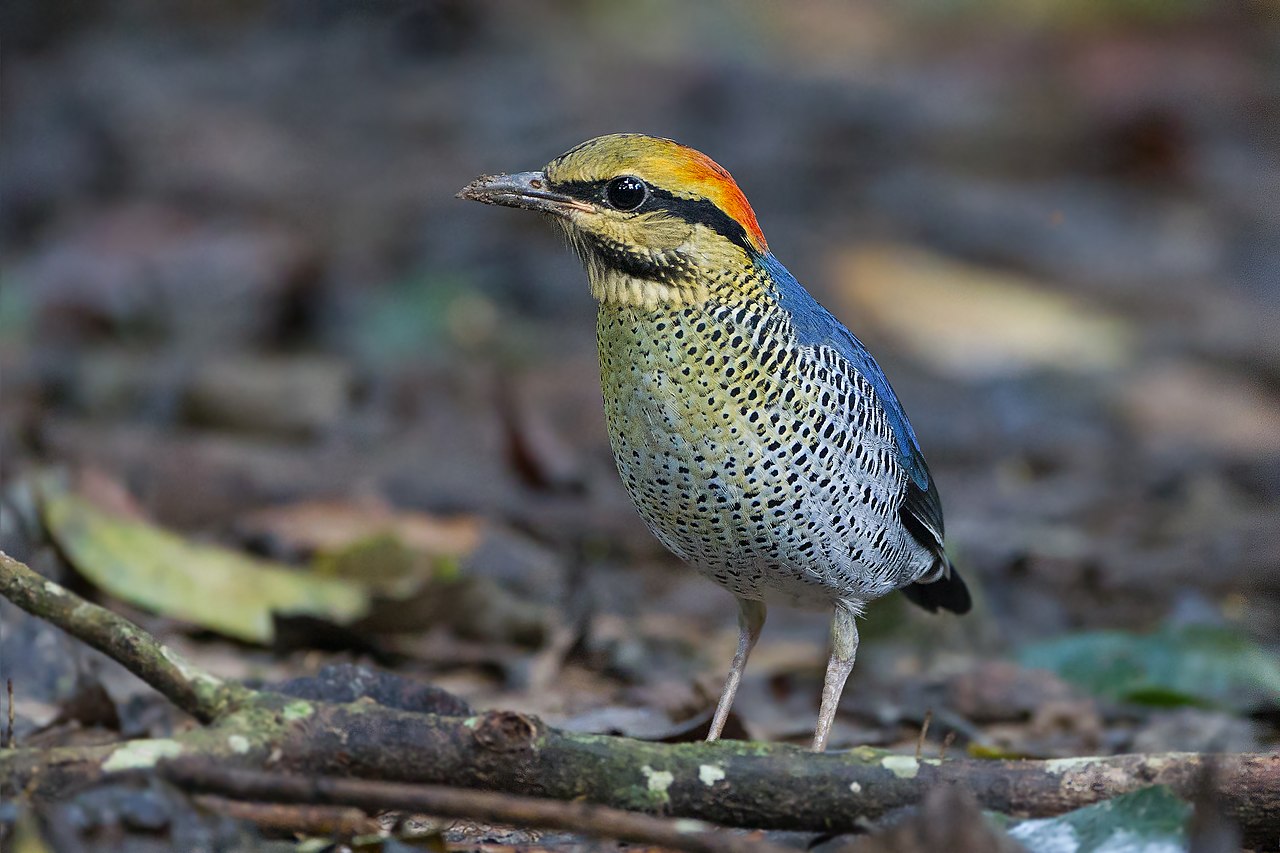
The blue nuthatch is a bird species in the nuthatch family Sittidae. It is a medium-sized nuthatch, measuring 13.5 cm (5.3 in) in length. The species, which shows slight sexual dimorphism, has dramatic plumage pattern unlike any other member of its genus. Its head is black or blackish-blue dark blue upperparts close to purple with azure feathers. The wings are edged with black. The throat and chest are white or a washed buff, contrasting with the upperparts and the belly of a very dark blue; the covert feathers are generally clear, blue-grey or purplish.
Region
Southeast Asia (Sundaland and the Malay Peninsula)
Typical Environment
Found in the mountains of the Thai–Malay Peninsula, Peninsular Malaysia, Sumatra, Java, and Borneo. It inhabits montane evergreen and mossy forests, often in mature oak–laurel stands and along ridgelines. Typically uses the mid- to upper canopy, foraging on trunks, large limbs, and mossy boughs. Occasionally occurs in tall secondary forest adjacent to primary montane habitats.
Altitude Range
600–2500 m
Climate Zone
Highland
Ease of Keeping
Beginner friendly: 1/5
The blue nuthatch is one of the most striking nuthatches, with deep indigo to purplish-blue upperparts and a contrasting pale throat. It forages acrobatically along trunks and branches and often joins mixed-species flocks in montane forests. Unlike many temperate nuthatches, it is strictly a tropical highland specialist.


A blue nuthatch on a tree trunk at Fraser's Hill, Malaysia.
Temperament
social and active
Flight Pattern
short rapid wingbeats with undulating darts between trees
Social Behavior
Often seen in pairs or small parties and frequently joins mixed-species flocks in the canopy. Typically nests in natural tree cavities or old woodpecker holes, lining the cavity with plant fibers and moss. Likely monogamous and maintains a small breeding territory during the season.
Migratory Pattern
Resident
Song Description
Calls are high-pitched, thin, and sibilant, often a series of tsee-see or seee notes. Song can include rapid, squeaky trills delivered from canopy perches, carrying well through montane forest.
Plumage
Dramatic, glossy dark blue to purplish-blue upperparts with black-edged wings; strong contrast between pale throat/chest and very dark blue belly. Feathers can show azure highlights; coverts may appear bluish-grey to purplish.
Diet
Primarily small arthropods, including beetles, ants, caterpillars, and spiders. Probes bark crevices and peels at lichens and moss to extract prey. Will hang acrobatically beneath branches to glean hidden insects and occasionally makes short sallies to snatch prey.
Preferred Environment
Feeds on trunks and large limbs in the mid to upper canopy of montane evergreen and mossy forest. Often forages along moss-covered boughs and at forest edges or along ridgelines, especially when in mixed flocks.