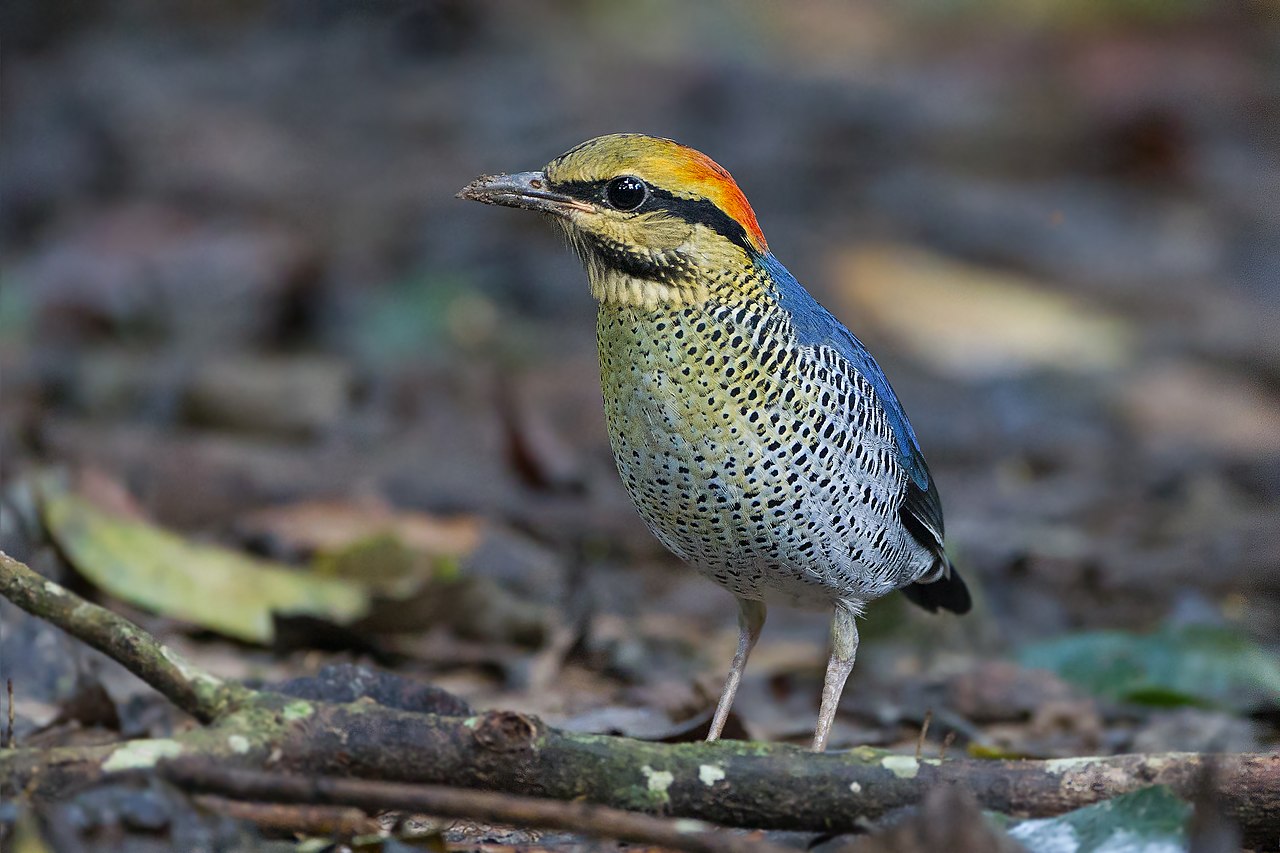
The blue paradise flycatcher is a species of bird in the family Monarchidae. It is endemic to Palawan. It is mainly found in the understory of lowland primary and secondary forests, however populations are likely to be declining owing to habitat loss.
Region
Palawan archipelago, western Philippines
Typical Environment
Occurs in the understory and mid-levels of primary and mature secondary lowland forests on Palawan and nearby islands. It frequents riverine forest, forest edges, and bamboo or vine tangles but generally avoids open agricultural land. Birds forage 1–10 m above ground, moving through shaded thickets and along quiet forest trails. Presence is highest where canopy cover and structural complexity are intact.
Altitude Range
Sea level to 800 m
Climate Zone
Tropical
Ease of Keeping
Beginner friendly: 1/5
This striking monarch flycatcher is endemic to the Palawan archipelago of the Philippines and favors shaded lowland forest understory. Males sport elongated ribbon-like tail streamers and richer blue tones, while females are shorter-tailed and duller. It often joins mixed-species flocks and helps control forest insects. Ongoing lowland deforestation on Palawan is the principal threat to this species.


Temperament
active and alert, usually in pairs
Flight Pattern
short rapid wingbeats with frequent sallies
Social Behavior
Typically seen singly or in pairs inside forest, often joining mixed-species flocks. Builds a small, neat cup nest suspended from a forked twig, usually low to mid understory. Both adults likely participate in nest building and care for the young.
Migratory Pattern
Resident
Song Description
Delivers a series of clear, sweet whistles interspersed with soft chirps. Alarm notes are sharper ticks given when disturbed in dense cover.
Plumage
Velvety to glossy blue head and upperparts with darker slate-blue wings and tail; underparts bluish to pale gray, sometimes whitish on the belly. Males have elongated, ribbon-like tail streamers; females are duller with shorter tails and slightly browner tones on the wings.
Diet
Primarily feeds on flying and foliage-dwelling insects such as flies, beetles, moths, and caterpillars; also takes spiders and other small arthropods. Captures prey by sallying from low perches and by gleaning from leaves and twigs. Occasionally hawks insects along shaded stream corridors and forest paths.
Preferred Environment
Forages in shaded understory and lower mid-story, especially near vine tangles, bamboo clumps, and along streams. Uses semi-open gaps within forest but avoids open farmland.