
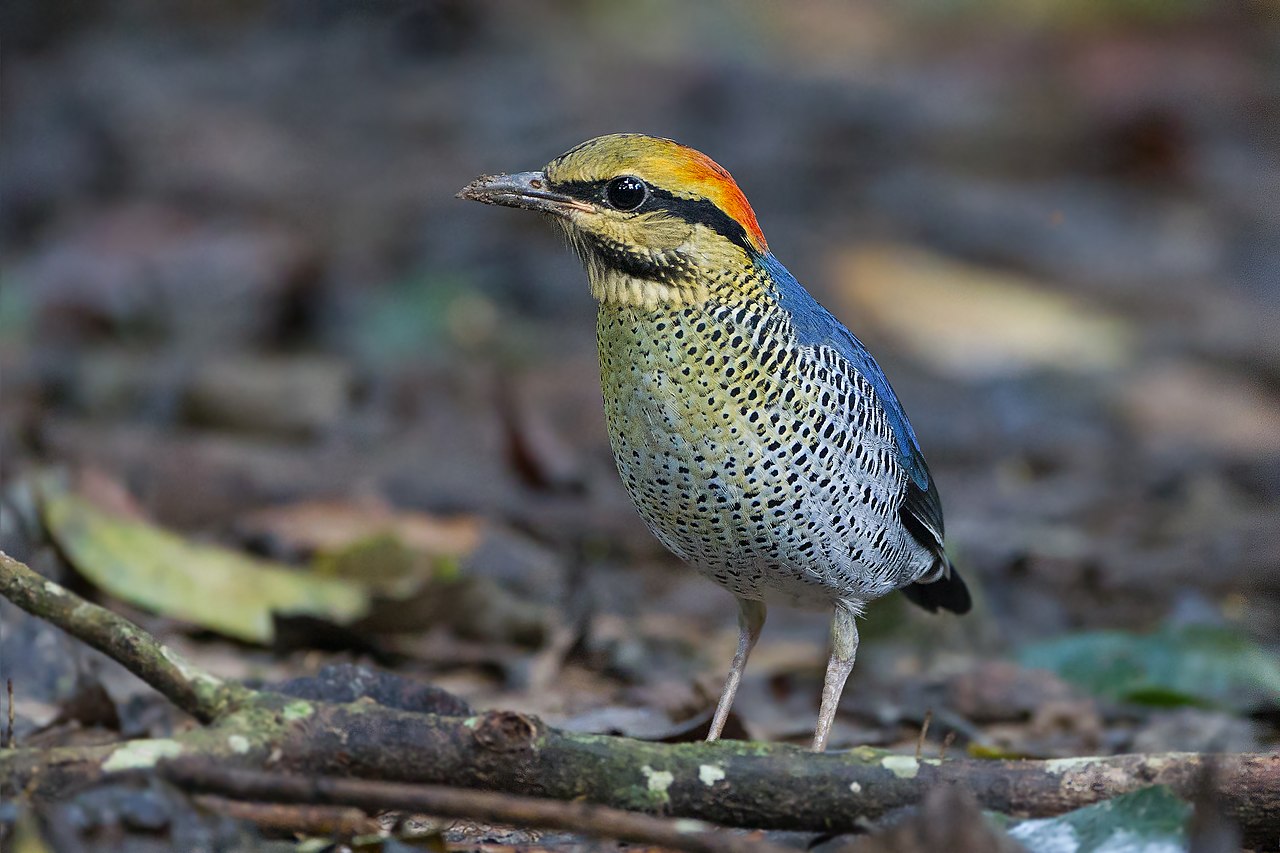
The blue pitta is a species of bird in the family Pittidae found in the northeastern Indian subcontinent, southern China, and Indochina. It typically lives in moist forests but can also inhabit dry forest. It is an unobtrusive, solitary bird which feeds by foraging on the ground for insects and other small invertebrates.
Region
Indochina and southern China
Typical Environment
Occurs from northeastern India and Myanmar through Thailand, Laos, Cambodia, and Vietnam, into southern China. Prefers moist evergreen and semi-evergreen forests, bamboo thickets, and dense secondary growth with a closed canopy. Often frequents shaded ravines, stream margins, and areas with deep leaf litter for foraging. Typically remains on or near the forest floor and avoids open habitats. It tolerates some forest degradation if understory cover remains intact.
Altitude Range
Sea level to 2000 m
Climate Zone
Tropical
Ease of Keeping
Beginner friendly: 1/5
Blue pittas are famously elusive, slipping quietly through dense understory and leaf litter where they are more often heard than seen. Their clear, mournful whistles carry far in damp forest, especially at dawn. They build domed nests low to the ground from leaves and moss, and often forage by flipping leaf litter to expose prey.


ssp. willoughbyi
Temperament
solitary and secretive
Flight Pattern
short rapid wingbeats with low, brief flights
Social Behavior
Mostly solitary, maintaining territories on the forest floor. Breeding pairs construct a domed nest close to the ground and share incubation and chick-rearing duties. Clutches are small, and birds remain very unobtrusive around the nest site.
Migratory Pattern
Partial migrant
Song Description
A clear, mournful series of whistled notes, often descending in pitch and repeated at intervals. Most vocal at dawn and dusk, with calls carrying well through damp forest. Alarm notes are softer and more subdued.
Plumage
Male shows rich blue upperparts with a contrasting dark face mask and warm orange to yellowish crown, and greyish underparts with fine dark barring; female is duller with more olive-brown tones and heavier barring below. Both sexes have short rounded wings and a relatively long, sturdy bill for a pitta. The tail is short and often held low while moving through understory.
Diet
Feeds primarily on insects and other invertebrates such as beetles, ants, termites, earthworms, and snails, occasionally taking small vertebrates. Forages by probing and flicking aside leaf litter to expose hidden prey. May use a hard surface as an anvil to break snail shells. Diet composition shifts with seasonal availability of invertebrates.
Preferred Environment
Forages on the shaded forest floor, especially in damp gullies, along streams, and in dense understory or bamboo. Often selects areas with deep leaf litter and scattered logs or stones that harbor invertebrates.


