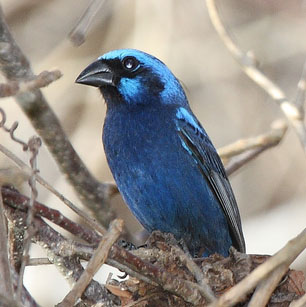
The blood-eared parakeet, also known as the red-eared parakeet and in aviculture as the red-eared conure, is a species of bird in subfamily Arinae of the family Psittacidae, the African and New World parrots. It is endemic to Venezuela.
Region
Coastal Cordillera of northern Venezuela
Typical Environment
Occupies humid montane and cloud forests, forest edges, and adjacent secondary growth. It also ventures into shade coffee plantations and wooded ravines where fruiting trees are abundant. Flocks typically move along ridgelines and valleys, feeding in the canopy but descending to mid-levels at forest edges. Roost sites are usually in tall trees with suitable cavities. Local movements track food availability within the same mountain slopes.
Altitude Range
600–2000 m
Climate Zone
Highland
Ease of Keeping
Beginner friendly: 3/5
Often called the red-eared conure in aviculture, this small Pyrrhura parakeet is confined to Venezuela’s coastal mountains. It forages noisily in fast-moving flocks and is usually heard before it is seen. Like many conures, it nests in tree cavities and may use secondary forests and shaded plantations when mature trees are available. Habitat loss in montane forests is a potential concern.
Temperament
social and active
Flight Pattern
short rapid wingbeats with swift, direct flight
Social Behavior
Usually found in small to medium flocks, especially around fruiting trees. Pairs maintain close contact within the flock and may remain bonded year-round. Nests are placed in natural tree cavities or old woodpecker holes. Communal roosting in tall forest trees is typical.
Migratory Pattern
Resident
Song Description
Calls are sharp, piercing chattering notes and squeaky screeches delivered in rapid series during flight. At roosts and feeding sites, it gives softer, buzzy contact calls.
Plumage
Mostly green with a scaly, buff-edged pattern on the throat and upper breast, and a maroon belly patch. Ear coverts are distinctly red, with blue tones in the flight feathers and a reddish-brown tail. Crown and nape are dusky-brownish with subtle scaling.
Diet
Feeds primarily on fruits and berries from a variety of native trees, along with seeds and soft plant material. It also takes flowers and nectar when available. Foraging is mostly in the forest canopy, but birds descend to mid-story and edges to exploit seasonal resources. They often travel between feeding trees in chattering flocks.
Preferred Environment
Most often forages in humid montane forest canopies and along forest edges. It readily uses secondary growth and shade plantations where fruiting trees are retained. Riparian corridors with tall trees are also frequented.