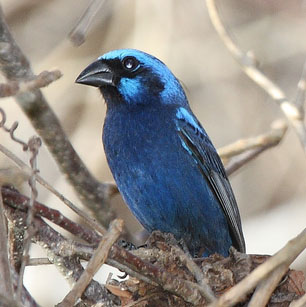
The blaze-winged parakeet, known as the blaze-winged conure in aviculture, is a species of bird in subfamily Arinae of the family Psittacidae, the African and New World parrots. It is found in Brazil, Bolivia, Paraguay, and possibly Argentina.
Region
South-central South America (Pantanal and Chaco)
Typical Environment
Occurs in southwestern Brazil (especially Mato Grosso do Sul), eastern Bolivia (Santa Cruz), northern Paraguay, and possibly adjacent northern Argentina. It favors gallery forests, semi-deciduous woodlands, forest edges, and palm groves embedded in savanna and seasonally flooded wetlands. Birds readily use secondary growth and riparian strips, moving locally to track food resources. It is most often recorded in lowland habitats and along river corridors within the Pantanal-Chaco ecoregions.
Altitude Range
0–800 m
Climate Zone
Subtropical
Ease of Keeping
Beginner friendly: 3/5
Also known in aviculture as the blaze-winged conure, this small Pyrrhura parakeet is noted for the vivid orange-red 'blaze' on its wing coverts. It inhabits the Pantanal and Chaco mosaics of forest, woodland, and savanna and can be confused with the maroon-bellied parakeet, with which it may form a contact zone. It nests in tree cavities and often travels in noisy, tight-knit groups. Despite its relatively localized range, it shows some tolerance of secondary habitats and forest edges.


Temperament
social and active
Flight Pattern
short rapid wingbeats with swift, direct flights between trees
Social Behavior
Typically seen in pairs or small, cohesive groups, sometimes larger flocks at fruiting trees or communal roosts. Cavity nester in natural tree holes; pairs maintain close contact and may remain together year-round. Breeding likely occurs in the austral spring, with small groups forming family parties after fledging.
Migratory Pattern
Resident
Song Description
Vocalizations are sharp, high-pitched chirps and rattling chatters, often given in rapid series during flight. At feeding sites, calls soften to conversational twitters and purr-like notes.
Plumage
Mostly green with a scaly, pale-edged breast, maroon belly patch, and a conspicuous orange-red blaze on the lesser to median wing coverts; primaries have bluish outer webs. Crown and nape are dusky-brown, and the long tail is reddish-maroon.
Diet
Feeds primarily on fruits, berries, seeds, and flower parts, including palm fruits and figs. It also takes buds and occasionally nectar, moving between trees as resources ripen. Birds may visit orchards and agricultural edges when native foods are scarce.
Preferred Environment
Forages in the canopy and subcanopy of gallery forest, semi-deciduous woodland, and along forest edges. Frequently uses mixed habitats near watercourses and seasonally flooded areas where fruiting trees are abundant.