
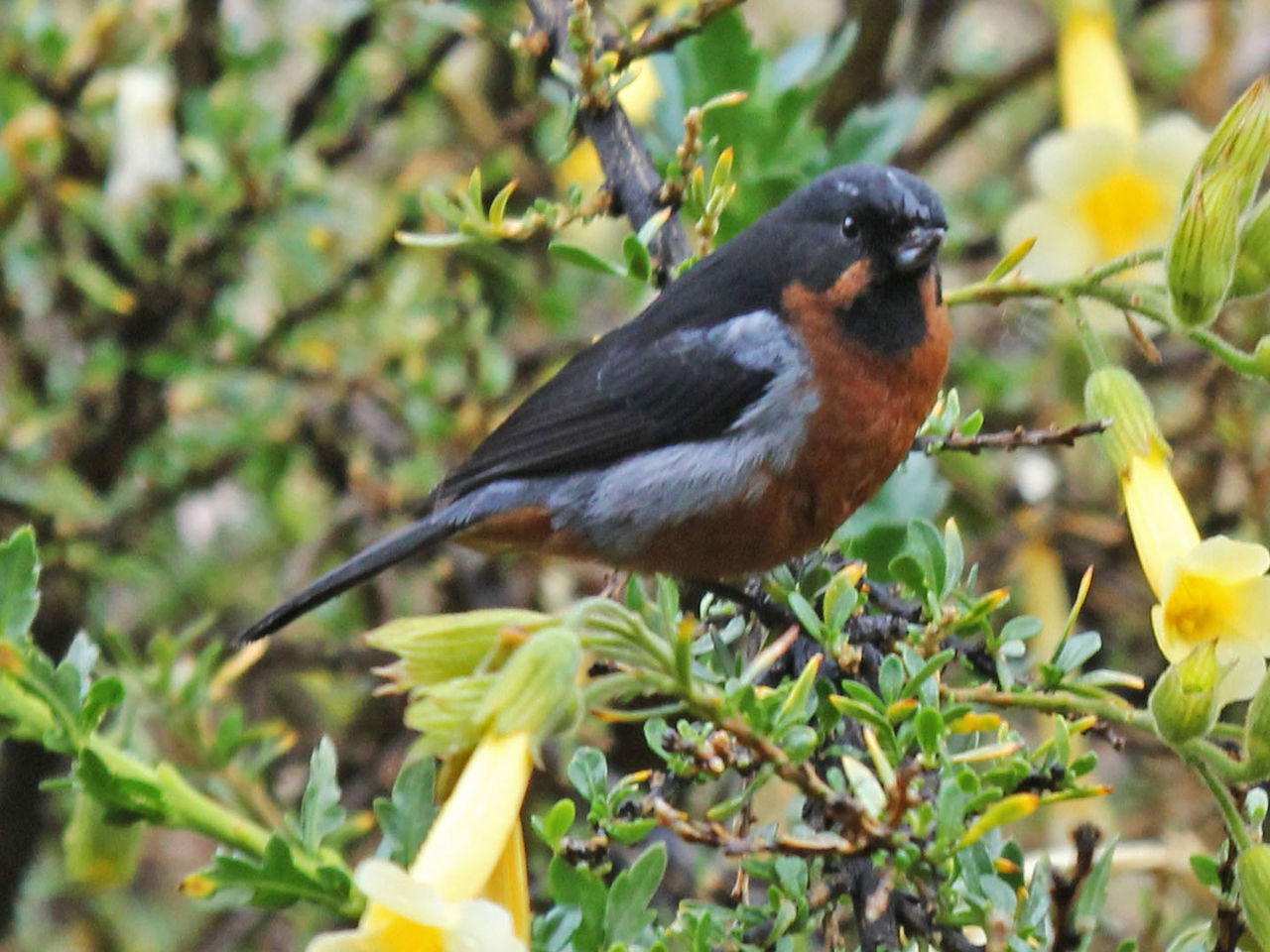
The black-throated flowerpiercer is a species of bird in the family Thraupidae.
Region
Andes Mountains
Typical Environment
Occurs in highland regions of the central and southern Andes, primarily in Peru and Bolivia, extending locally into northern Chile and northwestern Argentina. Favors shrubby slopes, forest edges, Polylepis woodlands, and montane scrub. It is also found in elfin forest margins and human-modified habitats like hedgerows and flowering gardens at high elevations. The species is typically common where tubular flowers are abundant.
Altitude Range
2000–4200 m
Climate Zone
Highland
Ease of Keeping
Beginner friendly: 1/5
A small Andean tanager, the black-throated flowerpiercer uses its fine, hooked bill to pierce the base of flowers and steal nectar, often without pollinating them. It also takes small insects and fruit, making it an opportunistic feeder. Males show a distinctive black throat contrasting with a warm brown belly, a key field mark at high elevations. It frequents shrubs and forest edges and readily visits flowering gardens in Andean towns.


Black-throated Flowerpiercer in Peru

Temperament
active and alert
Flight Pattern
short rapid wingbeats with quick darting flights
Social Behavior
Usually seen singly or in pairs, sometimes in small groups at rich floral resources. Joins mixed-species flocks along forest edges. Nests are cup-shaped and placed in dense shrubs; pairs are territorial around flowering patches during breeding.
Migratory Pattern
Resident
Song Description
Song is a thin, high-pitched series of twitters and trills. Calls include sharp, squeaky tsee notes given while foraging among flowers.
Plumage
Male with dark slate upperparts, a contrasting black throat and upper chest, and a rich brown to rufous belly and flanks; female duller with more brownish-gray tones and a less distinct throat contrast. Both sexes have a neat, compact appearance with a slightly notched tail.
Diet
Primarily robs nectar by piercing the base of tubular flowers such as Fuchsia and other Andean shrubs. Supplements nectar with small insects gleaned from foliage and taken in short sallies. Also consumes small berries, especially when flowers are scarce.
Preferred Environment
Feeds in flowering shrubs along edges of montane forests, Polylepis patches, and Andean scrub. Readily forages in gardens and hedges in highland villages where suitable blooms are present.


