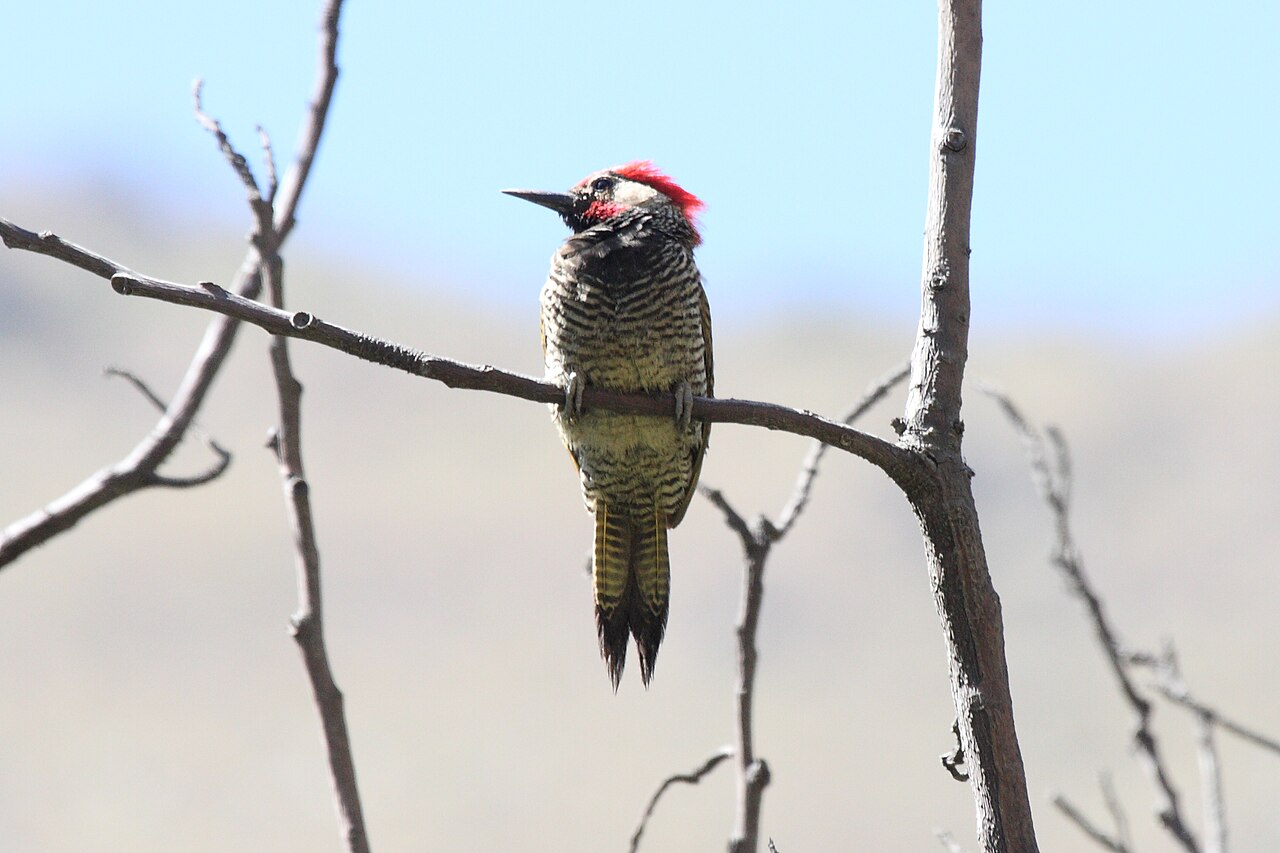
The black-necked wattle-eye is a species of bird in the family Platysteiridae. It is found in Angola, Cameroon, Equatorial Guinea, and Gabon. Its natural habitats are subtropical or tropical moist lowland forest, subtropical or tropical swamps, and subtropical or tropical moist montane forest.
Region
Lower Guinean forests of Central Africa
Typical Environment
Occurs from coastal and inland lowland rainforest to swamp forest and into foothill and montane evergreen forest. Frequently uses forest edges, riverine strips, and secondary growth, where it hunts in shaded understory and lower mid-canopy. It is recorded in Angola (northern), Cameroon, Equatorial Guinea (including Bioko in some ranges), and Gabon, with local continuity into adjacent Congo basin forests. The species typically remains near dense cover and thickets within mature or regenerating forest.
Altitude Range
Sea level to 1800 m
Climate Zone
Tropical
Ease of Keeping
Beginner friendly: 1/5
This small flycatcher-like bird is named for the male’s contrasting black neck and the fleshy, colored eye-wattle typical of wattle-eyes. It forages actively in the forest understory and midstory, often joining mixed-species flocks. Pairs maintain small territories and communicate with sharp, ringing calls. Its tolerance of secondary growth helps it persist where some forest has been disturbed.

Temperament
active and alert, often skulking in dense foliage
Flight Pattern
short rapid wingbeats with quick sallies between perches
Social Behavior
Usually found in pairs or small family groups and commonly joins mixed-species foraging flocks. Pairs defend small territories and perform duet-like vocal exchanges. The nest is a small, neat cup placed in a fork or on a horizontal branch, with both sexes participating in care.
Migratory Pattern
Resident
Song Description
Song is a series of sharp, ringing whistles and metallic notes, often delivered in short bursts. Calls include quick chips and ticks used for contact within the understory.
Plumage
Compact wattle-eye with a contrasting dark head and neck forming a collar, paler underparts, and darker upperparts; small white wing spot often visible on the folded wing. Males show a brighter, more contrasting pattern and a fleshy, colored orbital wattle; females are duller with browner tones and a less distinct collar.
Diet
Primarily feeds on small arthropods including flies, beetles, caterpillars, and spiders. Gleans prey from leaves and twigs and makes short sallies to snatch insects in mid-air. Occasionally takes small berries when insect prey is scarce, but animal prey dominates.
Preferred Environment
Forages in shaded understory and lower midstory of primary and secondary forests, along forest edges, and near streams or swampy thickets. Often associates with mixed flocks, exploiting disturbed or semi-open microhabitats within forest.