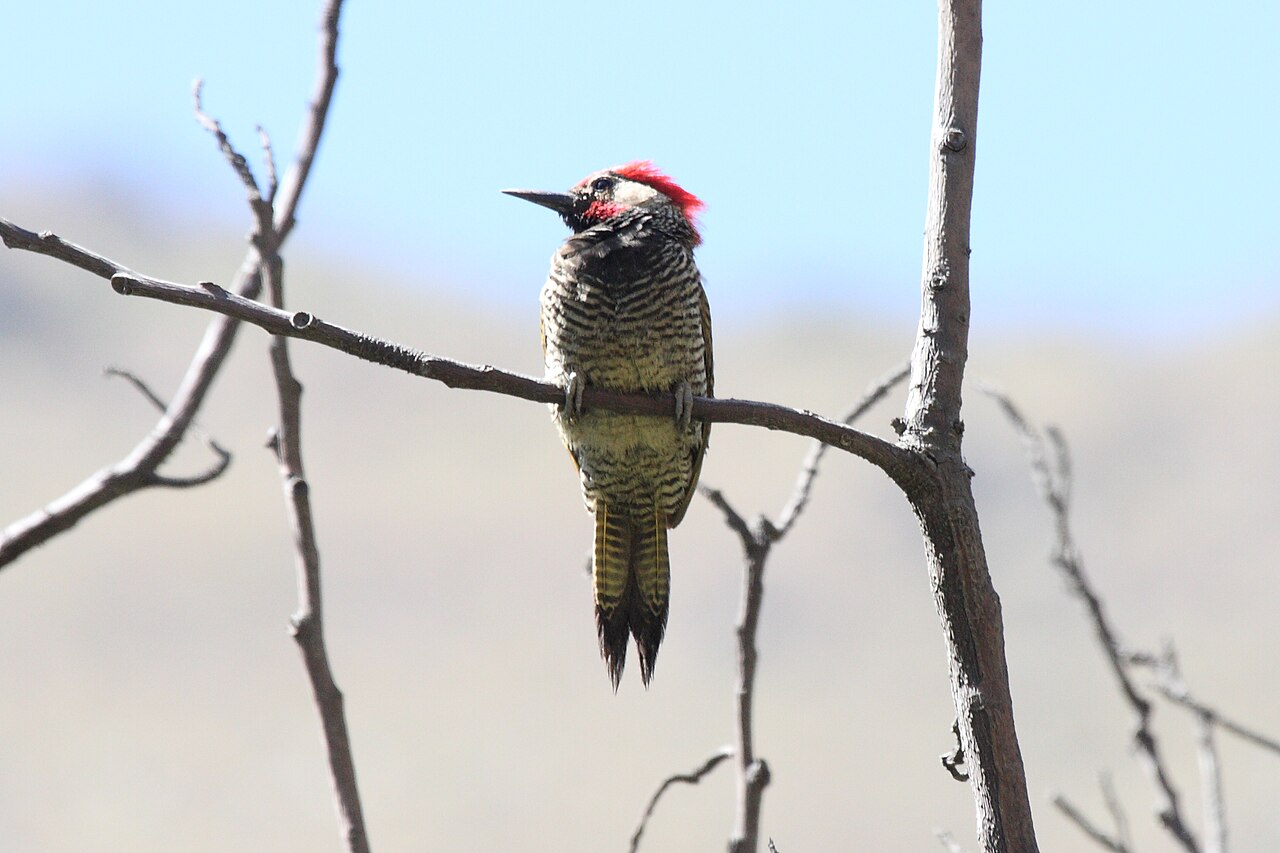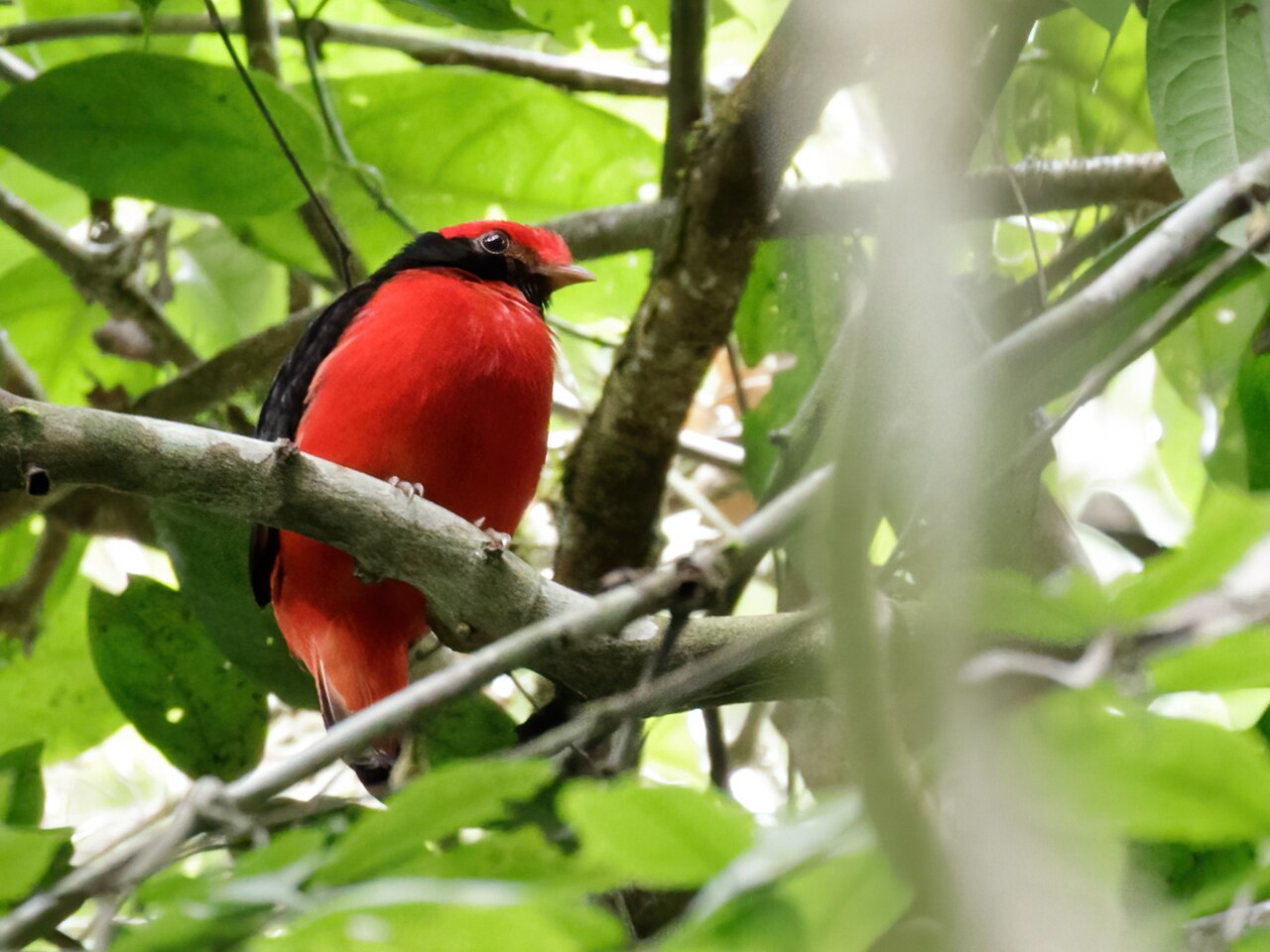
The black-necked red cotinga is a species of bird in the family Cotingidae, the cotingas. It is found in Brazil, Colombia, Ecuador, Peru, and Venezuela.
Region
Western Amazon Basin
Typical Environment
Occurs in lowland humid forests of Brazil, Colombia, Ecuador, Peru, and Venezuela. Prefers terra firme and seasonally flooded (várzea) forests, most often in the mid- to upper canopy. It frequents fruiting trees along forest edges, river corridors, and light gaps. The species is generally uncommon and patchily distributed but can be locally regular where fruit is abundant.
Altitude Range
0–800 m
Climate Zone
Tropical
Ease of Keeping
Beginner friendly: 1/5
A striking cotinga of the western Amazon, the male is vivid crimson with a contrasting black head and neck, while the female is much duller and brownish-olive. It spends most of its time high in the canopy and is often overlooked despite its bright color. Primarily a fruit-eater, it plays an important role in seed dispersal. Its voice is subdued, giving thin whistles and soft calls, especially at dawn.


Temperament
solitary and unobtrusive
Flight Pattern
short direct flights between canopy trees
Social Behavior
Usually seen alone or in pairs, occasionally joining mixed-species groups at fruiting trees. Spends long periods perched quietly high in the canopy. Breeding biology is poorly documented, but like many cotingas it is suspected to have simple perch displays and a loosely defined breeding season tied to fruit availability.
Migratory Pattern
Resident
Song Description
Generally quiet; gives thin, high-pitched whistles and soft tsip notes. Vocalizations are brief and often delivered at dawn, making the bird easy to overlook.
Plumage
Male with brilliant crimson-red body and rump contrasting sharply with a black head, neck, wings, and tail; plumage appears sleek and glossy. Female is olive-brown with subtle scaling or mottling and much less red, giving a more cryptic appearance. Both sexes have a short, broad bill typical of cotingas.
Diet
Feeds mainly on small fruits and berries plucked from the canopy, swallowing them whole and later dispersing seeds. Occasionally takes small invertebrates, especially when fruit is scarce. Often returns repeatedly to productive fruiting trees and may forage methodically from a favored perch.
Preferred Environment
Forages in the mid- to upper canopy of mature lowland rainforest, including along river margins and forest edges. Frequently uses light gaps and secondary growth where fruiting trees are abundant.